
A Law Firm That Could Finally Be Bought, Not Just Referred
How a referral-bound commercial law firm built a fixed-fee, proactive advisory offer a stranger could buy before a crisis rather than after the bill arrived.
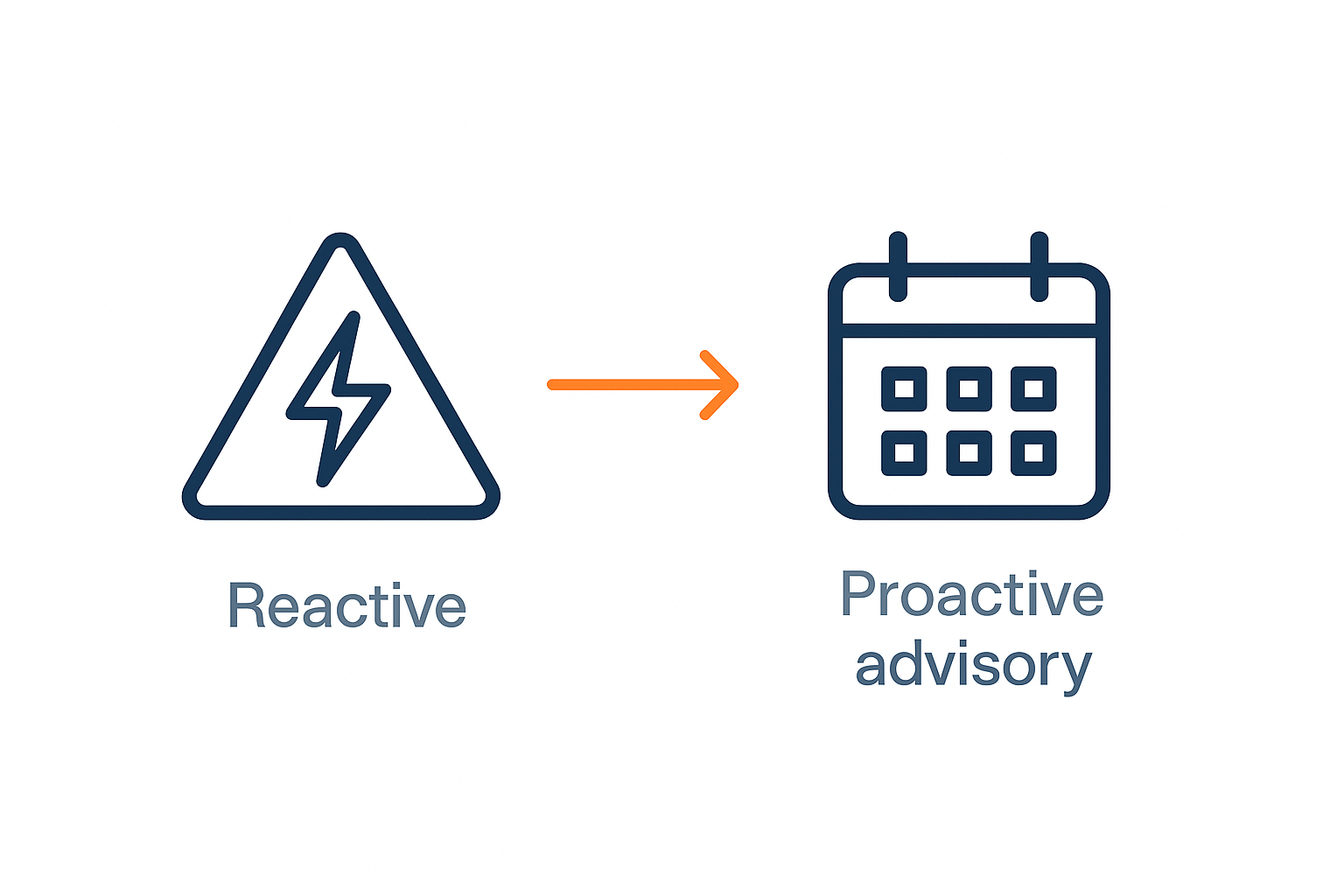
How a boutique commercial practice built a productised advisory offer beyond word-of-mouth
Illustrative case study. Industry and situation are drawn from a real engagement; the firm name and identifying details are anonymised.
A founder-led boutique commercial law firm — a small partner group, deep expertise in a defined area of business law, and an excellent reputation among the clients it already had. Every new matter arrived by referral or repeat instruction. The firm had never needed to market itself, and didn't know where it would even begin.
Referral-bound, and built on the oldest model in the profession
The practice ran entirely on word-of-mouth, and its "offer" was the oldest one in professional services: bill by the hour, when something goes wrong. That created three linked problems. Buyers couldn't tell what they were buying until the bill arrived, so price was anxious and open-ended. The firm only appeared once a client already had a problem, which meant it had no way to be useful before the crisis, and therefore no reason to stay top of mind in the long stretches in between. And selling was entirely partner-bound — a referral had to reach a particular partner, who then converted it on personal trust.
When the firm tried to grow beyond its existing circle, there was simply nothing for a stranger to evaluate or buy. Often the decision to engage a firm was taken inside the prospect's own circle of advisors, without this firm ever being in the room to make its case.
Turning a reactive practice into a proactive one
The work began by narrowing who the firm was for: growing founder-led companies at the stage where legal exposure was mounting faster than their in-house ability to manage it. The buying trigger was reframed from reactive to proactive — instead of waiting for something to break, the firm anchored to a growth event that predictably creates legal risk: a fundraise, a wave of new contracts, a scaling team. The promise moved with it, from "we'll defend you when something breaks" to "your legal exposure is handled before it becomes a problem." That single shift moved the firm from emergency room to standing protection.
Giving the firm something a stranger could actually say yes to
The open-ended hourly model was packaged into a productised advisory offer — a defined, fixed-fee engagement with named deliverables: a risk review, a documented protection plan, and a set scope of ongoing counsel, with clear boundaries. For the first time the firm had something a buyer could see, price, and agree to before a crisis rather than during one. The language followed, from "we provide legal services" to "we keep your business legally protected as it grows."
Legal work is a high-trust, warm purchase, and the firm's credibility lived in its reputation rather than in documented outcomes — so the approach strengthened what it genuinely had, a trusted name and a de-risked fixed-fee way in, rather than chasing a cold motion the market would never accept.
There was a human obstacle to handle as well. The partners were superb advisors but uneasy sellers; they associated selling with something slightly beneath the profession. The productised offer quietly solved this, because it turned the conversation from selling into simply describing a defined service — something the partners could do comfortably and without embarrassment. A little work on articulation got the lead partner to a clean, two-sentence description of the offer, which removed the discomfort that had kept the firm passive for years.
Being present before the crisis, and reaching the whole table
The firm built a way to be useful before any emergency — sharing its perspective on the risks its chosen clients predictably face, so prospects absorbed its expertise ahead of needing it. A low-friction entry point, a simple risk-awareness resource, fed the advisory offer, and gave the firm a route to reach the prospect's whole circle of advisors rather than depending on a single contact to carry the case alone — directly answering the "decided without us in the room" problem that had cost it work before.
The commercial terms held the repositioning in place. A fixed fee, a defined scope, and a clear engagement term replaced the open-ended hourly relationship — and that defined scope was precisely what stopped the firm sliding back into the unpredictable billing model that had made proactive selling impossible. From there, the advisory offer became the entry to deeper, retained counsel for clients who valued the proactive relationship, a natural step up from a productised front door.
The result
The firm now had something it had never possessed: an offer a stranger could understand and buy, before any emergency, at a price that didn't fill them with dread. It moved from pure referral dependence towards being able to show up in its market proactively — useful before the crisis, not merely summoned during one. Partners who had recoiled from "selling" could comfortably describe a defined service, and the firm had a way to reach the prospect's full circle of advisors instead of relying on one warm contact to carry the decision alone.
Bill-by-the-hour-when-it-breaks is unsellable to anyone who isn't already a client — there is nothing to evaluate until the bill lands, and nothing to offer before the crisis. Turning a firm's expertise into a defined, fixed-fee service that can be bought proactively is the only thing that lets a referral-bound practice grow beyond the circle it already has.
About the Author
Anoop Kurup
Sales-systems consultant for founder-led services businesses. Based in Bangalore.
More about meStill depending on referrals?
Find out how predictable your pipeline really is. Ten questions, three minutes, an honest score and the one thing to fix first.
Take the Sales Scorecard