
Breaking the Feast-and-Famine Cycle
How an eight-person creative agency replaced bespoke projects with a repeatable, delegable Brand Clarity Sprint and flattened its feast-and-famine revenue.
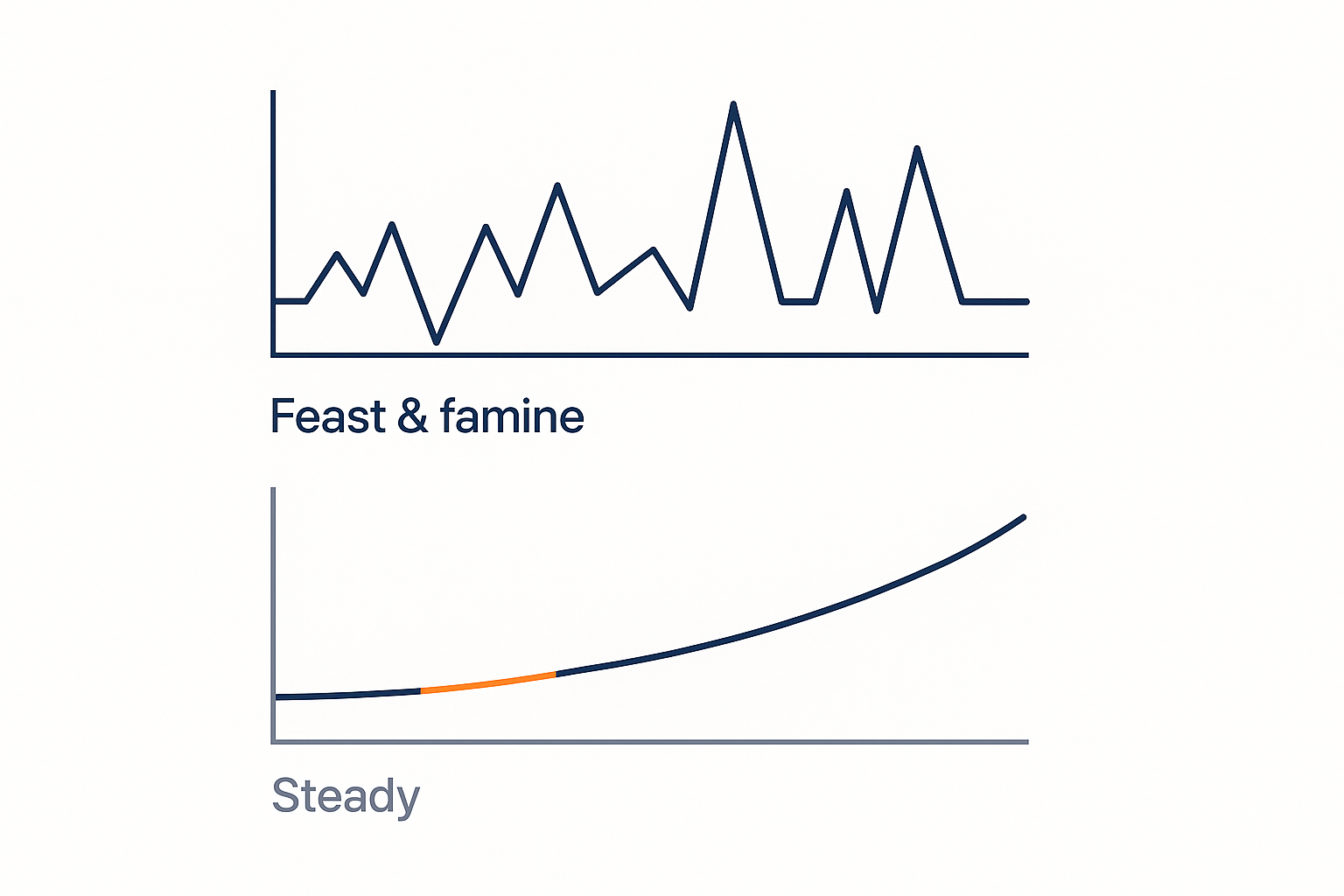
How an eight-person creative agency built a repeatable offer and stopped living project-to-project
Illustrative case study. Industry and situation are drawn from a real engagement; the firm name and identifying details are anonymised.
A founder-led branding and creative agency, eight people, a strong portfolio, and a founder well-networked through a local business community. The work was excellent. The trouble was that revenue swung violently — a good quarter on the back of one big rebrand, then a dry stretch while the founder, buried in delivery, did no selling at all.
Two problems that fed each other
The first problem was that the agency sold bespoke projects. Every engagement was scoped from scratch, every proposal a fresh custom document, so nothing was repeatable and the sales cycle restarted from zero with each new conversation. The second problem was that the founder was the only person who could sell, and he could only sell when he wasn't delivering. When projects were on, the pipeline went cold; when projects ended, he scrambled to fill it again. The two problems compounded: because selling depended entirely on the founder, and the founder was either selling or delivering but never both, the firm was structurally guaranteed to lurch between feast and famine.
There was a third, quieter cost. The agency had no entry point smaller than a full commitment. A prospect who wasn't ready for a complete rebrand had nowhere to begin, so they drifted away, and the firm never heard from them again.
Anchoring the firm to a moment the buyer could feel
The work started by settling who the agency was for: growing founder-led firms whose brand had fallen behind their ambition. That gave the firm a buying trigger it could recognise — a funding round, a move into a new market, a leadership change — any moment that suddenly made the old brand feel like an embarrassment. The promise shifted from "we'll redesign your brand" to "your brand finally matches where the business is going", tied to a specific moment rather than a vague sense that things could look better.
Making the offer repeatable, and the delivery delegable
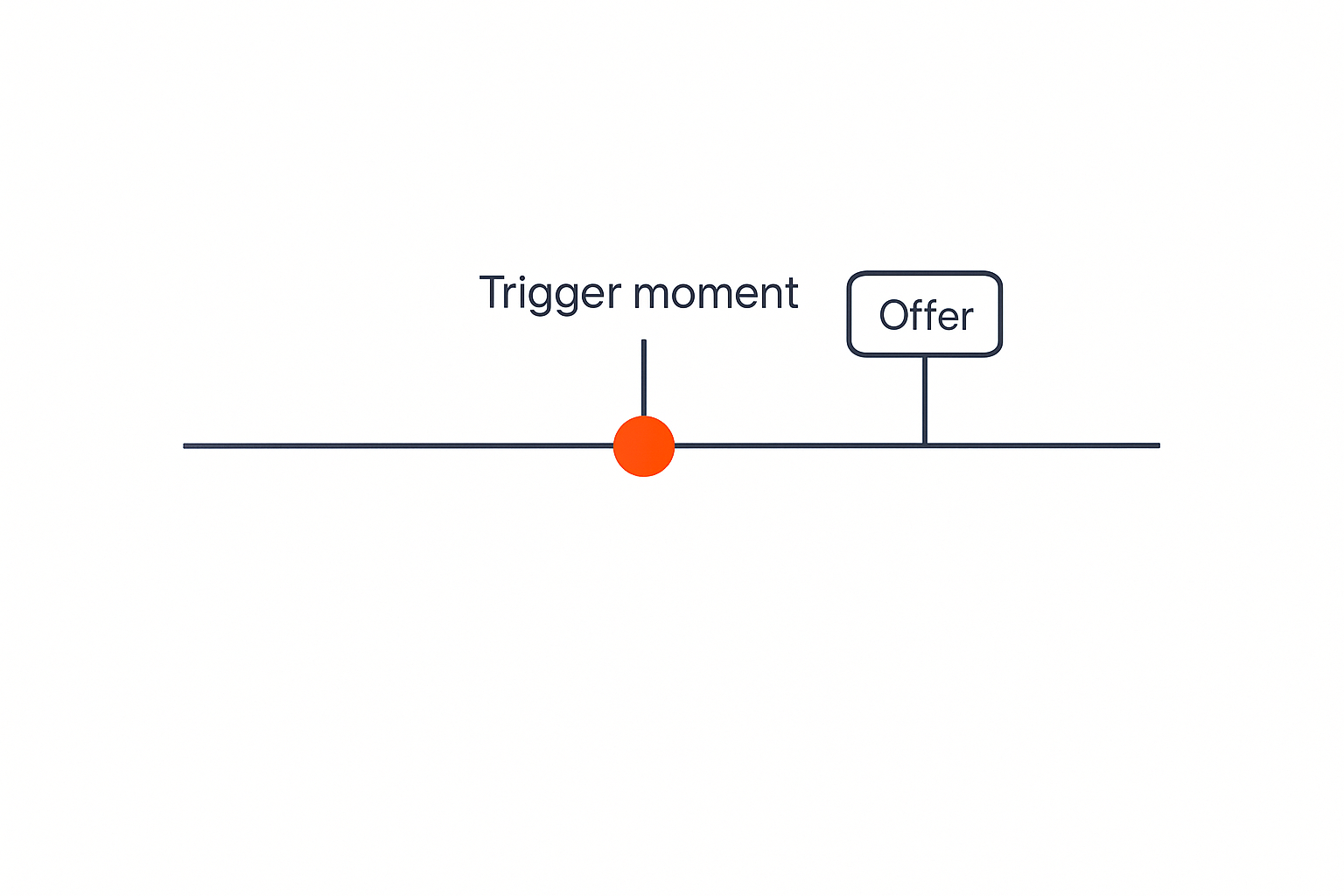
The bespoke-every-time model was replaced with a productised Brand Clarity Sprint — a fixed scope, a fixed fee, and a named set of deliverables: positioning, an identity system, a messaging guide, with clear boundaries. The detail that mattered most was structural: the deliverables were defined so that the team, not only the founder, could run most of the work. That freed the founder to do the one thing only he could do, which was sell.
And selling was where the productised offer earned its keep. Because the founder had always been the bottleneck, his ability to sell was treated as the centre of the problem, not an afterthought. A repeatable offer made his pitch repeatable for the first time — the same offer, the same words, every conversation — so selling no longer required him to think it all through from scratch each time. That, in turn, meant he could sell in the gaps between delivery instead of only after a project had ended and the pipeline had already gone cold.
Keeping the firm alive while the new motion took hold
A defined four-stage process let the team carry delivery while the founder stayed in the market. Cash flow was checked openly, because it mattered: the agency could not survive a twelve-week warming sequence with no revenue coming in. So the offer was structured for a fast first close — a small, quick entry engagement that produced revenue inside the founder's runway, rather than a long nurture that would have starved the firm before it ever paid off.
The commercial terms held the line too. Fixed scope, milestone payments, a hard end-date — the structure that stopped the agency sliding back into open-ended, scope-creeping projects that ate both margin and the founder's time. And the Sprint fed a natural next step, an ongoing brand-and-campaign retainer, offered only to clients who had already been through the Sprint, which kept the cold entry point small and the deeper commitment proven.
The result
The agency replaced bespoke chaos with one repeatable offer the founder could sell in any gap, and a delivery process the team could run without him. The feast-and-famine swing flattened, because selling no longer stopped the moment delivery started. The productised entry point gave the founder's network something specific to refer, and gave not-yet-ready prospects a small first step instead of a daunting all-or-nothing decision.
When the founder is the only seller and every project is built from scratch, the firm can only sell when it isn't working — which is what guarantees the cycle. Making the offer repeatable and the delivery delegable is what finally lets selling and delivering happen at the same time.
About the Author
Anoop Kurup
Sales-systems consultant for founder-led services businesses. Based in Bangalore.
More about meStill depending on referrals?
Find out how predictable your pipeline really is. Ten questions, three minutes, an honest score and the one thing to fix first.
Take the Sales Scorecard