
Why Creative Agency Founders Stay Stuck Between Art and Business
Many design and UI/UX founders are stuck because they run an art practice and a business at once. Here's the conflict, and the choice that lets you scale.
A design founder once told me his firm did the best work in his city and still could not get past the same revenue it had made three years earlier. He blamed the market, the clients who would not pay for quality, the constant grind of finding the next project. All of it sounded reasonable. None of it was the real problem. The real problem was sitting across the table from me, and it was him.
He was the chief creative director of his own company. Most creative agency founders are. And that single fact puts them in an impossible position, because they are trying to be two things at once: an artist and a business owner, and those two things do not run on the same logic. In many ways they run on opposite logic. Trying to honour both inside one company is what keeps so many good creative firms stuck at the same size, year after year. This article is about that conflict: why it caps your growth, the uncomfortable reason founders refuse to fix it, and the decision that finally settles it.
The two worlds a creative agency founder is trying to straddle
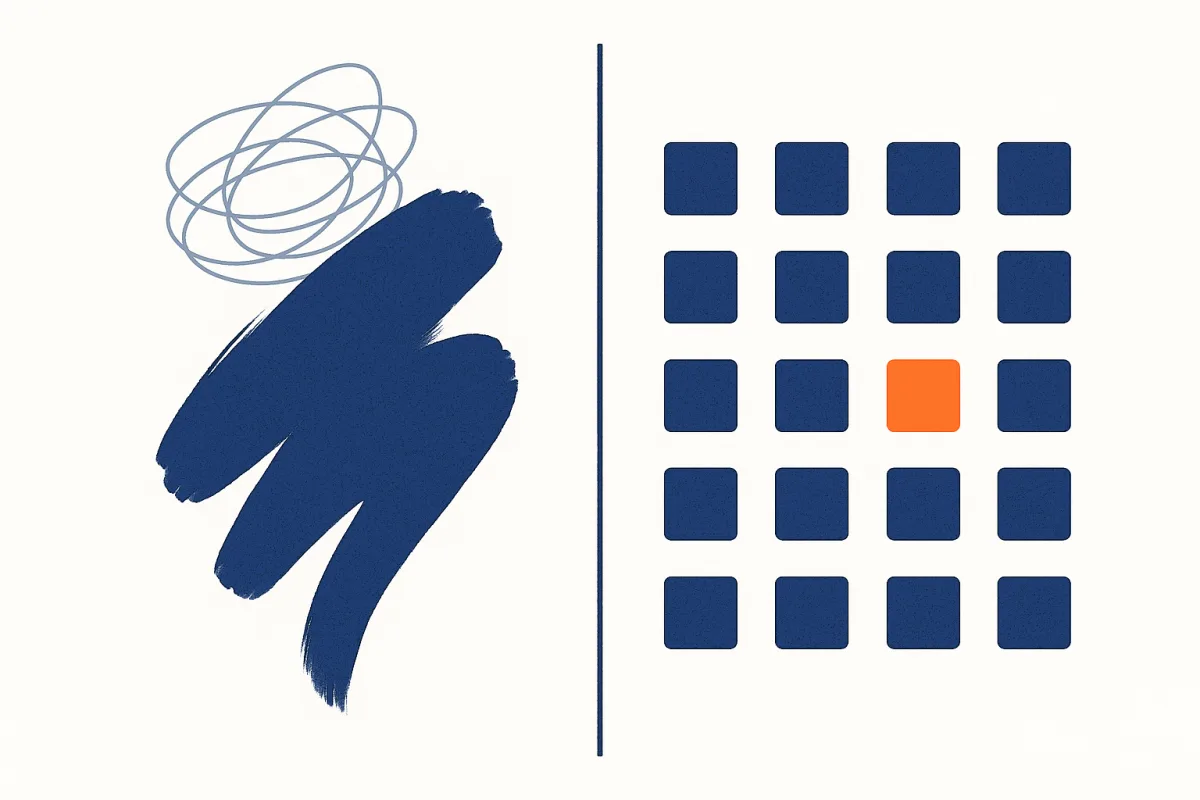
Art and business want different things, and it is worth naming exactly how, because the difference is not a matter of degree. It is a matter of direction.
Art works one way. You create first, put the work into the world, and let other people decide what it is worth. It is also deeply personal. Every project is a fresh act of expression, which is why criticism of creative work stings the way it does; it lands on the maker, not merely on the output.
Business runs the other way round. It needs a standardised offer that can be sold again and again with minimum friction, something that earns well whether or not it happens to be anyone's finest work. A business does not ask whether a piece of work is praiseworthy. It asks whether the same thing can be sold next month with less effort than it took this month. Its instincts are repeatability, predictability, and margin, not originality.
Put the two side by side, and the tension is plain. One rewards the thing that cannot be repeated; the other depends on repetition. One is judged by the crowd after the fact; the other is judged by whether the system works before the work even begins.
Why straddling both leaves you with neither
When a founder tries to serve both logics inside one company, the two cancel each other out.
The work is never quite free enough to be celebrated as art, because client budgets, deadlines, and briefs bind it. And the business is never quite predictable enough to scale, because it runs on bespoke, one-off creativity that only the founder can reliably deliver. What you are left with is a firm that produces neither a body of work the founder is truly proud of nor a company that runs and grows without the founder being involved in the delivery.
From the outside, it looks like a talented studio that needs sharper marketing or one lucky break. From the inside, it feels like working harder every year and staying in the same place. The cause is not effort, and it is not talent. It is that two incompatible ambitions are competing for the same hours, the same clients, and the same company.
The hidden reason custom projects are so hard to give up
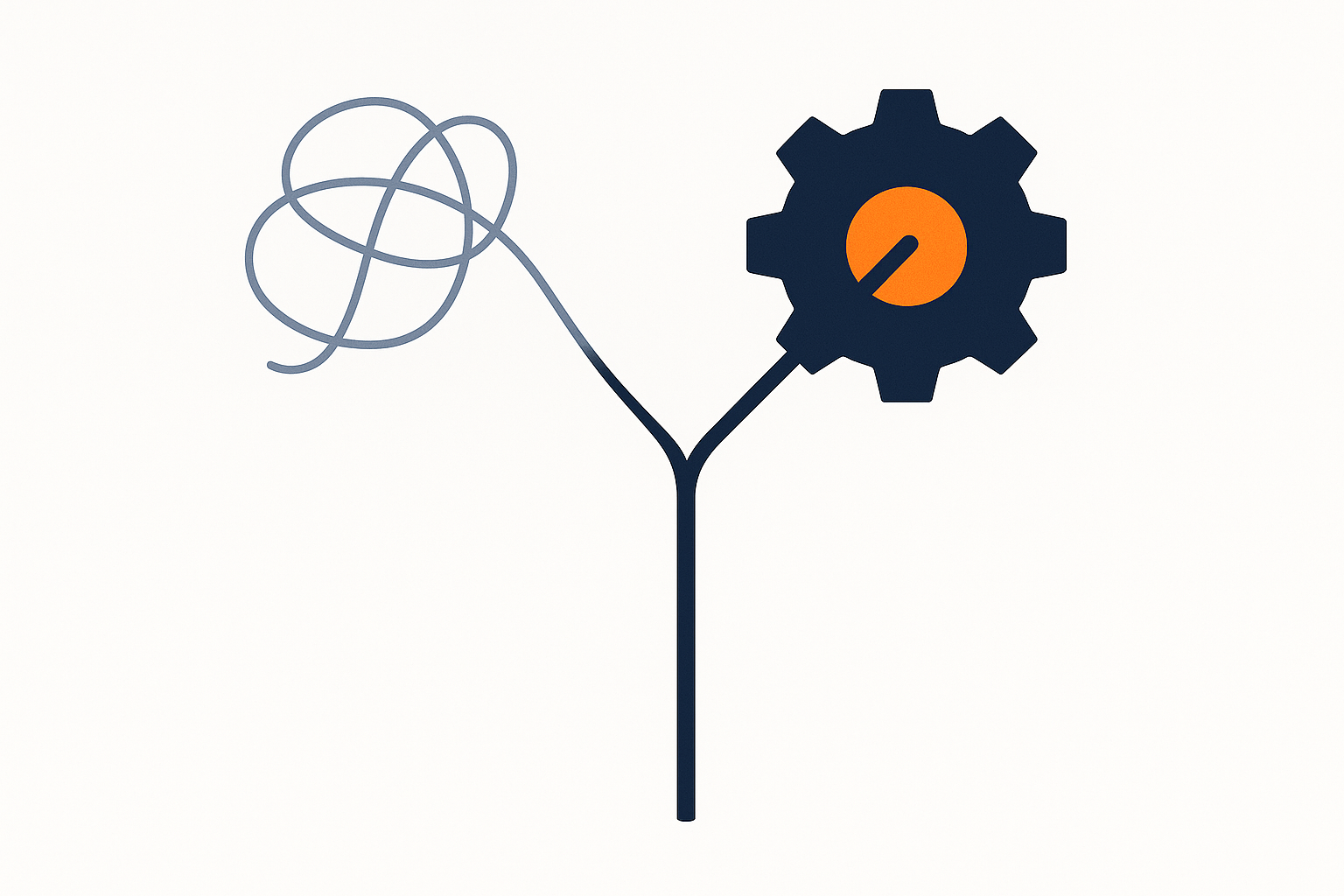
The custom, bespoke projects, the ones where every brief is different and the fee is a fresh negotiation each time, are usually a disguised outlet for the founder's own creativity. They are how the founder keeps making things they want to make while still getting paid for it.
This explains a pattern I see again and again: the founder who complains that finding clients is a constant struggle, yet quietly resists every attempt to narrow the offer or standardise the work. On the surface, it looks irrational. It is not. Custom work is hard to sell repeatably precisely because it is custom, so the pipeline stays uncertain, but the founder holds on to it because letting go feels like letting go of the creative heart of the whole thing.
Seen this way, the struggle to find clients is not really a marketing failure. It is the running cost of using a business as a private studio. Once a founder sees that their attachment to bespoke work is driven by self-expression rather than strategy, the way forward becomes clear.
What changes when you decide to run a business
Three changes occur for founders who break out of the artist mindset and decide to run the business the way it's meant to be run.
First, they narrow their focus. Instead of taking whatever creative challenge walks through the door, they pick a specific type of client and a specific problem they solve well.
Second, they let the team own the predictable, repeatable projects, rather than routing every creative decision back through the founder.
Third, they follow standard delivery processes, so the quality of the outcome no longer depends on the founder's personal touch being present on every single job.
None of this means abandoning good design or shipping worse work. It means deciding that the company's product is a repeatable, useful service, not the founder's ongoing artistic development. And there is an unexpected reward buried in it. When the business runs on standards, the founder often gets their creativity back, because the work no longer has to justify itself commercially inside every client project. The business earns predictably. The self-expression, if the founder still wants it, can live somewhere that does not have to pay the bills.
The choice every creative founder eventually has to make
Sooner or later, every creative agency founder has to choose between the two directions. You can be an artist, someone who risks criticism and failure by publishing their work and letting the public decide what it is worth. Or you can be a business owner, someone who learns to sell something useful, repeatedly, whether or not it is their finest work. Both are honest paths. What does not work is trying to be both inside the same company, because each one demands the opposite of the other.
If your studio has felt stuck for years despite real talent and effort, this is worth considering. The constraint may not be your marketing, your pricing, or your market. It may be that you have never actually decided which of these two businesses you are running, and until you do, you will keep paying the cost of both while collecting the rewards of neither.
The founders who grow are not the most gifted ones. They are the ones who chose.
If you want an honest assessment of how much of your revenue still depends on you, the founder, personally, and where a more repeatable business would begin, get in touch and tell me what you're seeing. I'll tell you where you stand and what to fix first.

About the Author
Anoop Kurup
I'm a marketing consultant for B2B service firms in India. I fix the positioning, visibility, and lead generation behind weak sales. Before this: a research lab at GE, then patents and competitive strategy, then an intellectual-property firm I built and exited. I work with founders one engagement at a time from Bangalore.
More about meRelated reading
Positioning and pricing
How to Productize Your Service (Step by Step)
A productized service is easier to sell, price, and scale. Here is how to package what you do into one clear offer your firm can repeat.
Scaling beyond the founder
How to Scale a Consulting Business Beyond You
Growth stalls when everything runs through the founder. Here is how to scale a consulting business by removing yourself from the parts that don't need you.
Scaling beyond the founder
The Founder-Led Sales Trap (and How to Escape)
When you are the only one who can close, growth stops the moment you get busy. Here is how to get out of founder-led sales without losing the magic.
Still depending on referrals?
Tell me what's going on with your sales. I'll tell you honestly if I can help.
Get in touch