
Why Disqualifying Prospects Faster Generates More Revenue
For B2B service firms, leads are a quality problem, not a volume one. Here's why disqualifying prospects faster grows revenue, and the system to do it.

A founder I work with once had his best-ever month for inquiries, 87 sales conversations in four weeks. When the numbers came in, revenue had fallen 20% against the previous quarter. He had taken every call, prepared every proposal, followed up on every lead. The harder he worked the funnel, the less he earned. He had followed the popular advice about what a growing business should do.
His confusion is worth taking seriously because the common advice that more leads mean more revenue is faulty for B2B service businesses. Why is the advice wrong? In fact, for a while, and at low volumes, that holds. But beyond a surprisingly low threshold, it stops being true. And contrary to popular belief, the road to more revenue runs through disqualifying prospects faster, not by chasing more of them. This article explains why that happens, and gives you a simple system to apply it in a firm where you are both the founder and the entire sales team.
More leads = more revenue ?
The idea that leads and revenue rise together gets repeated so often it rarely gets challenged. It sits underneath almost every piece of "grow your pipeline" advice: get more traffic, generate more inquiries, book more calls. So when inquiries climb, it feels like unambiguous good news. You take the meeting. You write the proposal. You follow up a second and a third time, because letting a live lead go feels irresponsible.
The result is a calendar that fills up and a pipeline report that looks healthy. Both create a powerful sense of productivity, because you are genuinely busy. But busy and productive are not the same thing, and in sales they often move in opposite directions. A week packed with the wrong conversations is not progress. It is a distraction that looks like hard work, making it hard to catch.
Why more conversations can mean less revenue

Let's return to those 87 conversations and look at who was actually in them. The uncomfortable truth is that most of those people were never going to buy. Some had a problem the firm doesn't solve. Some had no budget that could ever match the fee. Some were six months from a decision, or simply curious. What they all shared was a willingness to accept a free consultation and go away to "think about it", and a founder willing to keep giving it.
Now consider the cost that never appears on any pipeline report. In a B2B Services firm, good selling time is fixed and scarce, because the same person who sells the work also delivers it. There are only so many hours a week you can give to sales at full attention. Every one of those hours spent on a prospect who will not buy is an hour taken away from a prospect who would. The right clients don't get your best thinking; they get whatever is left once the wrong ones have taken their share. Which may be a rushed proposal, a delayed reply, a call you took while half your mind was on delivery.
That is how a record month for inquiries becomes a poor month for revenue. Nothing went wrong with the leads themselves. The founder's scarcest resource, focused selling time, was quietly redirected towards people who could never convert, and away from the few who could.
Disqualifying prospects: learn from enterprise sales teams
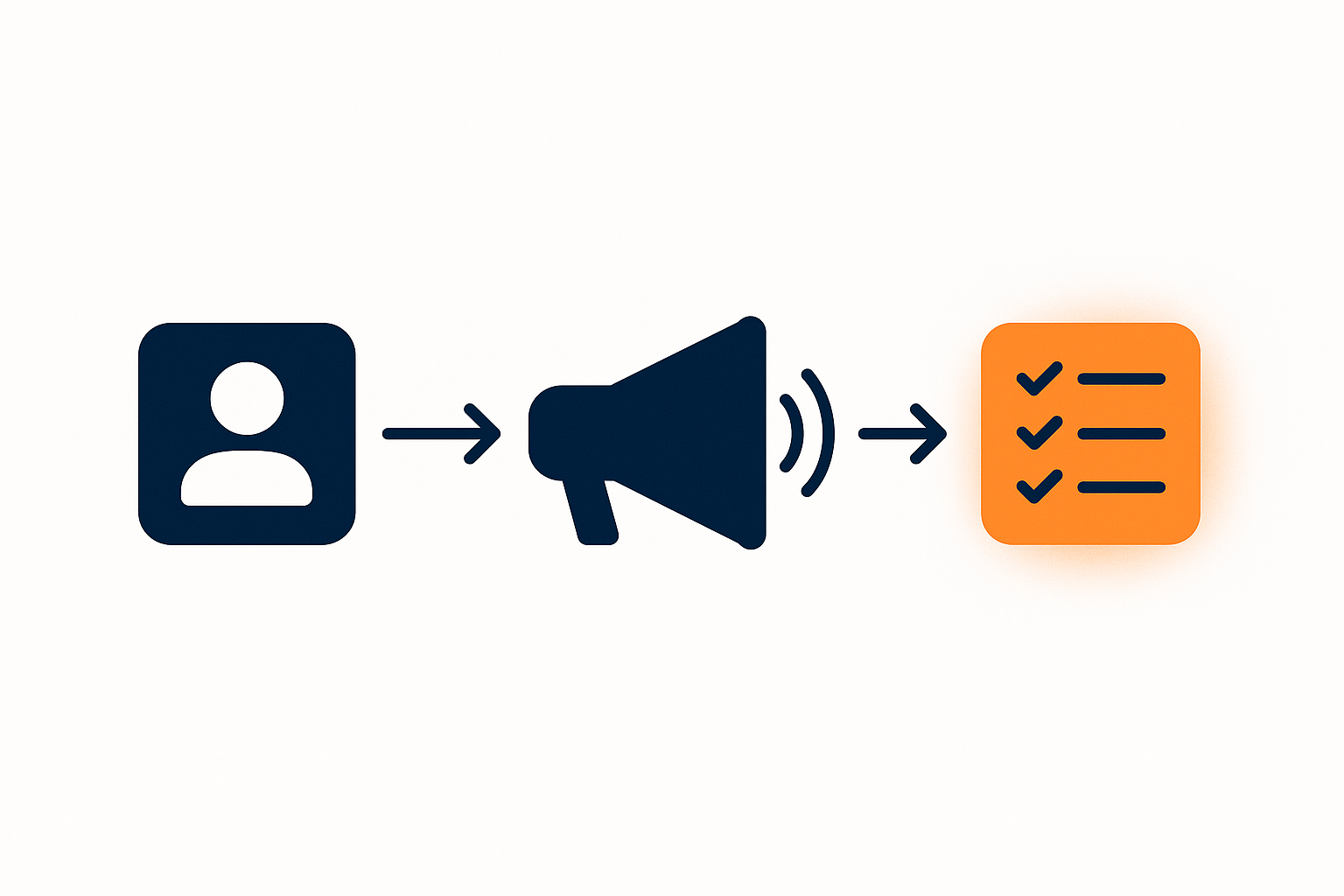
Large sales organisations solved this problem decades ago. They pay for an entire role whose purpose is not to close deals but to disqualify prospects: the Sales Development Representative (SDR). The SDR sits at the top of the funnel and filters it, so the person who actually closes only ever speaks to prospects who fit and can realistically buy. The closer's time is treated as too valuable to spend on unqualified conversations.
A well-run sales team considers disqualification important enough to hire a dedicated person for. Turning the wrong people away is not a luxury you allow yourself when business is booming. Lead qualification (or disqualification) is the mechanism that keeps business healthy in the first place. The entire value an SDR creates is invisible: it is the pile of conversations that never happened, freeing up the ones that mattered.
The lesson for a B2B Services firm is not "hire an SDR". It is that disqualification is a real, revenue-generating function that big companies pay a full salary to perform. In your business, there is no SDR. There is only you. Which means the discipline can't be bought or handed off. It has to be built into how you sell.
The three-part system for disqualifying well
You don't need to hire anyone to get most of the benefit. You need a simple system with three parts, and you can build it from information you already have.
Define who is a good client
Start with data. Review every client from the last six months and identify the ones who generated the most revenue with the least effort. The engagements that ran smoothly, where the client made decisions quickly, valued the work, and left satisfied. Then look for what those clients have in common: their industry, their size, the specific problem they came to you with, the stage they were at. That pattern is your ideal client profile (ICP).
Defining your ICP is often the single most valuable exercise a founder can do. Knowing precisely who you serve best does more for revenue than any new tactic. Every later marketing and sales tactic gets sharper once the target is clear.
Make your marketing speak to your ideal clients
Once you have defined your ICP, communicate it plainly on your website, in your posts, and in your outreach. When your messaging describes one specific type of client and one specific problem, the people who don't fit quietly disqualify themselves before they ever reach you.
ICP-centric communication is the easiest form of disqualification because it occurs before any conversation begins. Strong positioning does the filtering for you. The prospect who reads your page and thinks "this isn't quite for me" has just saved you both at least an hour.
Standardise your discovery call
Finally, decide in advance what a real opportunity looks like, and write it down. A simple, documented standard usually covers four things: is there genuine urgency, is the actual decision-maker in the room, is the timeframe workable, and does the budget fit the fee? Turn those into a short checklist you run every discovery call against.
The point of writing it down is that you can end the wrong conversation early and kindly, without second-guessing yourself each time. When a prospect clearly fails the checklist, you can close the call with respect and move on because you are following a standard rather than making an awkward personal judgement on the spot.
Disqualifying is how you qualify the right leads
None of this is about arrogance, or turning away perfectly good business out of some misplaced sense of exclusivity. It is about protecting the small, precious amount of selling time you have so it reaches the people you can genuinely help. It also gives you the time to give those people your best work rather than your leftover attention.
The founders who escape referral dependence and build predictable pipelines are rarely the ones having the most conversations. They are the ones having the right ones. If your last quarter was full of calls that went nowhere, the problem is not that you need more leads. It is that too much of your time is going to prospects you should have disqualified early.
If you want to know where your pipeline is leaking, get in touch and tell me what you're seeing. I'll tell you where the wrong conversations are quietly costing you revenue, and what to fix first.

About the Author
Anoop Kurup
I'm a marketing consultant for B2B service firms in India. I fix the positioning, visibility, and lead generation behind weak sales. Before this: a research lab at GE, then patents and competitive strategy, then an intellectual-property firm I built and exited. I work with founders one engagement at a time from Bangalore.
More about meRelated reading
Getting clients beyond referrals
Interest Is Not Intent: The Handshake Happens Inside Your Head
For a founder-led firm, the gap between interest and intent is not a handover between teams. It is a judgement you make alone, and usually badly.
Positioning and pricing
The Praise Trap: Why Expert-Founders Get Admired But Not Paid
Many expert-founders have full calendars and empty pipelines. Here's why praise doesn't translate to revenue, and how to fix the boundary problem.
Positioning and pricing
How to Handle Price Objections as a Consultant: It Starts With Your Pipeline
"You're too expensive" is rarely about price. It's what a thin pipeline sounds like. Here's why, and what to fix before you discount.
Still depending on referrals?
Tell me what's going on with your sales. I'll tell you honestly if I can help.
Get in touch