
Advertising / Outdoor Media
From "We Do Everything" to One Campaign a Stranger Could Buy
How a B2B advertising agency replaced referral dependence with a single, sellable offer
From a past consulting engagement. The firm is anonymised at the client's request; the situation and the work are as they happened.
"Tell me what you sell. Two sentences, and pretend I've never met you."
What came back was the menu. We can do hoardings, we also do digital, we can manage the whole campaign. Twelve years of respectable client list, eight good people, craft nobody was arguing with. And the founder of this B2B advertising and outdoor-media agency could not finish that sentence.
He had never needed to. Every client he had ever won arrived through a personal referral or a repeat buyer who already trusted him. Trust does not ask what you sell.
The agency had capabilities. It did not have an offer.
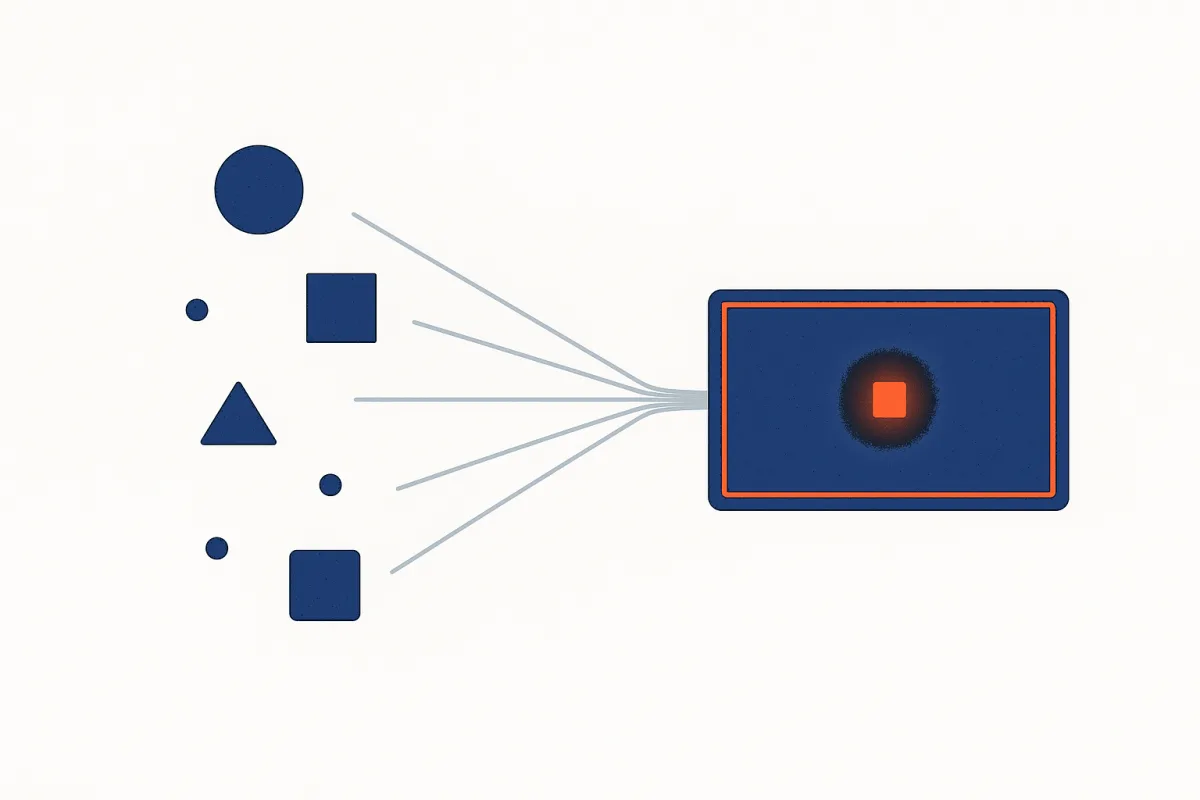
A capability list is a kitchen. An offer is a dish on the menu with a price next to it. Nobody walks in and orders a kitchen.
That was the shape of the problem. When the founder met a prospect, he described what the firm could do rather than what the buyer would end up with. The prospect couldn't work out what they were buying, what it would cost, or what they would have at the end of it. So they did the safe thing: asked for a proposal, then went quiet.
Referrals still closed, which is exactly what made this so hard to see. Trust was doing the selling, and a warm buyer doesn't need the offer to be clear. Everyone else stalled. Revenue arrived in lumps, entirely at the mercy of whether his network happened to throw off a warm introduction that month.
The instinct in that situation is to sell harder or market more. But you cannot market your way out of an offer nobody can describe. We started with the offer.
Narrowing until the firm stood for something
I made him give up most of the market. Not "any business that needs advertising", but regional consumer brands launching or relaunching a product in one or two cities. That one choice did a lot of quiet work.
It handed the firm a buying trigger it could see coming: a launch date sitting on somebody's calendar. And it let the founder talk about a specific outcome instead of a menu. "We run your advertising" became "your launch lands with a coordinated campaign across the channels that matter, run by one team." A date the buyer can feel, not a list of things the agency happens to be capable of.
One thing, with a name and a price
With the customer settled, the scattered list collapsed into a single named product: a Single-Campaign Sprint. One launch, one fixed scope, one fixed fee. A creative concept, a channel plan, three placements, launch-week management. Revisions and support bounded in writing.
The wording carried as much weight as the structure. "We can help with your advertising" became "we build and run your launch campaign." The founder could now describe the offer to a stranger in two sentences, the very thing he had quietly failed to do for a decade.
Where I had to be honest with him
On paper the Sprint was close to something a cold prospect could buy. It tapped fresh launch budget, the fixed scope took the risk out, and it was done for the client rather than taught to them. What it lacked was proof. Twelve years of good work, and not one documented, outcome-framed case a sceptical stranger could point to.
So we didn't paper over it. The agency sold into its warm network first, deliberately, treating every early Sprint as a chance to manufacture the proof it didn't yet have. Only once a couple of documented cases existed did it widen its reach.
The parts that stopped it sliding back
The Sprint ran on four repeatable stages: brief, concept, build, launch-week run. Those stages replaced the scramble that had made every project feel like starting from zero. To warm people up before any sales conversation, the founder published a short "launch readiness" teardown he could share freely, so prospects arrived having already spent time inside the firm's thinking rather than meeting it cold.
The commercial terms did the rest. Fixed fee, payments tied to concept approval and launch, a hard end-date at launch week. Those milestones are what stopped the agency drifting back into the open-ended retainers that had quietly eaten its margins.
The Sprint became a front door, not the whole house. Brands whose launch went well were offered a Quarterly Campaign retainer, but only once a Sprint had proved the relationship. Cold buyers bought the Sprint. Proven buyers graduated.
What he could say by the end
One thing he could name, price and explain, and a clear answer to who it was for. He stopped improvising. His referrals finally had something concrete to refer to, and for the first time a prospect from outside his network could understand the offer well enough to buy it.
The proof base grew with the work, too, because every Sprint delivered produced a documented case. The constraint that had kept the offer in warm-only territory was no longer sitting still.
A firm that does everything is, in practice, unsellable to anyone the founder hasn't already met. One customer, one named deliverable, one price, one outcome. That discipline is what turns a kitchen into a menu.
More case studies
Corporate Video / Film Production
Out of the Editing-Rate Trap
Commoditised as "just a video editor"; vague ICP collapses price
Branding / Creative Agency
Breaking the Feast-and-Famine Cycle
Project feast-and-famine; founder is the only seller; no repeatable pipeline
Corporate Training / Communication Skills
From "Communication Skills" to "Speak Like a Leader"
Generic "communication skills" training is a commodity HR struggles to fund
Recognise your own pipeline here?
Tell me what's going on with your sales. I'll tell you honestly if I can help, and where I'd start.
Get in touch