
Your LinkedIn problem is a first draft problem.
You are not short of things to say. You say them every week on calls, in proposals, in the answer you have now given four clients in a row. The trouble starts at the empty page, when saying it well is suddenly a different job.
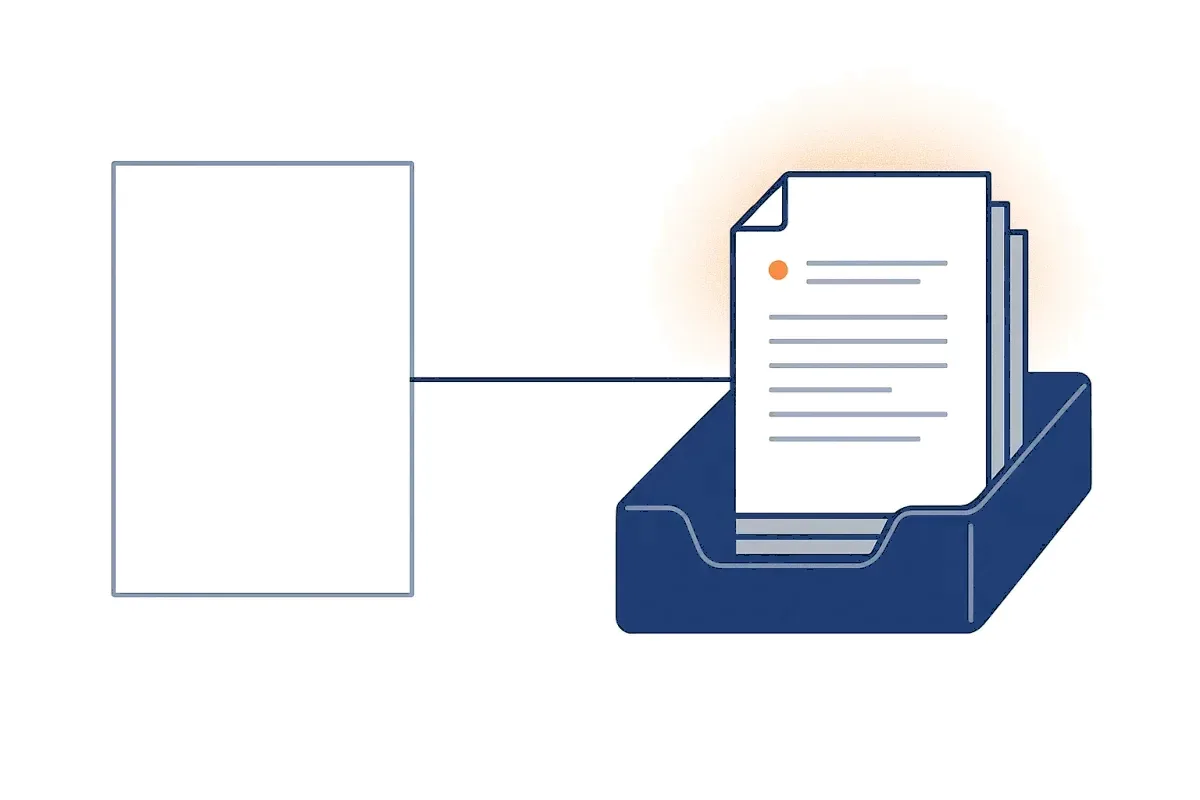
Postie starts for you. Every week, finished posts on your themes, written in your voice, arrive in your inbox. You read them with your coffee, change the lines you would have put differently, and publish.
I run this myself, so seats are limited. One client per niche.
- Ten minutes a week
- Nothing posted for you
- Monthly, no lock-in
Nobody stops posting for want of ideas.
Think about the last proposal one of your people sent you to review. You read it, marked the three sentences that were wrong, sharpened the opening and sent it back inside ten minutes. You may even have enjoyed it. Now think about writing that same proposal from nothing on a Tuesday morning. Same document, entirely different amount of will required.
A LinkedIn post is the second job, and that is the real reason your posting is patchy. It is not discipline and it is not a missing content strategy. Having an opinion and starting from an empty page are two separate skills, and only one of them is in short supply.
So the week goes, and you tell yourself you will do it properly at the weekend. The weekend has its own plans. Meanwhile the people who were beginning to recognise your name stop seeing it, and the next time they need someone who does what you do, they think of a firm with worse answers and a steadier habit.
Editing is a ten minute job you can do while tired. Starting is not.
Three doors, and why each one closes.

The AI tool
ChatGPT will hand you a post in seconds. But you still have to decide what the post is about, which was the hard half of the work, and what comes back is the same LinkedIn voice everyone else is pasting in. It also has no memory of what you published last month, so sooner or later it returns an idea you have already used, wearing new words. Your readers spot that before you do.
The writer you hire
You brief them for an hour and get back something smooth and weightless that could have been written about any firm in your category. In a sense it was. They have never sat in one of your client calls, so the opinions are borrowed and the sentences hedge in exactly the places where you would commit.
Waiting to feel like it
Some weeks the mood turns up and you write three good posts in an evening. Then a project lands and it goes quiet for a month. LinkedIn only pays out on consistency held over months, and the mood is precisely the input you cannot put in a calendar.
The fourth door: change the job, not your willpower.
Every one of those three asks you to supply something you have already proved you will not reliably supply: the starting effort, the brief, or the mood. Postie asks for none of them. It changes what the task is.
A finished draft is sitting in your inbox on the same days each week. The work left in front of you is reading and correcting, which is the job you are good at and can do without motivation, tired, on a Monday morning, with a coffee. That is the entire mechanism, and it is why it survives a busy month when the other three do not.
An hour to set up. Then it just runs.

- 01
You give me an hour.
We go through who you sell to, the handful of themes you want your name attached to, and what you actually believe about each one. You send me a few things you have written that sound like you. That becomes your voice profile, and everything Postie writes afterwards is measured against it.
- 02
Postie researches and drafts, weekly.
It reads what is being discussed in your field that week, checks every candidate idea against everything it has already written for you, and drafts the posts. Each draft is measured for length, tone and the tics that make writing sound automated, before it is allowed anywhere near your inbox.
- 03
The posts arrive on fixed days.
Read, edit, publish. Skip one and that topic goes back in the queue for later. If a post misses the mark, tell me and I change the instructions behind your account, which is the part you cannot get from a tool.
Finished work, not raw material.
Ask about a subscription- Complete posts on a fixed weekly schedule.
- Not outlines, not prompts, not three bullets to expand. Posts you could publish unedited, though you probably will not, and should not.
- An image with every post.
- Made for that post, not pulled off a stock library where your competitor found the same photograph.
- Topics researched fresh each week.
- Drawn from what your field is actually discussing now, rather than recycled out of a fixed idea bank that goes stale by month two.
- A long-form article as a Word document.
- On the higher plan, weekly. Yours to publish as a newsletter, a blog post or a client mailer, and it arrives with a companion post that points at it.
- A calendar of what is coming.
- So you can see the month ahead and move things around before they are written, not after.
- Me, on email.
- You are not filing a ticket with a support queue. You are telling the person who built the thing what it got wrong, and he changes it.
The dull machinery is the actual product.
I have been automating my own work since 2006, when the first thing I did was repurpose the Caps Lock key into a search bar. Twenty years of that teaches you one lesson: the first version of anything automated is easy, and the fiftieth is the one that exposes you.
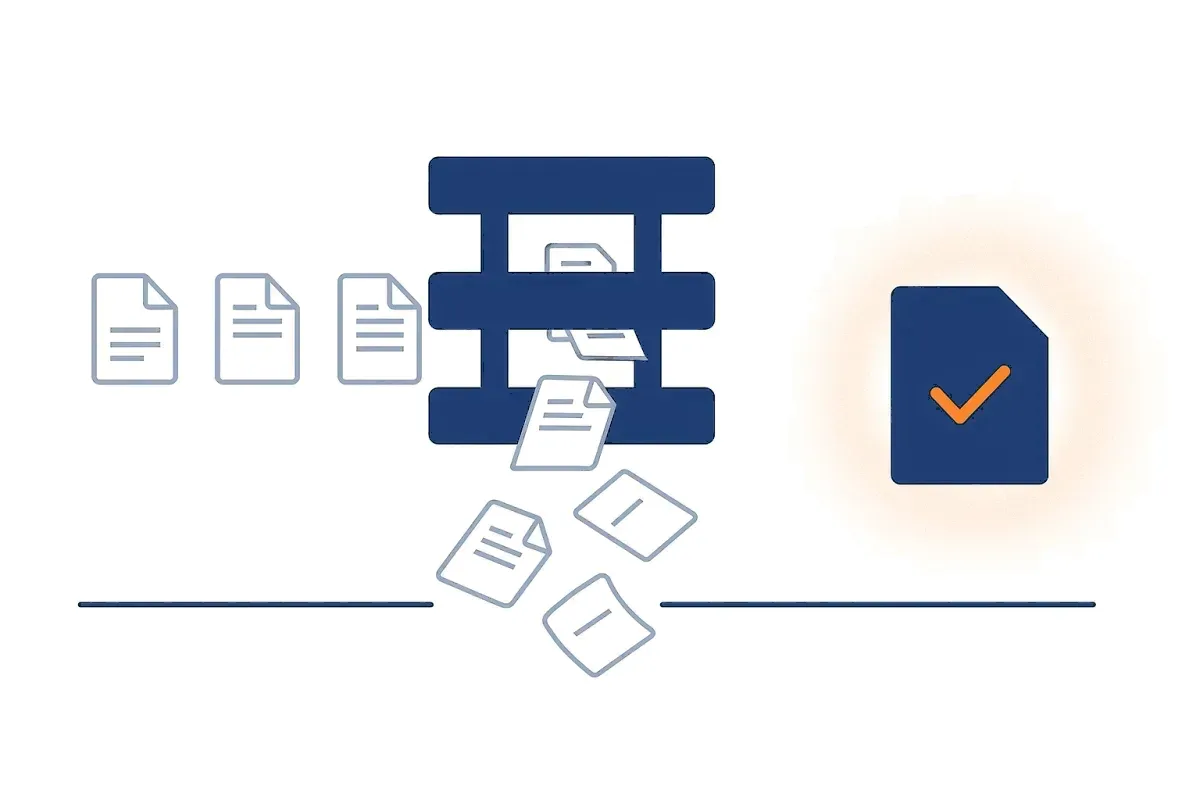
Anyone can get a language model to write a LinkedIn post. Getting it to write fifty across a year without sliding into repetition, sameness and tells is a different problem. Most of Postie is the boring machinery that stops that happening.
It will not repeat itself.
Three separate checks run before a topic is accepted, including one that catches the same idea coming back in new clothes. The reworded repeat is the failure everybody else ships.
It rotates your themes on purpose.
You set the weight each theme carries. Two posts a week on the thing that wins you work and one on the thing that builds credibility, week after week, instead of whatever the model found interesting that morning.
It writes in your voice, not the LinkedIn voice.
No hashtags. No one line per sentence stacking. No opening with "Here's the thing:". These are rules in code, not polite requests in a prompt, which is why they hold on every post rather than most of them.
It never bolts on a templated closer.
No "What do you think? Let me know below" at the bottom of every post. That closer is the fastest way to look automated, and it is the first thing readers learn to skip.
Nothing broken reaches you.
A draft that comes out wrong is caught and rewritten inside the system. You see the ones that passed.
This works if you sell on expertise.
A good fit if you are
A consultant, advisor or professional services owner whose next client is somebody who already trusts your judgement.
A founder or partner who knows LinkedIn matters and has proved to yourself, repeatedly, that you will not sit down and write.
Someone with real opinions about your market who has no interest in handing them to a writer who does not hold them.
Willing to spend ten minutes a week editing. That part cannot be removed, and you would not want it removed.
Not a good fit if you
Want follower growth, viral hooks or engagement pods. Postie writes to be read by the few hundred people who could actually hire you.
Want to publish without reading first. It is a first draft service, and a first draft is meant to be read.
Want a full ghostwriting relationship with strategy calls and revision rounds. That is a good thing to buy. It is not this.
Two plans, both monthly.
Posts
Finished LinkedIn posts every week, with images, on a fixed schedule.
- Weekly posts, in your voice
- An image with every post
- Calendar of upcoming topics
Posts and article
Everything in Posts, plus a long-form article every week as a Word document, with a companion post.
- Everything in Posts
- A weekly article as a Word document
- A companion post that points at it
No annual lock-in. Onboarding is a one time session included in your first month. Engagements are scoped in the conversation, not off a price list.
The questions I get every time.
- Does it post to LinkedIn for me?
- No. Everything arrives by email and you publish it yourself. I do not ask for your login, and Postie has no access to your account. The last word stays yours, every time.
- What if I do not like a post?
- Edit it, which is the expected use, or skip it and the topic returns to the queue. If posts keep missing in the same way, email me and I change the instructions behind your account. That correction loop is as much of what you are paying for as the posts.
- Will it sound like me?
- It is trained on writing you supply and it improves over the first few weeks as you edit. Expect week one to need more work than week four. If it is not close by week three, tell me, because that is a fixable problem and not a you problem.
- How long does onboarding take?
- About an hour of your time. Posts start the following week.
- Can I pause it?
- Yes. Tell me and delivery stops. Your themes and voice profile are kept, so starting again takes an email.
- Do you work with my competitors?
- No. One client per niche per market. That is most of why seats are limited.
- Who actually runs this?
- I do. I built it, I run it, and I read what goes out. It is not a reseller account on somebody else's tool.
Stop negotiating with a blank page.
Tell me what you do and who you are trying to reach. If Postie is a fit, I will write you a week of posts before you commit to anything, so you can read your own voice coming back at you and judge it properly.