
A B2B Messaging Framework That Sells Services
A messaging framework for B2B services firms: what to say, in what order, so prospects understand what you do and why it is worth paying for.
A founder I worked with could explain his firm in ninety seconds on a call. I watched him do it. The prospect stopped taking notes, leaned in, and said "that is exactly our problem". Later the same week I read his homepage, and by the fourth paragraph I still could not have told you what the firm did for a living.
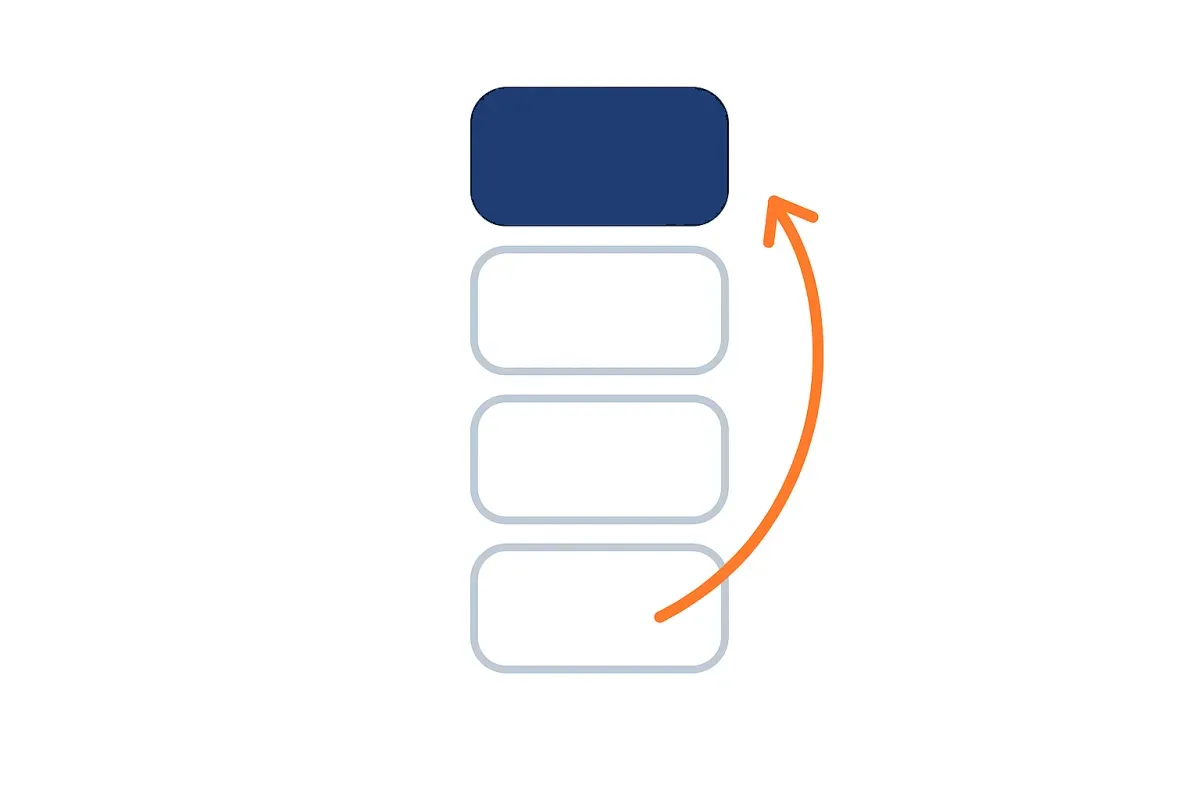
Same man. Same business. Same vocabulary, more or less. The page was not badly written; it was assembled in the wrong order. It opened with the method he had spent eleven years refining, moved to his credentials, and reached the buyer's problem somewhere near the bottom, by which point no buyer was still reading.
That gap between how a founder talks and how the firm writes is the most common messaging problem I see in B2B services. And it is not a vocabulary problem, which is why hiring a better writer so rarely fixes it.
Why Smart Firms Produce Confusing Messaging
Firms write from the inside out. You know your method intimately, you are proud of it, and it is the thing that makes your work good, so it goes first. The buyer, who has never heard of your method and does not yet know they should care, reads a sentence about a proprietary five-stage approach and quietly decides this page is not about them.
The second cause is the curse of knowledge. After a decade in a field, the problem you solve feels too obvious to state. Saying it plainly feels like insulting the reader. So you skip it and start at the interesting part, and the buyer never gets the sentence that would have told them they are in the right place.
The third is that most messaging is written by committee, or by three people over two years, none of whom agreed on who the buyer was. Every round adds a clause to avoid excluding someone. You end with copy that offends nobody and moves nobody, which for a services firm is the same as being invisible.
A messaging framework exists to stop all three. It is simply the written hierarchy of what your firm says about itself: the problem you solve, the outcome you produce, how you work, and the proof, in that order. Written down once, it means every page, proposal, and post says the same thing instead of each one improvising. That is the whole of it. Frameworks sold as templates make it look more elaborate than it is, but the value was never in the boxes; it is in the order and in the discipline of not deviating from it.
The Order That Works: Problem, Outcome, Method, Proof
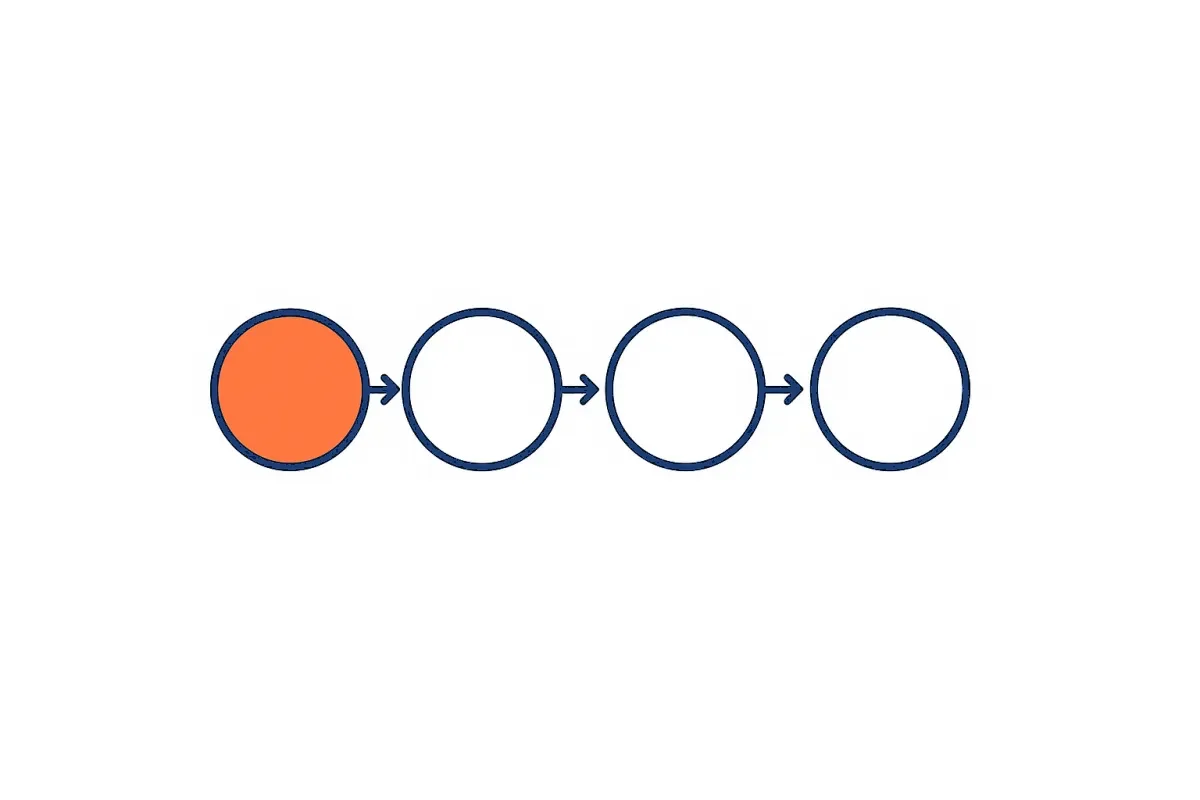
The order is not arbitrary. It follows the questions a buyer asks in the sequence they ask them, and each answer earns the right to the next.
Problem: is this about me? The first job of your messaging is recognition. The buyer should read your opening and feel mildly uncomfortable, because you have described their situation more precisely than they would have described it themselves. Not "companies today face increasing competition", which describes everyone and therefore no one. Something like "your managers were promoted for being excellent at the work, and now they are expected to lead the people doing it". A buyer who recognises themselves reads on. Nobody else needs to.
Outcome: what do I get? Once they have recognised the problem, they want to know what the other side looks like. State the changed situation in the buyer's terms, not the deliverable in yours. "A twelve-week programme with fortnightly sessions" is a deliverable. "First-time managers who can run a team review without you in the room" is an outcome. Deliverables answer a question the buyer has not asked yet.
Method: how does it work? Now, and only now, the thing you wanted to lead with. By this point the buyer is invested enough to care how you produce the outcome, and the method reassures them that the result is not luck. Keep it inspectable rather than impressive. A named method works when its job is to let a buyer see the steps before they buy, and fails when its job is to sound proprietary. On this site the method is called CLEAR, and every page describing how I work is written so a prospect can judge the thinking before paying for any of it.
Proof: why should I believe you? Last, because proof is worthless until the buyer wants the thing being proved. Case studies, specific patterns you have seen many times, the names of firms you have done this for, an honest account of what did not work. Proof placed first reads as boasting. Proof placed here reads as relief.
Most confusing B2B messaging is this exact sequence, reversed. Credentials, method, deliverables, and a problem statement so general it could belong to any firm in any industry. Turn it the right way up and the words barely change. The effect on the reader changes completely.
One Message Hierarchy, Every Channel

Firms do not usually have one messaging problem. They have four versions of themselves, on four surfaces, contradicting each other quietly.
The website says one thing. The LinkedIn headline says another, because it was written in 2019 for a business that has since moved on. The proposal template says a third, because it was inherited from a template the founder liked. And the founder himself says a fourth in meetings, which is usually the best of the four, because in a real conversation you cannot hide behind adjectives.
The fix is a hierarchy, not four documents. Write the message once at three lengths:
One sentence. The buyer, the problem, and the method in a form a stranger can repeat a week later. This is the same sentence your positioning work produced, and if you have not done that work yet, this is where you will discover it.
One paragraph. The sentence plus the outcome and one line of proof. This is the LinkedIn about section, the intro to a proposal, the answer to "so what do you people do?" at a wedding.
One page. The full order: problem, outcome, method, proof, with the detail a buyer needs before enquiring. This is your homepage and the opening of your capability document.
Every channel then uses one of the three, unchanged. LinkedIn is not a chance to say it differently; it is the paragraph. The proposal opens with the paragraph and then goes into the specifics of this client's situation. Nothing gets rewritten from scratch for a new surface, because rewriting is where the drift starts. Repetition feels tedious to the person writing it long before it becomes familiar to the buyer, and that gap is the trap. Say the same thing until you are bored of it, and then say it for another year.
The Founder Test: Can You Say It Out Loud Without a Script?
Here is the test I use, and it takes two minutes.
Ring someone intelligent who does not work in your industry. Your cousin, an old classmate, anyone who will be honest with you. Tell them what your firm does, without slides and without preparing. Then ask them to tell it back to you in their own words.
If what comes back is close, your messaging is sound and your only remaining job is to get it onto the page in that form. If what comes back is vague, or wrong, or is mostly your industry's vocabulary parroted without meaning, you have found the problem, and it is not on your website.
The reason this test works is that speech will not tolerate padding. You cannot say "end-to-end solutions leveraging deep domain expertise" out loud to your cousin without hearing how it sounds. Written copy hides that; the eye slides over an abstract phrase in a way the ear refuses to. This is also why I ask founders to read their homepage aloud before we change a word. The sentences you stumble over are the sentences that were never really saying anything.
The corollary is useful. The best raw material for your messaging is not a workshop. It is a recording of you explaining the business to a prospect who was genuinely interested, transcribed and lightly tidied. Founders solve their own messaging problem three times a week, verbally, and then go back to their desk and write something worse.
Keeping the Message Intact as Other People Write

A messaging framework that lives in the founder's head survives exactly as long as the founder writes everything. The moment a junior colleague, an agency, or a new head of marketing starts producing copy, the message begins to drift, one reasonable-sounding edit at a time.
Three things keep it intact, and they are all boring, which is why most firms skip them.
Write the framework down as a working document, not a slide. The one sentence, the paragraph, the page, plus the buyer's problem in the buyer's own words, gathered from real calls. Anyone writing anything starts here.
Keep a short list of words the firm does not use. Every services firm has a handful of phrases it reaches for when it has nothing to say: solutions, holistic, cutting-edge, world-class, passionate. Naming them makes them visible in a draft. On this site the banned list is enforced by a script, and the point is not the automation; it is that the decision was made once and does not get relitigated in every review.
Give one person the final read. Not for grammar, for order. The only question that reader is asking is whether this page opens with the buyer's problem or with us, and whether it says the same thing the other pages say.
When Better Words Will Not Help
There is a version of this problem that no framework fixes, and it is worth naming plainly, because I would rather tell a founder in the first meeting than after a rewrite.
Positioning is the decision about who you serve and why you win. Messaging is the language that carries that decision. If the decision has not been made, the language has nothing to carry, and every attempt to write it lands on the same three adjectives everyone else uses. This is the difference between messaging and positioning, and it explains why rewriting the words alone so often produces a page that sounds better for a month and then slides back.
You can tell the two apart quickly. If you can answer "which buyer, which problem, which method" in one breath, and the website still fails to say it, you have a messaging problem, and the order above will fix it. If the answer to that question changes depending on which client you are thinking of, the problem is upstream, and the honest next step is positioning rather than copy. The related question of what makes you the obvious choice within that position is differentiation, and it also has to be settled before the words can carry it.
Get the sequence right and the rest of the machinery has something firm to sit on: the content, the outreach, the whole system for getting clients beyond referrals works better when every part of it is saying one thing rather than five.
Does your messaging say what only you can say? Get in touch and send me three things: your homepage, your LinkedIn headline, and the last proposal you sent. I will tell you honestly whether the three say the same thing, and which order they should have been in.
Common questions
What is a messaging framework?
A messaging framework is the written hierarchy of what your firm says about itself: the problem you solve, the outcome you produce, how you work, and the proof, in that order. It exists so every page, proposal, and post says the same thing instead of each one improvising.
How is messaging different from positioning?
Positioning is the decision about who you serve and why you win; messaging is the language that carries that decision. Weak messaging is often a symptom of a positioning decision that was never made, which is why rewriting the words alone rarely fixes it.

Anoop Kurup
I'm a marketing consultant for B2B service firms in India. I fix the positioning, visibility, and lead generation behind weak sales. Before this: a research lab at GE, then patents and competitive strategy, then an intellectual-property firm I built and exited. I work with founders one engagement at a time from Bangalore.
More about meDoes your messaging say what only you can say?
This is the Clarify stage of the CLEAR method. Tell me what you're seeing in your pipeline. I'll tell you honestly if I can help, and where I'd start.
Get in touch