
How to Differentiate a B2B Services Firm
When prospects cannot tell you apart, they choose on price. Here is how a B2B services firm builds real differentiation, beyond claiming quality.
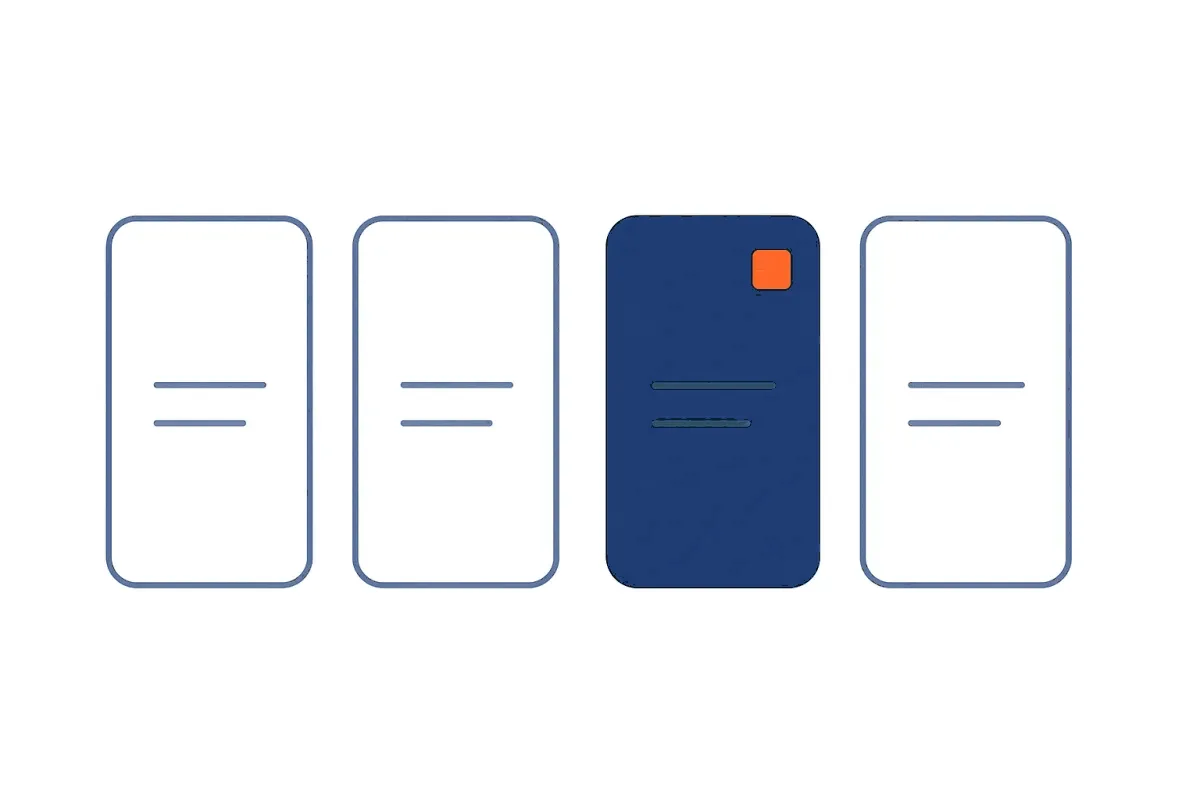
Here is a test I run in the first hour with a new client, and nobody enjoys it. I open their website and the websites of three competitors in four browser tabs, cover the logos, and ask the founder to point at their own firm.
About half the time they hesitate. More than once, a founder has pointed at a competitor. The copy is that interchangeable: "quality work", "experienced team", "client-first approach", "end-to-end solutions", a wall of client logos, a photograph of people gathered around a laptop. The firms are genuinely different. The founders know it, and the clients who have stayed for years know it. But nothing on the page carries the difference across to a stranger, and a stranger is exactly who a prospect is.
That is what "how to differentiate a B2B company" really asks. Not how to look different, which is a design problem, but how to be different in a way a buyer can see before they have paid you anything. When prospects cannot tell four firms apart, they do the only sensible thing available to them: they compare the one variable they can read, and that variable is the price. A firm nobody can tell apart is a line item.
The Sameness Test
The logo-swap test above is worth running on your own firm before anyone else does. Take your homepage copy and paste it onto a competitor's site in your head. Would their clients notice? Would yours?
If the answer is no, the problem is not your writing. Copy that could belong to anyone is usually describing a firm that has not yet decided how it is different. The words are vague in exactly the way the business is vague. You will see the same symptom in the sales conversation: the prospect nods through the pitch, asks for a proposal, then asks for a discount or goes quiet. Those are sales symptoms, but they have a marketing cause. The buyer was never given a reason to pay more for you, so they did not.
Why Quality, Experience, and Passion Differentiate Nothing
The three most common claims in B2B services are quality, experience, and passion, and all three fail the same test. The buyer cannot verify them before purchase, and every competitor makes them. A claim everyone makes is an entry requirement for the category, not a difference within it. Nobody chooses the restaurant that promises fresh ingredients, because every restaurant promises fresh ingredients.
Michael Porter's version of a differentiation strategy is simple enough to state in one sentence: charge more because buyers see a difference they value. The important word is "see". The difference has to exist in the buyer's view, before the engagement, not merely in your delivery afterwards. Your quality may be real. Your twenty years may be real. If the buyer cannot see them from outside, they do not count, and the firm charging less wins the comparison it never should have been in.
"Passion" is the weakest of the three because it cannot even be measured after purchase. It is a claim about how you feel, made to a buyer who is deciding how much to spend. It differentiates nothing, and it slightly undermines the rest of the page, because a firm that reaches for "passion" is telling the buyer it has run out of things to say.
Four Sources of Difference Competitors Will Not Copy

Real differentiation comes from decisions a competitor could copy but will not, because copying them costs something. That cost is the whole point. A difference that costs nothing is one every competitor can adopt by Monday, and by Tuesday it is table decoration again. For services firms in particular, I keep finding the durable differences in four places.
Who you refuse. A firm that takes every client is, by construction, like every other firm. The clearest differentiation strategy for services is a refusal: a defined type of work, or client, or engagement length, that you will not take. A training firm that refuses one-day workshops and only runs ninety-day programmes is instantly unlike the hundred firms that will do either. Competitors will not copy this because refusing revenue hurts this quarter, and most founders are not willing to pay that. Which is precisely why the ones who do stand out.
How you package. Most services firms sell time, scoped freshly for each prospect. A firm that sells a named, fixed-scope offer with a known process is selling something a buyer can compare against nothing else, because nothing else has that name. I have written about how to productise a service in detail; the differentiation point is simpler. Copying a package means re-engineering delivery, not rewriting a page, and that is more than a competitor will do to keep up with you.
What you guarantee. A guarantee is the one difference a buyer can read at a glance, because it moves risk from their side of the table to yours. It does not need to be a full refund on everything. The useful guarantees are specific and honest: if the diagnosis finds nothing worth fixing, the second phase is off; if the work is not delivered in six weeks, the seventh is on us. Competitors will not copy a guarantee unless they trust their own delivery to be consistent, and consistency needs a method, which brings us back to packaging.
What you publish. Buyers read before they call. A firm with a written, opinionated point of view on the buyer's problem is differentiated before the first meeting has been booked, because the buyer arrives already persuaded of how this firm thinks. Competitors will not copy a body of published thinking because it takes years, and because it requires an opinion, which is the one thing a firm that serves everyone cannot afford to have. It is also the most durable of the four, and the reason I keep telling consultants that writing is the lead generation channel they already own.
Notice what these four have in common, because it is also the honest answer to the disadvantages of a differentiation strategy. Each costs you something now: refused revenue, the effort of re-engineering delivery, the risk of a guarantee, the hours spent writing. That is why they work. You are buying a position competitors will not pay for.
Proving Difference Instead of Claiming It

Even a real difference reverts to a claim the moment it is stated as an adjective. "Rigorous" is a claim. The checklist your team runs before anything leaves the building, named and shown, is proof. "Experienced" is a claim. The specific pattern you have seen forty times, described in enough detail that the buyer recognises their own situation in it, is proof. The rule is simple to state and hard to follow: for every claim on your site, show the mechanism behind it, or delete the claim.
This is why a named method matters more to differentiation than most firms expect. On this site the method is called CLEAR, and its job is not to sound impressive; it is to let a buyer inspect how the work is done before deciding to buy it. A method is proof of process. Case studies are proof of outcome, and they only work as proof when they are honest, which is why the ones here are labelled as coming from past consulting engagements, with original numbers and nothing borrowed. And a small first engagement is proof of judgement: the one-week Pipeline Reality Check exists partly so a prospect can see the quality of the thinking before committing to anything larger.
A branding agency I worked with had this problem in its purest form. They sold distinctiveness for a living and had none of their own; four proposals in front of a buyer, all beautiful, all compared on price. The fix was not louder claims. It was a chosen niche, an offer framed as a business lever rather than decoration, and a focused diagnostic that let a prospect experience the thinking before paying for the full programme. The case is on this site, and the pattern in it is the whole argument of this article: they stopped asserting a difference and started demonstrating one.
When Differentiation Is Really a Positioning Problem
Some firms cannot answer "how do we stand out from competitors in B2B?" because it is the wrong question for them just now. Differentiation is relative. Different from whom, in the eyes of which buyer? A firm that has not chosen its buyer and its problem has no reference point, so every attempt to be different collapses into the same three adjectives, because "different from everyone" and "the same as everyone" read identically from outside.
The sequence has to run in order. First the position: which problem you solve, for which buyer, by which method, the three choices I set out in positioning for consulting firms. Then the differentiation choices within that position: what you refuse, how you package, what you guarantee, what you publish. Then the messaging, which carries the difference onto the page in a form a stranger can repeat. Firms that start at the third step, hiring a copywriter to make the page sound different, get a page that sounds different for about a month and then quietly slides back to "quality work", because the words had no decisions underneath them.
If the logo-swap test stung, the most useful next step is to work out which stage you are actually at. A firm with a clear position and a vague page has a differentiation problem, and the four sources above will fix it. A firm with a vague page and no chosen buyer has a positioning problem, and needs to go upstream first. Either way, the price objections and the silent proposals are symptoms. The cause sits in the marketing, and it is fixable, which is what a system for getting clients beyond referrals is built to do.
Sounding like every other firm in your market? Get in touch and send me your homepage and the homepages of two competitors. I will tell you honestly whether a stranger could tell you apart, and which of the four sources of difference I would start with.

Anoop Kurup
I'm a marketing consultant for B2B service firms in India. I fix the positioning, visibility, and lead generation behind weak sales. Before this: a research lab at GE, then patents and competitive strategy, then an intellectual-property firm I built and exited. I work with founders one engagement at a time from Bangalore.
More about meSounding like every other firm in your market?
This is the Clarify stage of the CLEAR method. Tell me what you're seeing in your pipeline. I'll tell you honestly if I can help, and where I'd start.
Get in touch