
How to Productize Your Service (Step by Step)
A productized service is easier to sell, price, and scale. Here is how to package what you do into one clear offer your firm can repeat.
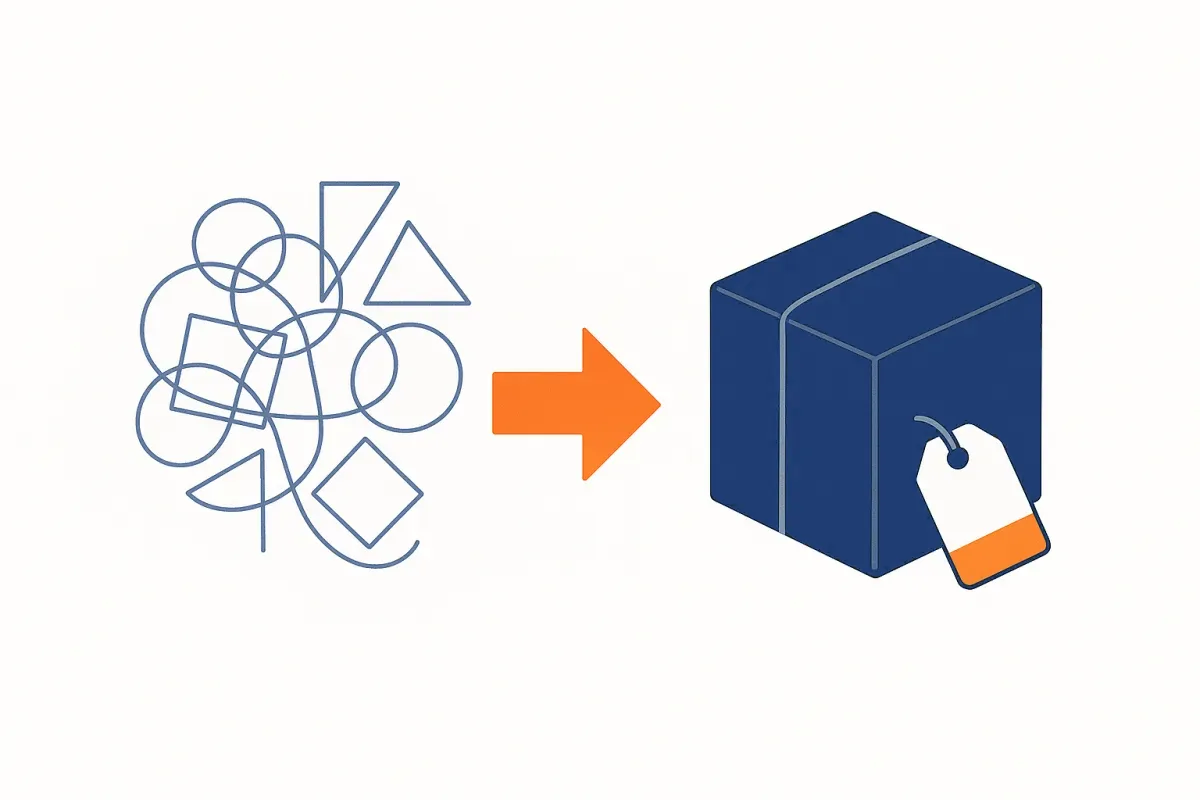
Here is a small test I run with service firm owners. I ask: "What exactly would I be buying if I hired you, and what does it cost?" Then I watch.
The answer almost always begins with "well, it depends". What follows is a five-minute tour of everything the firm can do, ending with an offer to "have a conversation and put together a proposal". Which sounds reasonable, until you realise the prospect has just been told: we will invent your engagement from scratch, and you will find out the price at the end.
Every part of that firm's life is harder because of this. Selling is hard, because there is nothing specific to say yes to. Pricing is hard, because every price is a fresh negotiation. Delegating is hard, because every project is a new invention. When people ask me where to start fixing sales, my answer is very often not in sales at all. It is here: productise one service. Package one piece of what you do into a named offer with a fixed scope, a defined outcome, and a stated price.
(A note on the word: the spelling on this page's signboard is "productize", because that is how the world searches for it. In my writing it is productise, and in your business it will simply be "the offer".)
Why Bespoke-Everything Keeps You Stuck
Custom work feels like the premium position. Every client is unique, so surely tailoring everything is what excellence looks like. But look at what bespoke-everything actually does to the machinery of the firm.
Every sale becomes a consulting project you do free of charge. Because nothing is defined in advance, each prospect requires discovery calls, a custom-written proposal, and rounds of negotiation over scope you have re-invented for the occasion. Two or three weeks of unpaid effort per deal, and none of it reusable. Firms in this pattern can spend a quarter of their senior time selling, and feel busy rather than notice it.
Nothing compounds. When every project is different, the hundred projects behind you are anecdotes rather than an asset. No repeatable method hardens out of the work, no junior can be trained on "it depends", and no case study quite describes what the next client will get. The firm gets older without getting easier to run.
And word of mouth garbles. A happy client of a bespoke firm says "they're good, talk to them", which is pleasant and almost useless. A happy client of a productised firm says "they have this programme, it took ninety days, it fixed our pipeline, it cost this much". One of these sentences sells while you sleep. The difference is not the client's enthusiasm; it is that you gave one of them something repeatable to say. Referrals, incidentally, are how most of these firms survive at all, and I have written about what that dependence costs.
The deepest cost is that bespoke-everything keeps the founder personally inside every sale and every delivery, because only the founder can invent the engagement each time. If that trap sounds familiar, it has a chapter of its own.
The Anatomy of a Productised Offer
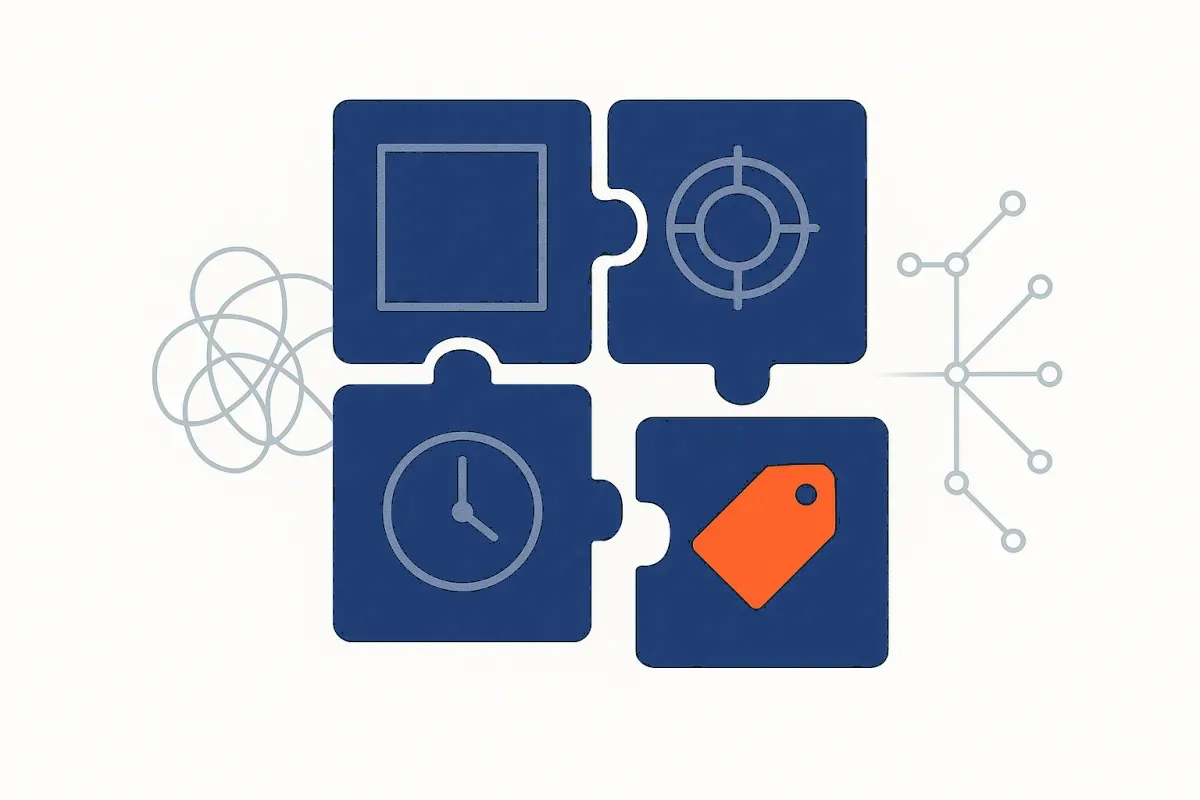
A productised service is defined by four commitments, made in advance, in writing.
Scope: what is included, and, just as importantly, what is not. "A positioning audit covering your offer, your last twenty proposals, and interviews with five clients" is scope. "We'll help with your positioning" is weather.
Outcome: what the client holds at the end. A report they act on, a system running, a decision made with confidence. Buyers of services are not buying your activity; they are buying the state of affairs after your activity. Name it.
Price: stated, not discovered. A number, or a narrow band, that a prospect can see before they have spent an hour with you. This terrifies bespoke firms and is precisely the point: a stated price filters out the wrong buyers and signals that this engagement is a shaped thing that has been run before, not an experiment.
Timeline: how long it takes. Two weeks, six weeks, ninety days. A defined duration tells a buyer this is a bounded commitment rather than an open-ended relationship with a consultant's meter running.
Scope, outcome, price, timeline. On one page. The one-page constraint is not cosmetic; if the four answers cannot fit on a page, they have not been decided yet, and the page is where you find that out.
Finding the One Offer to Lead With
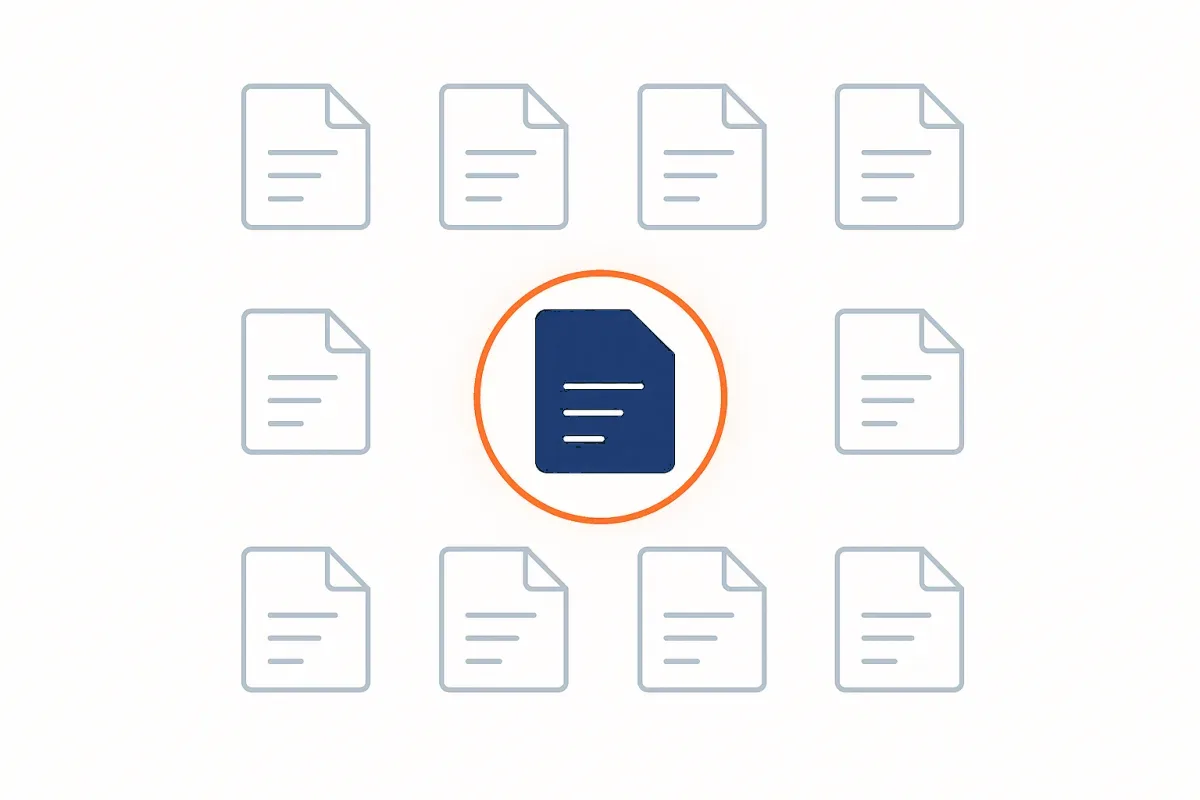
The obvious objection: "we do fifteen things, which one do we package?" You are not choosing your favourite. You are looking through your own history for the one engagement where the evidence already points, and the evidence has three tests.
You have done it repeatedly and well. Somewhere in your delivery history is a type of project you have quietly run eight or ten times, with a method that has hardened through repetition, even if it has never been written down. Repetition is the raw material of productisation; you are packaging proof, not a hope.
Clients visibly valued it. Which past projects did clients rave about, renew after, refer from? Value the client could feel is what makes an outcome sellable to the next client.
The problem it fixes is common and expensive. A packaged offer works when many organisations share the problem and the problem costs them enough that a stated price looks small beside it. Rare problems and cheap problems both make poor anchors.
Run your history through those three tests and the shortlist is usually two or three candidates, and often one. Pick it and resist the committee urge to make the offer broader "so we don't lose anyone". A packaged offer is a spearhead. Its narrowness is the feature. Clients who need other things will still find you; they will arrive through the sharp thing, then discover the rest, and the sharp thing is also what gives your lead generation something concrete to point at.
Naming and Pricing It So It Sells Itself
An offer that "sells itself" is simply one where the prospect can grasp what it is, believe it works, and see the price, without you in the room. Two decisions do most of that work.
The name should say what the buyer gets, not celebrate your cleverness. "The Pipeline Reality Check" tells a founder exactly what they are buying. Plain, descriptive names outsell clever ones because a buyer repeats them accurately to a colleague, and in B2B the colleague is usually part of the decision. The test of a good name is whether a client can relay it, correctly, to someone who was not in the meeting.
The price should be anchored to the outcome and stated with a straight face. Price the problem, not your hours: an engagement that reliably fixes something costing a firm ₹50 lakh a year is not expensive at ₹5 lakh, and hourly arithmetic will only talk you down from what the outcome is worth. State the number plainly, in writing, without apology. Firms are consistently surprised by how much friction disappears at this step alone, because half the exhaustion of bespoke selling was the negotiation ritual, and a stated price simply deletes the ritual.
One caution: a packaged offer is a promise of consistency, so only package what you can deliver consistently. The offer is a claim that this engagement has a shape you have mastered. Make the claim true.
When to Stay Custom, and When That Is an Excuse
Productisation is not a religion, and some work genuinely should stay bespoke. Deals where the client is buying your personal judgement on a novel, high-stakes problem. Engagements too large and entangled to pre-scope honestly. New kinds of work you have only done twice, which have not yet earned a package. Keeping this work custom is right, and it will price accordingly.
But be honest about the ratio, because "our work is too custom to package" is the most common self-flattery in professional services. In most firms claiming it, seventy percent of revenue comes from engagements that rhyme heavily with each other and are re-invented each time out of habit, not necessity. The bespoke label protects the founder's self-image as an artist while quietly taxing every sale the firm makes.
The workable structure for most B2B service firms is a productised front door and a custom back room. One packaged offer that is easy to find, easy to grasp, and easy to buy; and behind it, the deeper custom work for clients whose situation genuinely demands it, most of whom arrived through the front door. The package is not a limit on the firm's sophistication. It is the mechanism by which strangers become clients, and it is one of the five parts of a working client acquisition system.
If you are not sure whether your offer is the weak link in your sales, get in touch and tell me what you are seeing. I will tell you honestly whether the first thing to fix is your offer, your pipeline, or something else entirely.
Common questions
What is a productized service?
A service packaged like a product: a named engagement with a fixed scope, a defined outcome, a stated price, and a set timeline, all decided in advance and written on one page. Buyers can understand it, compare it, and say yes to it without a bespoke proposal cycle.
Can consulting really be productized?
Most of it, yes. Look at your delivery history: the engagements you have quietly run eight or ten times already have a repeatable shape, and that is what you package. Genuinely novel, high-stakes advisory work stays custom, and usually arrives through the packaged offer that made strangers trust you.

Anoop Kurup
I'm a marketing consultant for B2B service firms in India. I fix the positioning, visibility, and lead generation behind weak sales. Before this: a research lab at GE, then patents and competitive strategy, then an intellectual-property firm I built and exited. I work with founders one engagement at a time from Bangalore.
More about meIs your offer clear enough to repeat?
This is the Lead stage of the CLEAR method. Tell me what you're seeing in your pipeline. I'll tell you honestly if I can help, and where I'd start.
Get in touch