
How to Stop Relying on Referrals for Clients
Referrals feel free but leave your pipeline at the mercy of other people. Here is how B2B service firms build a system that produces clients on purpose.
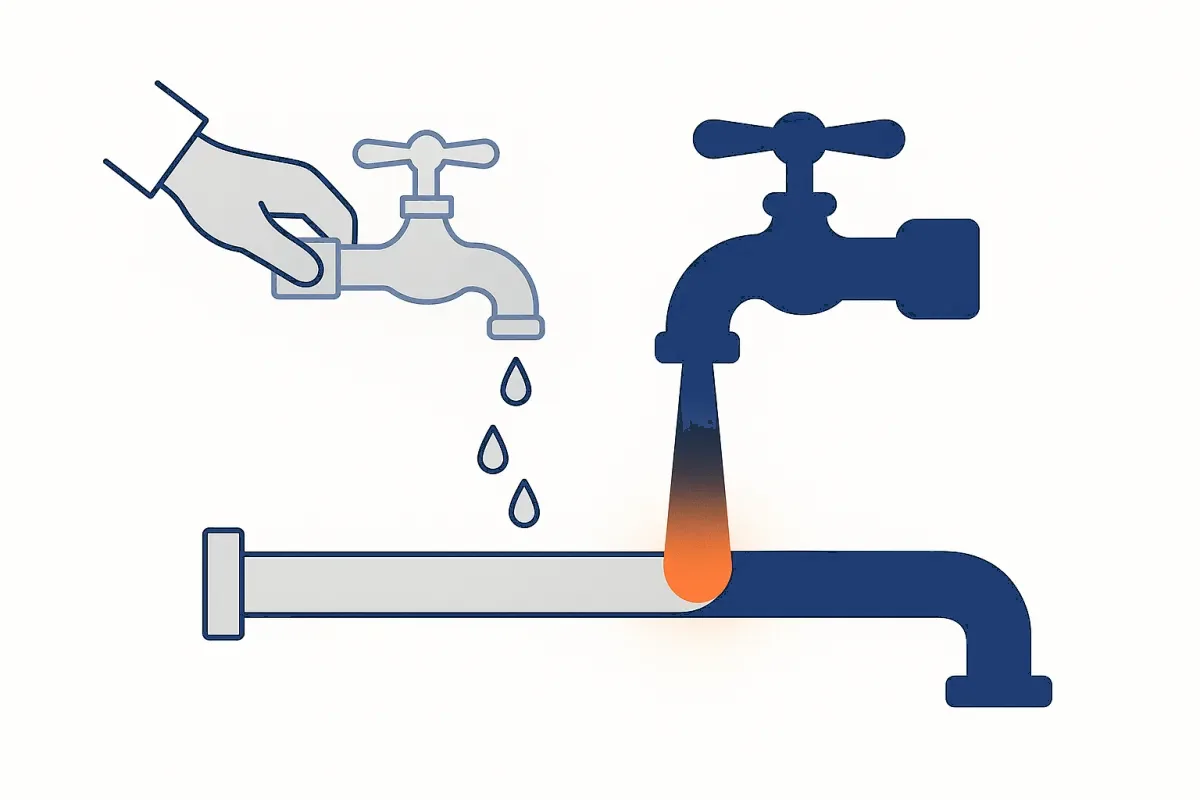
Ask the owner of any B2B service firm where their last five clients came from, and you will usually get the same answer delivered with a small amount of pride: referrals. Someone knew someone. A past client made an introduction. A friend from an old job passed the name along. The work arrived, the invoices went out, and nobody had to do anything that felt like selling.
I ran an intellectual property firm for years, and for a long stretch it worked exactly this way. Clients arrived through introductions, the work was good, and I told myself the model was proof of quality. It took a slow quarter to teach me what it was actually proof of: I had no way to make a client appear. I could only wait for one.
That is the position most referral-run firms are in, whether they can feel it yet or not. This article is about how to get out of it. Not by abandoning referrals, which would be foolish, but by building something alongside them that you control.
The Feast-or-Famine Cycle Every Referral-Run Firm Knows
The pattern is so common it is almost a law. Work arrives, so you deliver. Delivery consumes every working hour, so nobody is out meeting prospects or publishing anything or following up with old conversations. Three months later the projects end, the pipeline is empty, and suddenly the founder is scrambling: emailing old contacts, discounting to close whatever is nearby, taking projects that are too small or a poor fit.
Then a referral lands, the relief is enormous, and the cycle starts again.
Notice what the cycle does to your decisions. In the famine phase you say yes to work you should refuse, at prices you should never accept, because an empty pipeline removes your ability to choose. The cost of referral dependence goes deeper than unpredictable revenue: every negotiation happens from weakness. A prospect does not need to know your pipeline is empty; they can hear it in how quickly you concede.
And the cruel part is that the famine was caused by the feast. The busier the good months, the emptier the months that follow, because all the activity that produces future clients stopped. Any fix has to break that link, which is why the answer is a routine that runs in small, protected amounts of time every week, not a heroic burst of marketing whenever things look thin. I have written separately about what referral dependence quietly costs a firm; here I want to focus on the way out.
Referrals Feel Free. What They Actually Cost Is Control

A referral costs nothing in cash, which is why it feels free. What it costs is control, and control is the more expensive of the two.
Think about what you control in a referral: nothing. You do not control when it arrives. You do not control who it brings; the client who loved your ₹2 lakh project will happily refer you a ₹50,000 one, because from the outside the work looks the same. You do not control what the prospect was told about you, so you inherit whatever framing your referrer improvised. And you cannot turn the tap up. If you need three new clients this quarter, there is no amount of referral you can go and do.
Compare that with any channel you run yourself. It might convert worse than a warm introduction, and it will certainly cost more effort. But you decide when it runs, who it targets, and what it says. When it slows down, you can see why and fix it. A referral pipeline that slows down offers you nothing to fix. It is a black box owned by other people.
There is a simple test I ask people to try. Suppose you needed one new client to start within sixty days. Write down, specifically, what you would do tomorrow morning. If the honest answer is "email a few old clients and hope", you do not have a pipeline. You have a lottery ticket that has been paying out often enough to feel like a salary.
The Three Things a Referral Carries, and How to Rebuild Each One
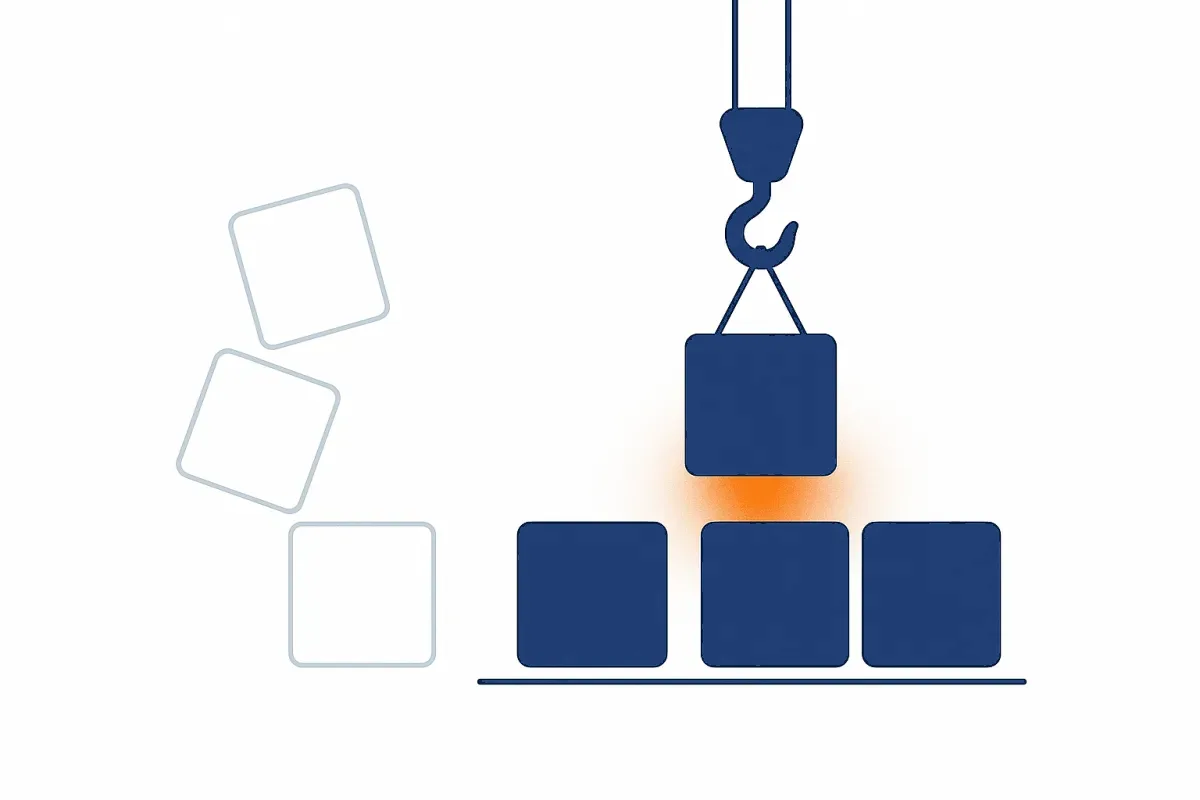
Here is the useful way to think about referrals: a referral is not magic. It is a bundle of three specific advantages, and each one can be rebuilt deliberately.
The first is trust. A referred prospect arrives believing you are competent, because someone they trust vouched for you. You can rebuild this in the open market with proof: written case studies with real numbers, work you have published that demonstrates judgement, and a clear record of who you have helped and how. Trust built this way is slower than a friend's word, but it scales, and it works on strangers.
The second is timing. Referrals often arrive at the right moment because the prospect mentioned a problem and your name came up in response. You rebuild timing with consistency. You cannot know when a prospect's problem becomes urgent, so the only reliable tactic is to be visible every week, so that when the moment comes, you are the name already in the room. This is what a publishing routine and a follow-up list actually do. They are not "content marketing"; they are a way of being present when timing turns.
The third is framing. A referrer says "she fixed exactly this problem for us", and the prospect arrives pre-framed to see you as the answer. You rebuild framing with positioning: one clearly named problem, for one clearly named kind of client, with a clearly described way of fixing it. Most firms cannot state this in one sentence, which is why their outreach reads as "we do many things for anyone". A referrer never sells you that way. Learn from what they do and package the problem, not the profession.
Trust, timing, framing. Every marketing activity you might consider either strengthens one of these or is decoration.
What a System Adds. Note: On Top of Referrals, Not Instead of Them
I want to be precise here, because "stop relying on referrals" is often misread as "stop taking referrals", which would be daft. Referred clients are usually your best clients. Keep them. The goal is to stop depending on them, which means building a second source of clients that runs on effort you control.
A working system for a B2B service firm is smaller than most people fear. It has four parts.
One packaged offer. A single, clearly scoped way to start working with you, with a defined outcome and a stated price. This is the thing your outreach points at and your referrers describe without mangling. If everything you sell is bespoke, every sale is a long negotiation from scratch, and no message can be repeated. If this is your gap, productising one service is where to begin.
A named list. The fifty to two hundred organisations that actually fit your offer, written down, with the person you would speak to. Not a vague market; a list. The discipline of writing it forces the positioning question most firms have been avoiding.
A weekly rhythm. A fixed, small block of time each week in which pipeline work happens regardless of how busy delivery is: conversations started, follow-ups sent, something useful published. Two or three hours, protected like a client meeting. This single habit is what breaks the feast-or-famine link, because the client-producing activity no longer stops when the work arrives. What that rhythm should contain differs by firm, and I have written more on lead generation that fits a consultant's week.
Proof that compounds. Each finished project should produce an artefact: a case study, a documented result, a lesson written up. Referral-run firms finish projects and keep nothing but the invoice. Firms with a system turn every engagement into material that makes the next sale easier.
These four parts connect into something larger, and I have laid out the whole of it in one place: the client acquisition system as I build it with firms. But you do not need the whole machine on day one. You need the parts above, running weekly, for long enough to compound.
A 30-Day First Step That Does Not Require Luck
Grand plans fail on contact with a busy delivery schedule, so start with a month, structured like this.
In week one, write the list. Fifty organisations that fit the work you most want to do, with a named person for each. You will discover, painfully, how sharp or blurry your positioning really is. That discovery alone is worth the week.
In week two, package one offer. Take the engagement you deliver best and give it a name, a scope, an outcome, and a price. One page. It does not need to be perfect; it needs to be repeatable.
In week three, book your rhythm. Choose the two-hour block, put it in the calendar as recurring, and treat it with the same respect you give a paying client. Use the first sessions to start ten conversations from your list. Not pitches; genuine, specific messages about a problem you can see they might have.
In week four, write one piece of proof. A single case study from a past engagement, with the situation, what you did, and what changed, in numbers where you have them.
Do that for thirty days and you will not have transformed the business. You will have something better: the first month of a pipeline you own, and a clear view of what to strengthen next. Referrals will keep arriving, and you will be delighted to take them. You will just no longer be waiting for them.
If you want to know exactly how dependent your pipeline is today, get in touch and tell me what you are seeing. I will give you an honest read, and the one thing to fix first.
Common questions
Are referrals bad for a consulting business?
No. Referred clients are usually your best clients: pre-sold, trusting, and easy to start with. The problem is depending on them, because you control neither their timing nor their fit. Keep taking referrals; build a deliberate channel alongside them so a quiet month is an inconvenience, not a crisis.
How do I get clients without relying on referrals?
Build the parts a referral gives you for free: trust, timing, and framing. Package one clear offer, write a named list of organisations that fit it, publish something useful weekly, and reach out directly in small, researched batches. Two to three protected hours a week, sustained, is enough to start.
How long does it take to reduce referral dependency?
Expect the first non-referral conversations within a month of starting a weekly rhythm, and the first closed client within one to two quarters, since B2B service sales decide slowly. Meaningful independence, where referrals are a bonus rather than the whole pipeline, typically takes six to twelve months of consistency.

Anoop Kurup
I'm a marketing consultant for B2B service firms in India. I fix the positioning, visibility, and lead generation behind weak sales. Before this: a research lab at GE, then patents and competitive strategy, then an intellectual-property firm I built and exited. I work with founders one engagement at a time from Bangalore.
More about meWant to know how dependent your pipeline really is?
This is the Clarify stage of the CLEAR method. Tell me what you're seeing in your pipeline. I'll tell you honestly if I can help, and where I'd start.
Get in touch