
The Founder-Led Sales Trap (and How to Escape)
When you are the only one who can close, growth stops the moment you get busy. Here is how to get out of founder-led sales without losing the magic.
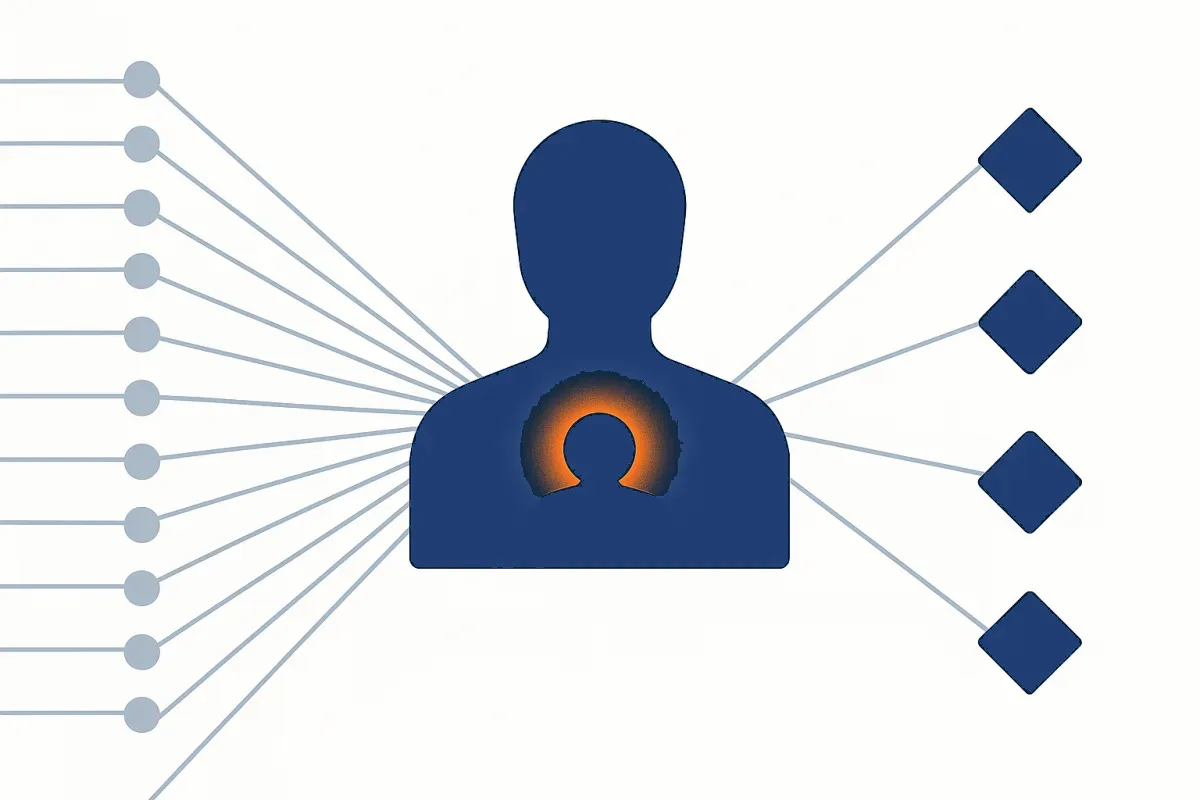
There is a particular moment I have seen in dozens of B2B service firms, and lived in my own. The founder comes out of a sales meeting that went well, as their sales meetings usually do, and says some version of: "See, when I'm in the room, we win. I just can't be in every room."
They say it as a complaint about time. It is actually a diagnosis of the business. A firm where sales only works when the founder does it has a ceiling built into its foundations, and the ceiling is the founder's calendar. This is the founder-led sales trap: the thing that built the firm quietly becomes the thing that stops it growing.
The trap is escapable. But the escape is widely misunderstood, because the standard advice, "hire a salesperson", skips the step that makes hiring work. Let me take it in order.
Founders Close Better Than Anyone. That Is Exactly the Problem
First, credit where it is due. Founder-led sales is not a weakness in the early years; it is the reason the firm exists. Nobody sells the work like the person who invented it. The founder carries total command of the subject, genuine conviction, the authority to reshape the offer mid-meeting, and the scars of every past project. Prospects can feel all of it. That is why founders routinely close at rates no hired salesperson will ever match.
Now watch what this excellence does to the firm over time. Because the founder closes so well, every serious prospect gets routed to the founder. Because every prospect routes to the founder, no one else in the firm ever practises selling. Because no one else can sell, the firm's revenue is capped at however many sales conversations one busy person can fit around delivery, hiring, and everything else. The better the founder is at sales, the more completely the firm depends on them, and the harder the eventual problem becomes.
You can see the trap most clearly in the rhythm of revenue. When the founder has time to sell, the pipeline fills. When delivery gets heavy, selling stops, and three months later revenue dips, which sends the founder scrambling back into sales. The firm does not really have a sales function. It has a founder with a queue, and the queue is often part of the same feast-or-famine cycle that referral dependence creates.
Here is the question worth sitting with: how much of what makes you good in that room is genuinely you, and how much is knowledge that has simply never been written down? In my experience the honest split is about twenty-eighty. And the eighty can be transferred.
The Three Things Locked Inside the Founder's Head
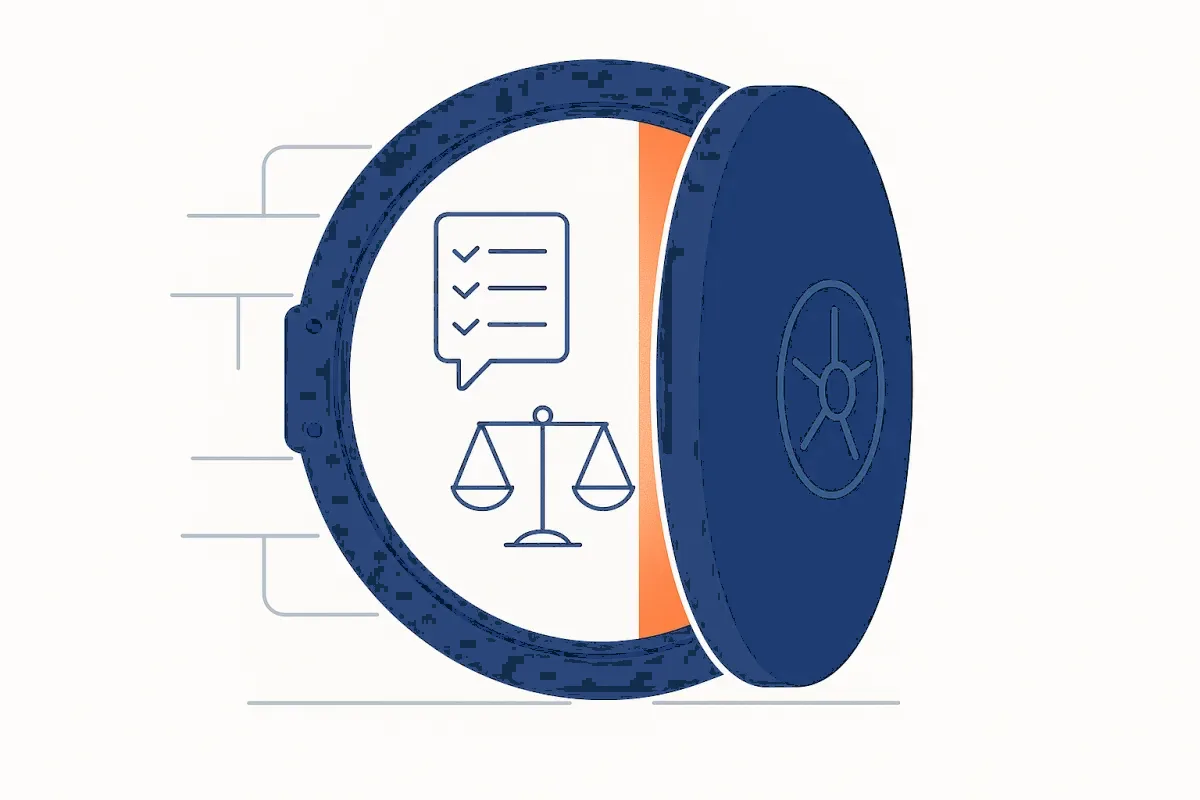
When I sit with a founder and pull apart what actually happens in their sales conversations, the "magic" reliably decomposes into three bodies of knowledge that exist nowhere except behind their eyes.
The first is pattern recognition on prospects. Within ten minutes of a first call, the founder knows whether this one is real: whether there is budget, whether the person talking can actually decide, whether the problem is urgent or merely interesting. They are running an evaluation checklist they have never articulated, built from a hundred old conversations. Nobody else in the firm has the checklist, so nobody else can be trusted to qualify, so every enquiry lands on the founder. The queue starts here.
The second is the story of the work. Founders do not describe their service in meetings; they narrate it. The client whose situation looked just like this prospect's. The engagement that nearly went wrong and what it taught them. The specific numbers from a project three years ago. These stories carry the proof and the credibility, and they live entirely in memory. When anyone else in the firm describes the service, it comes out as a features list, because the stories were never captured.
The third is judgement on shaping the deal. What to include, what to refuse, when to hold price and when to flex scope, which client requests are reasonable and which predict a nightmare engagement. This is the knowledge that turns a conversation into a sensible commercial agreement, and it is also the reason founders fear delegating sales: they assume the judgement cannot be transferred. Most of it can. Judgement is only pattern recognition plus values, and both can be written down to a far greater degree than founders believe.
Trapped knowledge, in all three cases. Not talent. The distinction matters, because knowledge can be extracted, and extraction is the actual escape route.
Document the Sale Before You Delegate It

The standard escape attempt goes like this: the firm hires an experienced salesperson, hands them the leads, and waits. Six to nine months later the salesperson has closed little, everyone is frustrated, and the founder concludes that "sales just can't be delegated in our business". The salesperson leaves, at the cost of a year and several lakh in salary, and the founder returns to the queue with their belief confirmed.
The conclusion is wrong. The sequence was wrong. The firm delegated a job that had never been defined, and no hire can execute an undocumented process that lives in someone else's head.
So the real first step costs nothing and requires no hiring: document your own sale. After each of your next ten sales conversations, spend fifteen minutes writing down what happened. What did you ask early, and what were you listening for? Which questions did the prospect ask, and how did you answer? Which story did you tell, and why that one? Where did you sense the decision actually turning? What made you quote the price you quoted?
Ten conversations is usually enough for the shape to emerge, because your sale is far more repeatable than it feels from inside. The same six or seven prospect questions keep coming. The same three stories keep doing the convincing. The same few signals keep separating real buyers from browsers. What felt like improvisation is revealed to be a process you have been running from memory for years.
Write it as four short documents: the qualification checklist, the questions and your best answers, the stories with their numbers, and the deal rules, covering what you flex and what you never flex. Half a day of writing, all told. This becomes the firm's sales playbook, and it changes what is possible next. One thing that makes every one of these documents dramatically shorter, incidentally, is a productised offer: a sale with a defined scope and price needs far less judgement per deal, which is precisely why packaged offers are easier to hand over.
The First Sales Routine You Can Actually Hand Off
With the playbook written, resist the urge to hire a closer and hand over everything. Delegation works in stages, from the edges of the sale inward.
Start with qualification. The playbook's checklist lets someone else, an operations person, a sharp analyst, a junior you trust, take every first call. Their job is not to sell anything; it is to sort. Real prospects, with budget and authority and urgency, get scheduled into the founder's calendar with a one-page brief. The rest get a polite no or a referral elsewhere. This single change typically recovers a third of the founder's selling time, because founders spend a shocking share of their sales hours discovering that a prospect was never a prospect. Being selective this early also improves the pipeline itself; qualifying out fast is a feature of good lead generation, not a loss.
Then hand over follow-up. Most deals in B2B services are not lost in meetings; they are lost in the silence after meetings, when the founder gets pulled into delivery and the proposal sits unanswered for three weeks. A routine where someone else owns the cadence, sends the follow-ups, books the next step, and keeps the file moving, is entirely learnable from a playbook, and it stops the leak that founders never see because they are the ones causing it.
Only then, months later, comes shared presence in the room itself: your deputy joins your meetings, then runs the standard parts while you handle the turning points, then runs smaller deals end to end against the playbook. Each stage builds on evidence from the last. At no point have you performed the leap of faith that fails, handing the whole sale to a stranger on day one.
What Stays Yours Forever
Full honesty requires saying this clearly: you will never delegate all of it, and you should not try.
The largest deals will always want the founder in the room, because at a certain size clients are buying you, and pretending otherwise is bad business. New offers need the founder to sell them first, ten or twenty times, because those early conversations are where the offer gets sharpened; nobody can document a sale that has not been figured out yet. And the standards, meaning what the firm will and will not promise, what price integrity means, which clients to refuse, are set by the founder for as long as the founder is in the building.
Escaping the trap was never about removing yourself from sales. It is about reserving yourself for the fraction of selling that genuinely requires you, and building a system that runs the rest. The founder as the firm's closing weapon is a strength. The founder as the firm's only working part is the trap; and the same logic extends beyond sales to the whole of how the firm wins its clients.
If you want to know how much of your sale currently depends on you alone, get in touch and tell me what you are seeing. The founders with the most to gain are usually the ones who suspect they are the bottleneck and would rather find out than keep wondering.

Anoop Kurup
I'm a marketing consultant for B2B service firms in India. I fix the positioning, visibility, and lead generation behind weak sales. Before this: a research lab at GE, then patents and competitive strategy, then an intellectual-property firm I built and exited. I work with founders one engagement at a time from Bangalore.
More about meFind out how much of your sale only you can do.
This is the Clarify stage of the CLEAR method. Tell me what you're seeing in your pipeline. I'll tell you honestly if I can help, and where I'd start.
Get in touch