
Lead Generation for Consultants & Service Firms
Most lead-generation advice is built for SaaS, not consultants. Here is how B2B service firms generate qualified leads that actually convert.
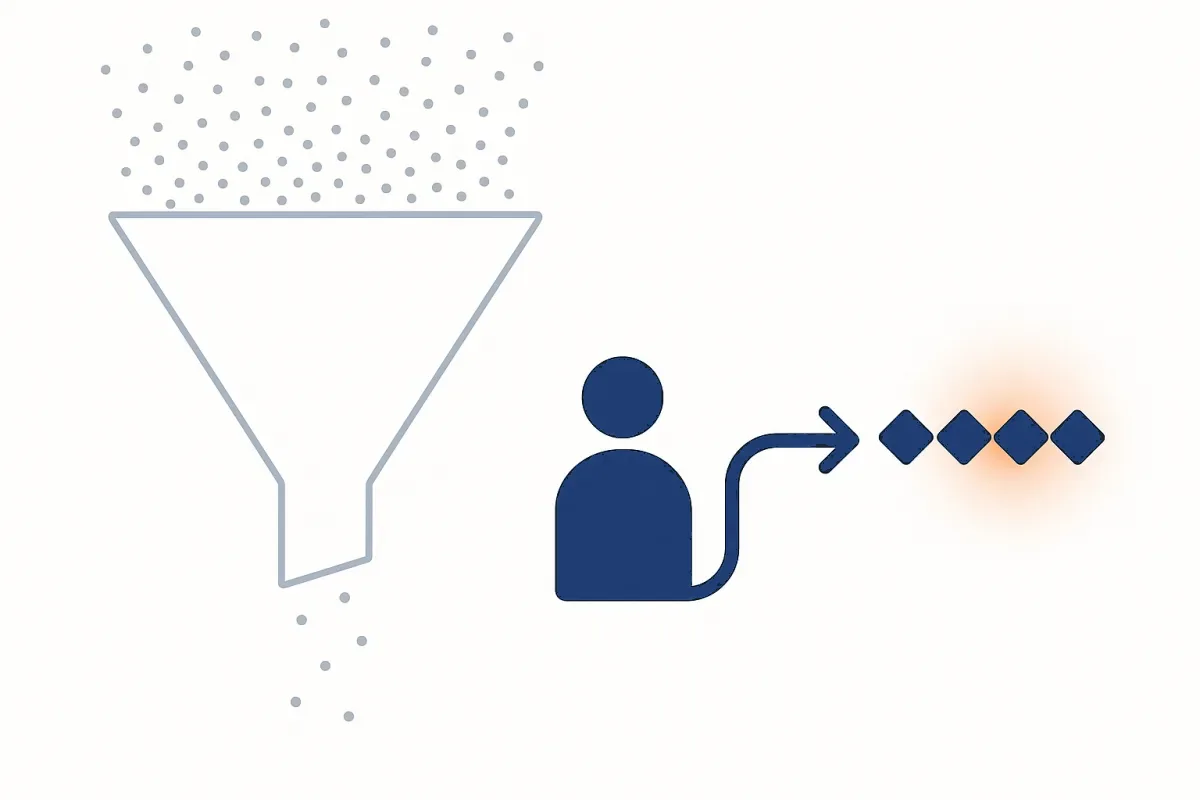
Search for lead generation advice and you will drown in it. Build a funnel. Run ads to a webinar. Gate an ebook. Score the leads, nurture them with an email sequence, and hand the "marketing qualified" ones to sales.
Now try to find the consultant or agency owner for whom any of that has actually worked. I have been in and around this problem for two decades, first selling intellectual property services, now fixing sales for B2B service firms, and I can count those people on one hand with fingers to spare.
The advice is not wrong. It is written for a different business. When a fifty-person SaaS company follows that playbook, it works, because the playbook was built for them. When a five-person consulting firm follows it, they spend six months and a decent amount of money building machinery designed for a volume of demand that does not exist in their market. This article is about what to do instead.
Why SaaS Lead-Generation Playbooks Fail Consultants
Look at the economics the standard playbook assumes. A SaaS product sells to thousands of customers at a low price. Losing any single lead costs almost nothing, so the whole machine is built for volume: cast wide, capture cheaply, let automation sort the pile. A two percent conversion rate on a big enough pile is a business.
A consulting firm sells to perhaps ten or twenty clients a year at ₹5 lakh or ₹50 lakh each. There is no pile. There is a small number of organisations that could ever buy from you, and each one decides slowly, on trust, usually after speaking with you several times. Volume tactics do not merely underperform in this setting; they actively damage it, because the wide-net behaviour that fills a SaaS funnel reads as spam to the two hundred people whose respect you actually need.
There is a second, quieter mismatch. The SaaS playbook assumes a marketing team runs it. In a service firm the founder runs it, in the gaps between delivery. Any lead generation approach that needs daily tending, ad budget management, and a content production line will be abandoned within a quarter. I have watched it happen dozens of times, and the failure always gets blamed on discipline when the real culprit was the design.
So discard the borrowed playbook. The right question is not "how do we generate more leads?" It is "how does a firm that needs fifteen good clients a year, with only the founder's part-time attention, produce them on purpose?"
The Only Two Leads That Matter
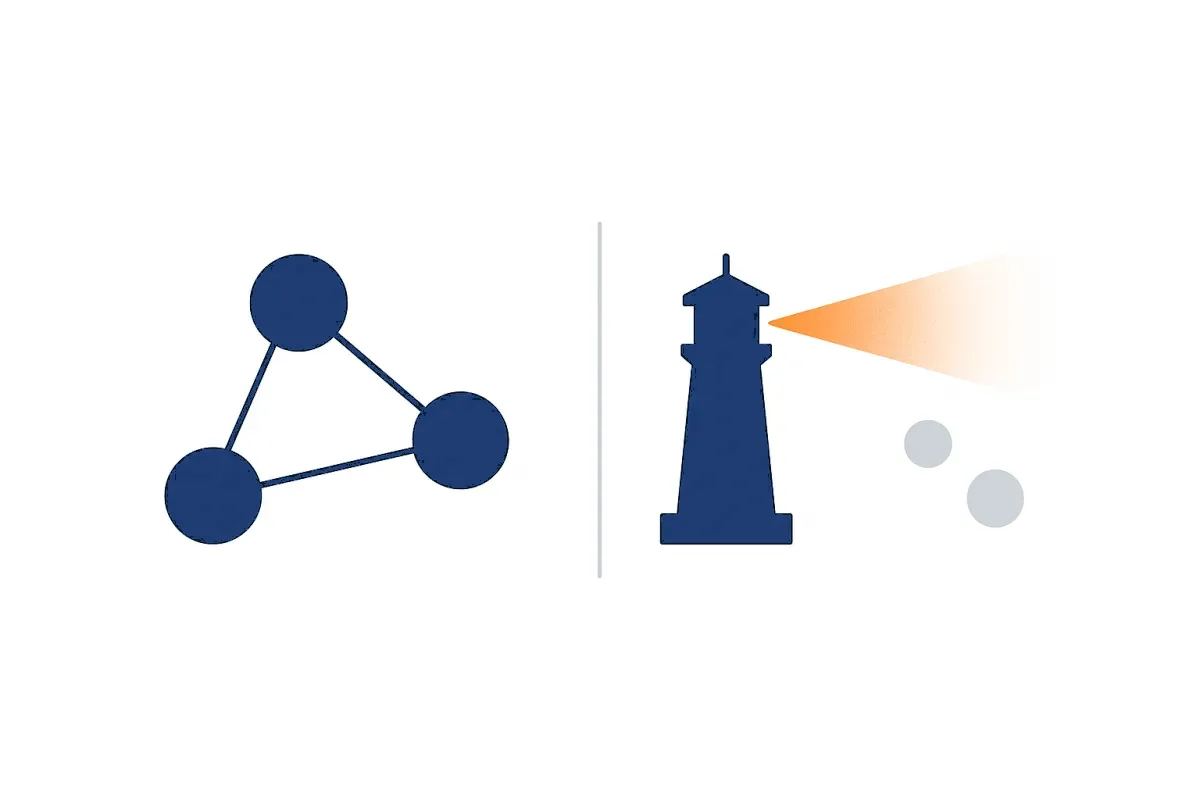
For a high-trust service sale, leads come in exactly two kinds worth having.
The first is the introduction-ready lead: someone reachable through a real, warm path. A past client, a former colleague, someone in your network who knows the person you want to meet. These convert at rates no cold channel will ever touch, because trust arrives with the introduction. Most firms treat these as luck. They are not luck; they are an asset you can work systematically, by mapping who you know, who they know, and asking well.
The second is the problem-aware lead: someone who has realised they have the problem you fix and is actively looking at it. They found your article, heard you speak, or saw a case study that described their situation with uncomfortable accuracy. They arrive partly sold, because the material did the early selling before you ever spoke.
Everything else, the scraped lists, the bought databases, the "grow your network" connection blasts, produces a third kind: the contact who neither knows you nor knows they have the problem. Converting these requires enormous effort per lead, which is precisely the effort a founder does not have. The volume playbook exists to process this third kind. Refuse to play it, and the machinery you no longer need is most of the machinery you were told to build.
Your entire lead generation effort, therefore, has two jobs: work the warm paths deliberately, and make yourself findable and credible to people who are becoming problem-aware. That is all.
Channels That Fit a Founder's Week, Not a Marketing Team's Budget
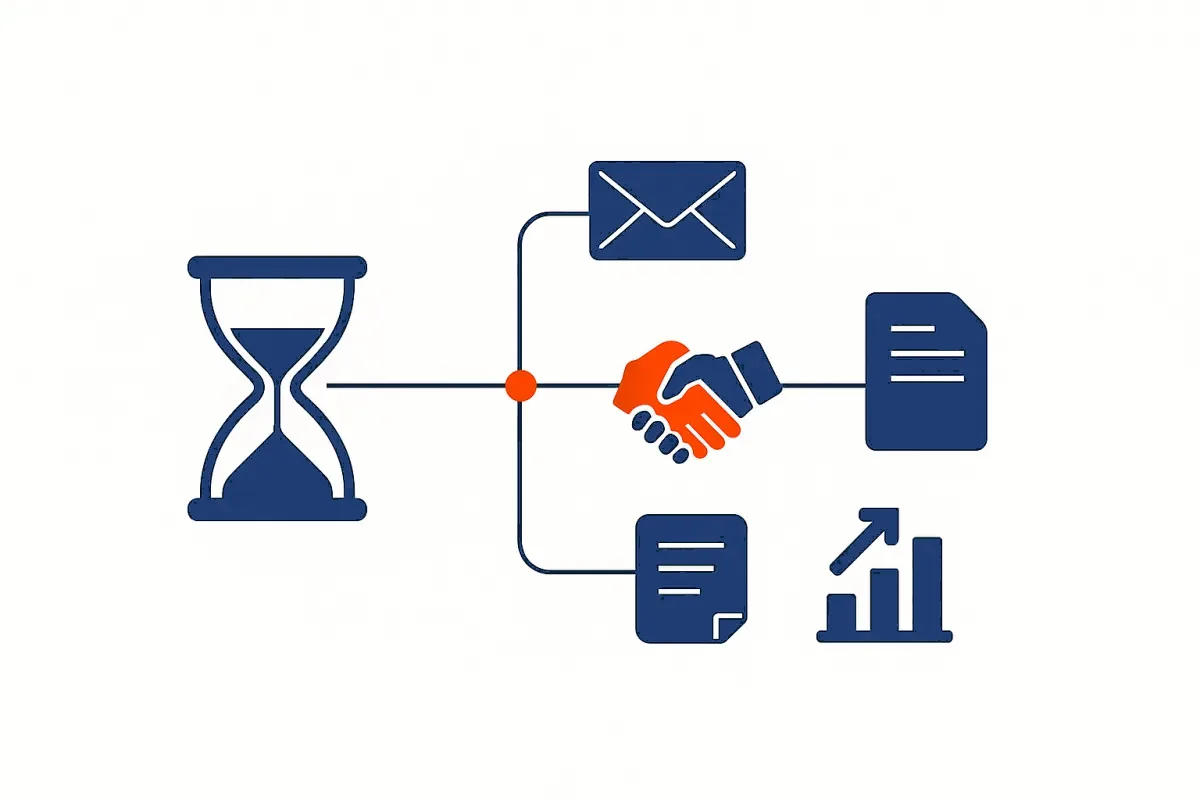
The test for any channel is blunt: can it produce qualified conversations on two to three hours a week, sustained through your busiest delivery month? Four channels reliably pass.
Direct, specific outreach to a named list. Not cold email blasts; short, researched messages to the small set of organisations that genuinely fit your offer, referencing a problem you can see they might have. Ten well-aimed messages a week beats a thousand sprayed ones, in replies and in reputation.
Asked-for introductions. Once a quarter, go through your past clients and network with a specific request: "I am looking to meet operations heads at mid-size manufacturing firms; is there anyone you would introduce me to?" Vague requests ("send work my way!") produce nothing. Specific ones produce meetings, because you have done the thinking for your referrer.
One publishing channel, done consistently. LinkedIn is the natural home for most B2B service firms in India. One useful post a week, drawn from real client work: a problem you saw, how you thought about it, what changed. The aim is not audience size. The aim is that when a prospect looks you up, and they all look you up, they find evidence of judgement. Publishing is how problem-aware leads find you, and how lukewarm leads warm up while you are not watching.
Speaking where your buyers already gather. Industry associations, chambers, internal events at client companies. One talk to thirty of the right people is worth more than a year of shouting at the general public.
Notice what is absent: paid ads, gated content, marketing automation, funnels. Not because these are bad, but because at a service firm's scale they solve problems you do not have while consuming attention you cannot spare. The constraint is your time, so the system must be designed around it. A packaged, clearly priced offer helps enormously here too, because every channel works better when it points at something specific; I have written about productising your service separately.
Qualify Out Fast: Sell Less, Close More
Here is an uncomfortable arithmetic every service founder should do once. Take your last twenty proposals. How many closed? Now look at the ones that did not, and ask honestly: how many were visibly poor fits before you wrote the proposal? Wrong budget, wrong urgency, wrong kind of problem, a prospect collecting three quotes to satisfy procurement.
In most firms, half the pipeline should never have been in the pipeline. And because proposals and meetings consume the same scarce hours that lead generation needs, every bad-fit prospect you pursue is paid for with conversations you never started. The feast-or-famine cycle is fed by this: busy chasing the wrong prospects, too busy to find the right ones.
The fix is to qualify out, early and cheerfully. Decide the three questions that predict fit for your business. Budget range is one; whose problem it is inside the organisation is another; why now is usually the third. Ask them in the first conversation, plainly. "Projects like this typically start at ₹8 lakh; is that within the range you had in mind?" is not rude. It is respectful of everyone's time, and it signals a firm that knows its worth.
Disqualifying feels like losing leads. It is the opposite: it is concentrating your limited selling time on the small number of prospects where it can actually compound. A pipeline of eight right-fit conversations will outperform a pipeline of thirty mixed ones every single quarter, and it will do so on fewer hours.
Leads Are One Part of a Larger Machine
A last word of warning, from someone who has diagnosed a lot of pipelines: lead generation is where founders look first, and it is frequently not where the problem is.
If the offer is vague, better leads will not save it; prospects will arrive, fail to understand what exactly they would be buying, and drift away. If nobody follows up, leads leak silently no matter how good the source. If the founder is the only person who can sell, every lead waits in a queue behind delivery work; that trap has a shape of its own. Lead generation sits inside a larger machine, and the machine is only as good as its weakest part. I have described the whole of it, end to end, in my guide to the client acquisition system.
So before you pour effort into more leads, it is worth finding out which part of your system is actually the constraint. If you want an honest reading of where the real gap is, get in touch and tell me what you are seeing. Fix the right thing first, and the leads you already have start going further.

Anoop Kurup
I'm a marketing consultant for B2B service firms in India. I fix the positioning, visibility, and lead generation behind weak sales. Before this: a research lab at GE, then patents and competitive strategy, then an intellectual-property firm I built and exited. I work with founders one engagement at a time from Bangalore.
More about meNot sure your leads are the problem?
This is the Engage stage of the CLEAR method. Tell me what you're seeing in your pipeline. I'll tell you honestly if I can help, and where I'd start.
Get in touch