
Cold Outreach for Consultants That Doesn’t Suck
Most cold outreach gets ignored because it leads with you, not the prospect’s problem. Here is how founder-led consultants do outreach that earns replies.

My LinkedIn inbox collects a fresh row of cold messages every week. They follow one script so reliably I could write the next one myself: a compliment about my profile that would fit any profile, two paragraphs about their company and its award-winning services, and a request for thirty minutes of my time. I delete them in seconds. So do you.
Here is the uncomfortable part: cold outreach itself is not the problem. A consultant who depends entirely on referrals has no way to choose their clients; outreach is one of the few channels where you pick exactly who you want to work with and go to them. I have watched consultants land their first non-referral clients through a dozen careful cold emails, sent in the same month that thousands of automated messages from other firms went straight to delete.
The difference is not volume, tooling, or a clever subject line. It is whose problem the message leads with. Everything in this article follows from that one idea.
Why Most Cold Outreach Fails
Open any cold message you received this week and count the sentences before the sender mentions something specific about you. Usually the answer is: all of them. The message is about the sender's firm, the sender's services, the sender's decade of experience. The reader is asked to do the hard work of figuring out why any of it matters to them. Nobody does that work for a stranger.
A cold message gets three questions from its reader, answered in about five seconds: so what, why me, and why now. Credentials answer none of them. Your twenty years of experience is a so-what until it is pointed at a problem the reader knows they have. Most outreach fails this test before the second sentence, which is why reply rates on template-blast campaigns are measured in fractions of a percent.
There is a deeper reason consultants specifically get this wrong. Most cold outreach advice comes from software sales, where a thousand-message sequence with a two percent reply rate is a working model. Consulting is a trust purchase. The client is buying your judgement before they can verify it, and a message that smells mass-produced is evidence against your judgement. The methods of volume selling do not transfer; for a consultant, one careless message to the right person costs more than fifty unsent ones.
And one honest caveat before the how-to: outreach amplifies your offer, it cannot repair it. If a stranger cannot tell within a paragraph who you help and with what, no message structure will save the campaign. Fix that first.
Picking a List Worth Writing To
Good outreach starts before any writing: thirty well-chosen firms will outperform three thousand scraped contacts, because everything that makes a message land depends on how well you chose its reader.
A firm belongs on your list when three things are true. First, it looks like clients you have already helped: same industry or same shape of business, so your proof is relevant. Second, you can name the specific problem it likely has, not a generic one every business has. Third, there is a visible reason to write now: a trigger. New funding, a new marketing head, a hiring spree, an expansion into a market you know, a product launch. Triggers are what turn "why now" from a line you assert into a fact the reader already knows.
This is slow work compared to exporting a database, and that is exactly why it works. The research you do to qualify a firm becomes the opening line of the message itself. When I sit with consultants struggling at lead generation, the list is usually the first thing we rebuild: not bigger, smaller and sharper.
The Problem-First Message Structure
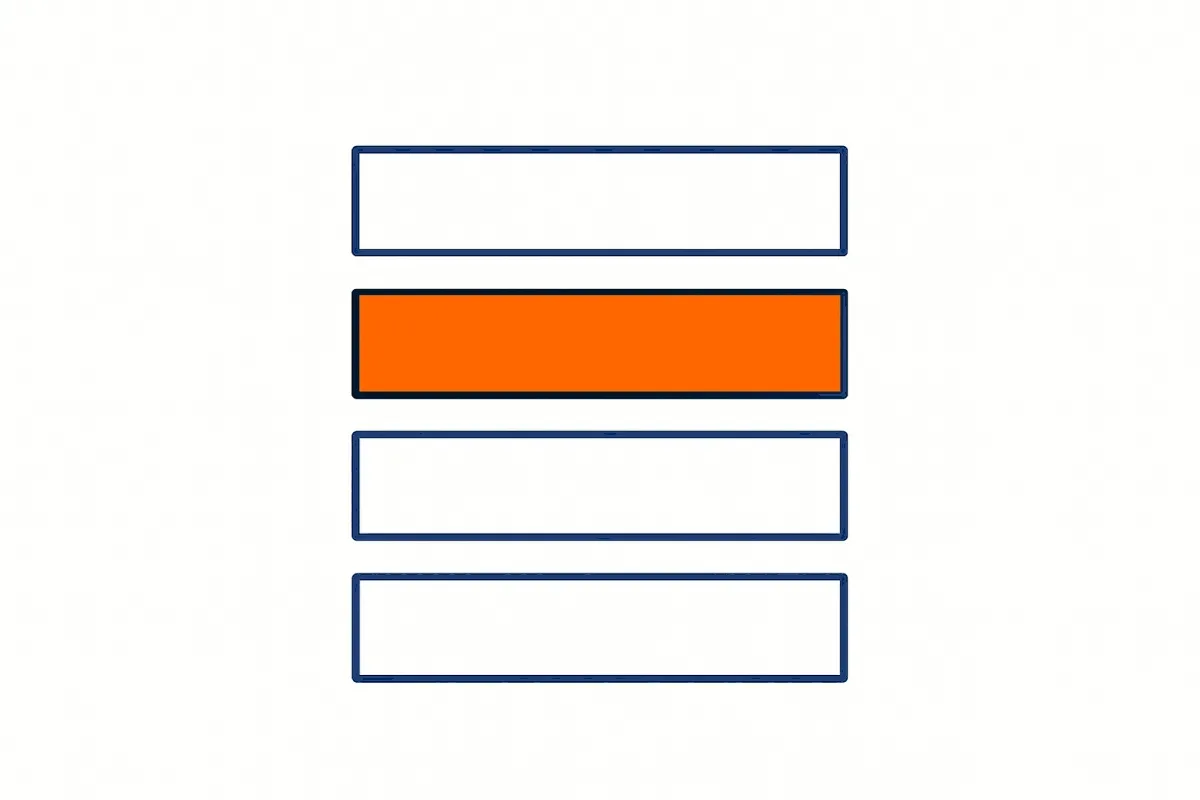
The message itself has four parts, in order, and rarely needs more than 120 words.
An observation about them. One sentence, specific and checkable, proving a human looked. "You have hired three delivery consultants in two months" or "Your new Pune office puts you in a market where we both know the referrals dry up." Not "I came across your profile and was impressed."
The problem you suspect. Name it plainly, in their words, and let them disagree. "Firms at that stage usually find the founder is still closing every deal personally." You are demonstrating diagnosis, which is the actual product a consultant sells.
One line of proof. A single sentence connecting you to that problem: a similar client, a similar situation, an article you wrote on exactly this. Not a paragraph of credentials. The proof is there to make the problem statement credible, not to sell.
A small ask. A question they can answer from their phone: "Is this on your radar, or have you already solved it?" Not thirty minutes of their calendar. A cold message earns a reply; the reply earns a conversation; the conversation earns a meeting. Asking a stranger for a meeting skips two steps and reads as it feels.
Put together, the whole thing reads like a note from a peer who noticed something, not a pitch. No brochure attached, no deck linked, no "hope this finds you well". A prospect who recognises their problem in your second sentence does not need persuading to reply; a prospect who does not was never going to.
LinkedIn or Email: Where Should a Consultant Start?
For most consultants the honest answer is both, in different roles.
LinkedIn is where your visibility compounds. A cold message there is never read alone; the reader clicks your profile, sees your headline, and skims what you have published. If those say clearly who you help and how, the message gets a second reading. This is also the real answer to how to get clients on LinkedIn: the messages open conversations, but the profile and a steady rhythm of published thinking do the convincing. Engage with a prospect's posts for a week or two before writing and the message is no longer entirely cold. The platform's limits on connection notes push you towards brevity anyway, which is a feature.
Email suits the fuller problem-first note, and it sits in the inbox where business decisions actually happen. The rules are the same, with one addition: send one-to-one, from your real address, written by hand. The moment you load a thousand addresses into a sequencing tool you have left consulting outreach and entered spam, whatever the tool's landing page says. I have written before about the AI version of this trap: personalisation at scale is not personal, and senior people recognise stitched-in first names instantly.
A question Indian founders ask me surprisingly often: is cold email even legal here? For one-to-one B2B email, yes. India has no consent-first regime for business email the way Europe does; the DPDP Act governs how you handle personal data, and TRAI's restrictions bite on bulk SMS and calls, not on an individually written note to a work address. The practical constraints are reputational, not legal: scraped lists and bulk sends will burn your domain's deliverability and your name long before any regulator notices you.
Following Up Without Being Annoying
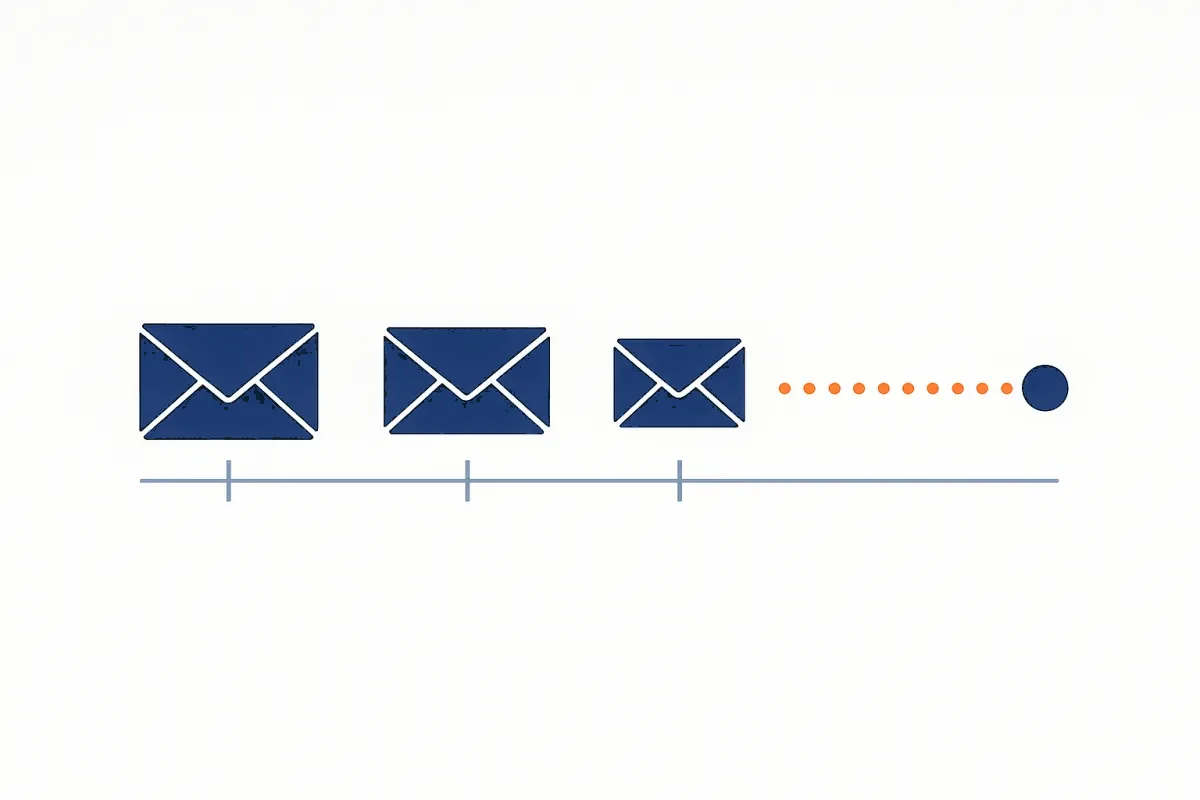
Most replies do not come from the first message. People are busy, your note arrived during a fire, and silence usually means "not now", not "never". So follow-up is where much of the return on outreach actually lives, and it is also where most senders destroy the goodwill their first message earned.
Two rules keep it clean. Follow up at most two or three times, spaced roughly a week apart. And make every follow-up add something new: a short idea about the problem you named, a relevant piece you wrote, a fresh observation about their business. "Just bumping this to the top of your inbox" adds nothing and says the sender values their pipeline more than your time. The sales-automation world will tell you five to seven touches is optimal; that arithmetic comes from selling software seats, and it prices in an annoyance that a trust business cannot afford. After the third quiet message, stop. Move them to the long game: they see your posts, they get your thinking, and when the problem becomes urgent, your name is the one attached to it.
Then read the silence honestly, because it is data. One prospect ignoring you is noise. A well-chosen list of thirty ignoring you is a verdict, and it is rarely about the wording. It means the problem you are naming is not one they recognise, or the offer behind it is not one they can evaluate. That is a positioning problem wearing an outreach costume.
Outreach Is a Channel, Not a Strategy
Cold outreach done this way is quiet, small-batch, and effective: a few carefully researched notes a week, sent to firms you would genuinely like to work with, each one rehearsing the diagnostic skill you are ultimately selling. It is one channel inside a client acquisition system, alongside the visibility that warms your name up before the message and the follow-up rhythm that catches the not-nows. On its own it will not carry a practice; wired into that system, it is the channel that lets you stop waiting for referrals to choose your clients for you.
But outreach only works if the offer lands. If your messages are careful, your list is sharp, and the replies still do not come, the problem is almost never in the message. It is upstream, in positioning and offer, and more words will not fix it. Get in touch and show me the last ten cold messages you sent. I will tell you honestly whether you have an outreach problem or a marketing problem underneath it.

Anoop Kurup
I'm a marketing consultant for B2B service firms in India. I fix the positioning, visibility, and lead generation behind weak sales. Before this: a research lab at GE, then patents and competitive strategy, then an intellectual-property firm I built and exited. I work with founders one engagement at a time from Bangalore.
More about meOutreach only works if the offer lands.
This is the Engage stage of the CLEAR method. Tell me what you're seeing in your pipeline. I'll tell you honestly if I can help, and where I'd start.
Get in touch