
AI for Client Acquisition: What Actually Works
AI won’t replace your judgement, but it will remove the grunt work from client acquisition. Here is where it helps founder-led firms and where it doesn’t.
A founder showed me his marketing stack a few months ago. Seven AI subscriptions: an outreach personaliser, two writing assistants, a call recorder, a lead scraper, and a couple he had honestly forgotten about. Between them they cost more each month than a part-time marketer. His pipeline was still empty. He asked me which tool he should replace.
Wrong question. The tools were fine. There was nothing underneath them. No clear picture of who he was selling to, no offer a stranger could evaluate, no weekly routine the tools could plug into. He had bought seven accelerators for a vehicle that was not moving.
That conversation is why this article exists. Search for AI for client acquisition and you will find tool lists, agency pitches, and people claiming an AI found their clients while they slept. Almost none of it survives contact with a real B2B services firm, where clients buy trust and judgement, not output. So here is the honest version: where AI genuinely helps you get clients, where it actively hurts, and how to use it without becoming the spam you currently delete.
Where AI Genuinely Saves a Founder Time
I have been automating my own work since 2006, first with scripts and macros in a research lab, later across an IPR firm and a set of digital marketing businesses. The test for what to automate has not changed in twenty years: automate the work that is repeatable and low-judgement, and keep the work that needs your thinking. AI has not changed that test. It has only moved a large amount of work from the second category into the first.
Notice what kind of work that is. Most founders assume their bottleneck is selling, and go looking for AI for b2b sales: something to write outreach, book meetings, close deals. But sit with the calendar of a founder who runs a consulting firm or an agency and you find the real time sink is everything upstream of the sale. Researching prospects. Writing and rewriting the LinkedIn post that never gets posted. Summarising calls. Chasing follow-ups. Qualifying enquiries that were never going to buy. That is marketing and admin, not selling, and it is exactly the grunt work AI is good at.
This matters because of a pattern I see constantly: the sales problem is usually a marketing problem. Founders who say "I need AI to help me sell" usually mean "nothing except my personal networking generates enquiries, and I have no time to fix that". AI cannot close deals for a firm nobody has heard of. What it can do is give you back the six to eight hours a week that building visibility and a lead pipeline actually takes.
Research, Drafting, and Qualification: The Three Honest Wins
Strip away the hype and AI earns its place in three specific jobs.
Research. Before a first call, I want to know what a prospect's firm does, who they sell to, what they have published, and what has changed for them recently. That used to be an hour of tabs and skimming. An AI assistant with a browsing capability compresses it into ten minutes and a one-page brief. The same applies to list building: describe your ideal client precisely, and AI can help you shortlist firms that fit, faster than any junior researcher. It gets facts wrong often enough that you must verify before you quote anything in a message, but as a first pass it is excellent.
Drafting. AI is a strong first-draft engine and a weak publisher. The distinction is everything. Feed it your past proposals and it will draft the next one in your structure, ready for you to correct. Speak your opinion into a voice note for five minutes and it will turn the transcript into a workable article draft that sounds like you, because the thinking is yours. What it cannot do is have the opinion. Publish its unedited output and readers may not consciously spot it, but nothing in it will make a prospect remember you, because there is nothing in it a competitor could not generate the same afternoon.
Qualification. Write down, once, what makes an enquiry worth your time: company type, problem, budget signals, decision authority. AI can score every incoming enquiry against that list, flag the ones worth a call, and draft a polite decline for the rest. Most founders never qualify this rigorously by hand because saying no feels rude and takes effort. Making the discipline cheap is one of the quietest, most valuable things AI does in the whole getting-clients process.
What AI Should Never Touch in a High-Trust Sale
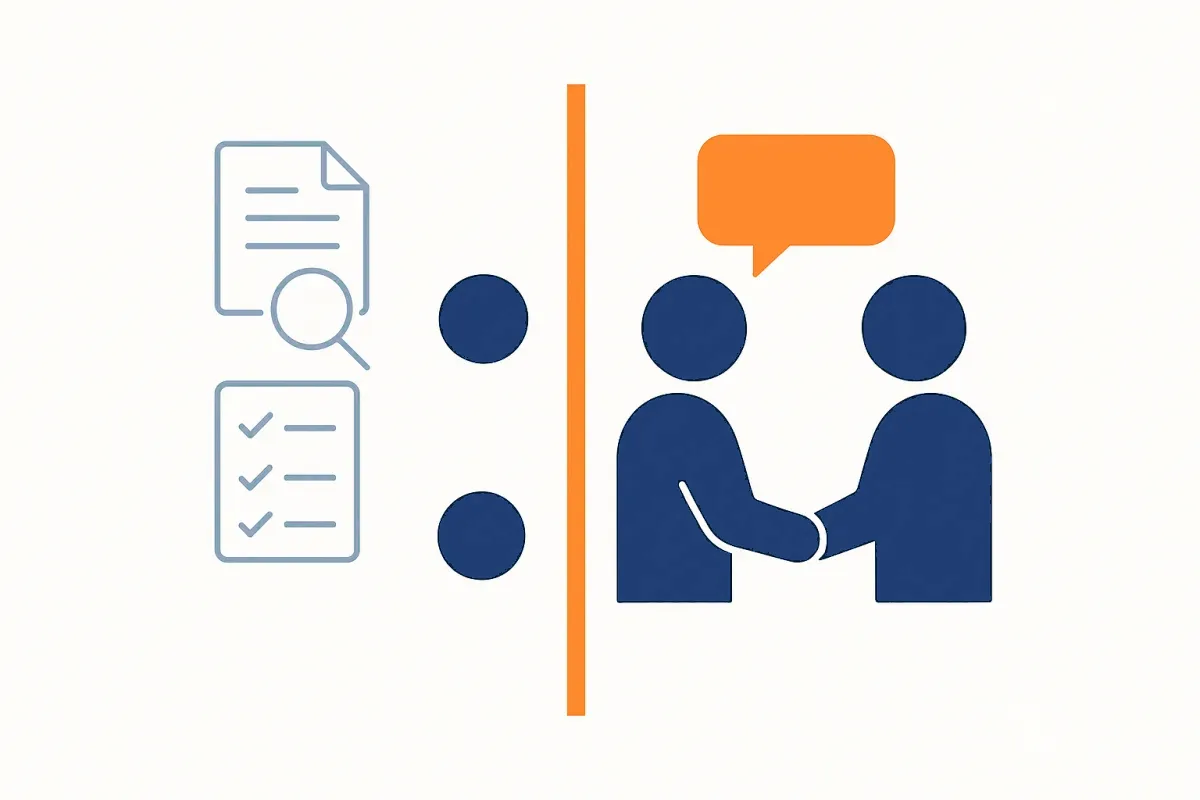
A B2B services purchase is a trust purchase. The client is not buying deliverables; they are buying your judgement, applied to their situation, before they can verify it works. That single fact draws a bright line through every AI sales automation pitch you will hear.
On the far side of that line: the discovery call, where the prospect is deciding whether you actually understand their problem. The pricing conversation. The advice itself. Any moment where the other person believes they are getting you, and would feel deceived to learn they were not.
The most common way founders cross the line is mass-personalised outreach. The pitch is seductive: AI reads five hundred LinkedIn profiles and writes five hundred individual messages mentioning each person's recent post. Here is what the recipients see: a message with their name stitched into a template, arriving in the same week as thirty others just like it. Personalisation at scale is not personal. It is cold spam with better grammar, and the people you most want as clients are precisely the people who recognise it instantly. You spend real trust, the only currency that matters in this market, to save time you could have saved elsewhere.
The rule I give clients is simple. Use AI to prepare for human moments, never to fake them. Let it brief you before the call, summarise the call afterwards, and draft the follow-up for your edit. The moment itself stays yours.
A Simple AI-Assisted Weekly Routine
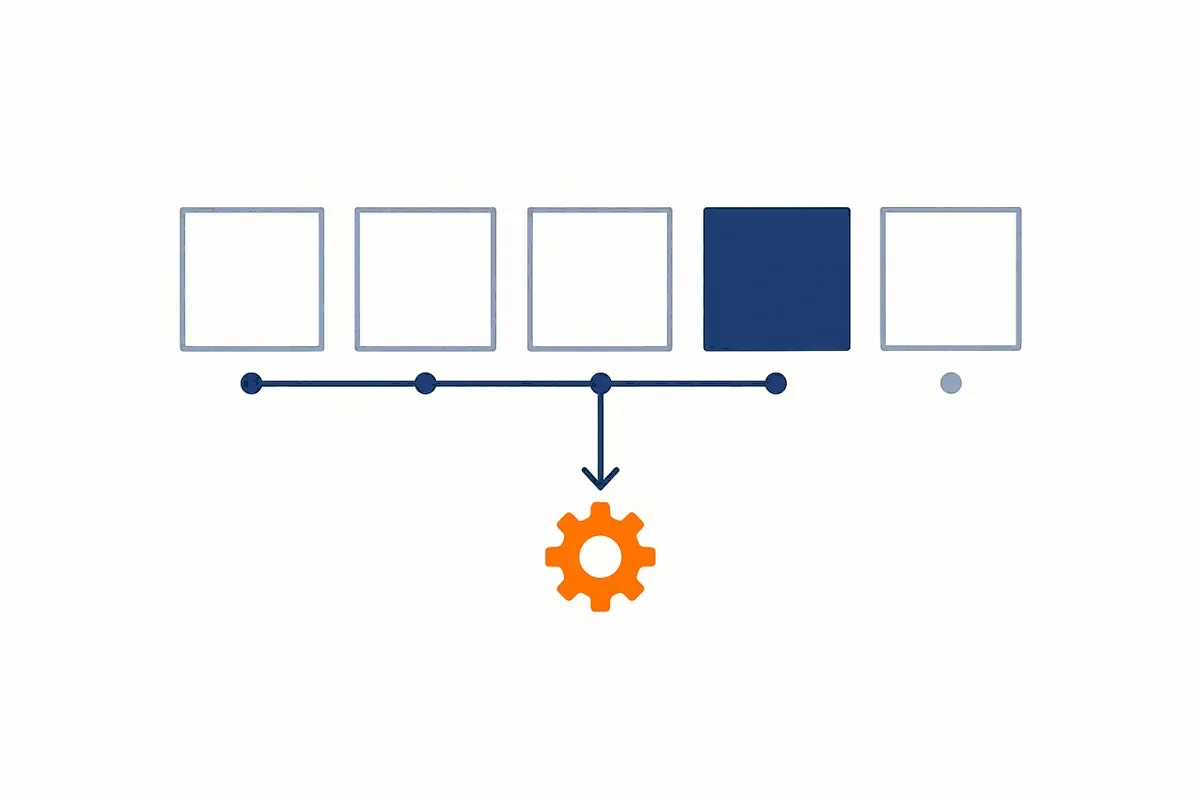
Tools only compound when they sit inside a repeatable weekly rhythm. Here is a shape I see working for solo consultants and small firms, taking roughly half a day in total.
Monday, an hour: AI drafts your week's content from your voice notes or a rough outline; you edit until it sounds like you, and schedule it. Tuesday, thirty minutes: review the ten prospects AI researched overnight against your ideal client definition, discard half, and write short, genuinely personal notes to three. Through the week, as enquiries arrive, AI scores them against your qualification list and drafts the responses; you approve or fix each one in minutes. Friday, thirty minutes: AI assembles the week's numbers, enquiries, replies, calls booked, into one summary, and you decide what to adjust next week.
None of this is glamorous. That is rather the point. The founders who struggle with lead generation are rarely short of ideas; they are short of consistency, because every one of these tasks used to cost an evening. AI shrinks the cost of the routine until consistency stops requiring heroism.
Tools Versus System: Why the System Still Matters
Two questions come up every time I discuss this, so let me answer them plainly.
Which is the best AI tool for getting clients? For most B2B service firms: the general-purpose AI assistant you already have, quite possibly the free tier, plus whatever your existing CRM has added. The gap between the best tool and a good-enough tool is small. The gap between having a system and not having one is enormous. If you enjoy evaluating software, enjoy it as a hobby, not as a strategy.
Can AI run the whole thing for me? No, and the reason is the seven-subscription founder from the opening. AI is an accelerator: it multiplies whatever it is pointed at. Point it at a firm with sharp positioning, a clear offer, and a working pipeline, and it compounds all three. Point it at a firm that has none of those and it produces more invisible marketing, faster. If your positioning is vague, AI will help you say nothing in particular to no one in particular at unprecedented volume. I made a version of this argument about marketing agencies and broken offers: no execution, human or artificial, fixes a foundation problem.
So sequence it honestly. First get the foundations right: who you serve, what you offer, and the repeatable path from stranger to enquiry. That is what a client acquisition system actually is, and it is the E in how I work with clients: engineering the lead generation machinery so it runs without depending on your spare time. Then bring in AI, and it will pay for itself in the first month, because every hour it saves feeds a system that converts.
Before automating anything, it is worth seeing what needs fixing first. Get in touch and tell me what your pipeline looks like and which tools you have already tried. I will tell you honestly whether your next step is an AI workflow or the marketing foundation underneath it.

About the Author
Anoop Kurup
I'm a marketing consultant for B2B service firms in India. I fix the positioning, visibility, and lead generation behind weak sales. Before this: a research lab at GE, then patents and competitive strategy, then an intellectual-property firm I built and exited. I work with founders one engagement at a time from Bangalore.
More about meCLEAR · Engage
Before automating, see what to fix first.
Tell me what you're seeing in your pipeline. I'll tell you honestly if I can help, and where I'd start.
Get in touch