
Build a Repeatable Sales Process (Service Firms)
A repeatable sales process means you stop reinventing every deal. Here is how small service firms build one, with a CRM that fits the founder.
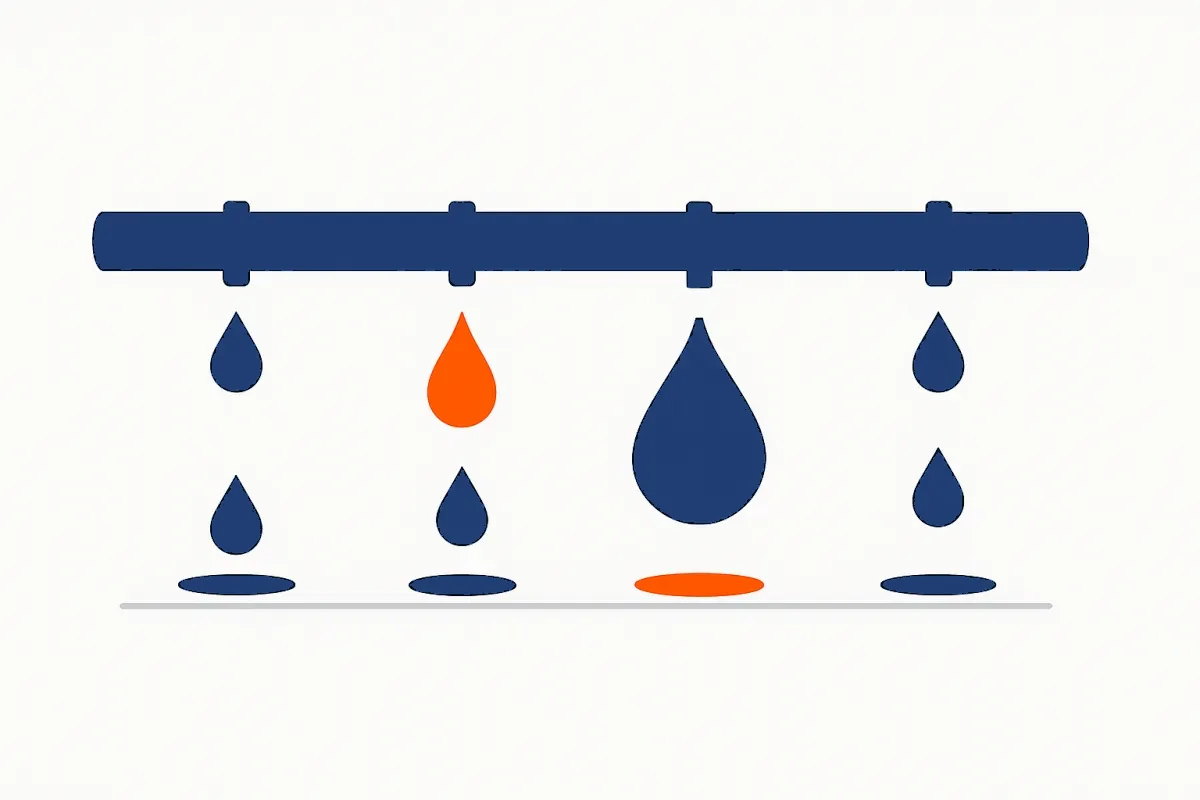
Ask a small consulting firm how many deals they have open right now and watch what happens. The founder looks at the ceiling, names three, remembers a fourth, and then says "and there are a few others I should chase". Those few others are the business. They are the proposals sent six weeks ago with no follow-up, the warm introduction that got a polite reply and nothing since, the prospect who said "let's talk after the quarter" in a quarter that ended two months back.
None of these were lost. They were simply never worked, because there was no process that said whose turn it was to act and when. That is what a repeatable sales process fixes. Not the charm of the founder in the room; that is usually fine. What it fixes is everything that happens between the rooms.
I have run this exercise with enough service firms to know the pattern. The firm believes it has a conversion problem. It almost always has a leakage problem, and it is quietly expensive.
Why Ad-Hoc Selling Leaks Deals
Ad-hoc selling looks like this. Every enquiry gets handled from scratch. The founder decides on the spot whether to send a deck or a proposal or just "have a chat". Follow-up happens when someone remembers. The pipeline lives in the founder's head, an inbox, and a WhatsApp scroll, so nobody can see it and nothing prompts anyone to act.
The cost is not the deals you lose in a competitive pitch. The cost is the deals that die of neglect. A service purchase is slow. The buyer has to find budget, convince a partner, wait for a project to end. During that stretch, the difference between a deal that closes and one that fades is usually a single, timely, unremarkable follow-up. Ad-hoc firms do not send it, because nothing reminds them to.
There is a second leak, and it sits earlier. When each enquiry is handled differently, the founder cannot tell which ones deserved the effort. A good enquiry and a tyre-kicker get the same hour-long call, the same custom proposal. The firm spends its scarcest resource, founder time, on prospects it should have politely parked in the first ten minutes.
Both leaks share a cause. A sale with no defined stages has no defined next action, and work without a next action does not get done. It is a marketing problem wearing a sales costume: the firm has not decided who it sells to, what it sells them, and what has to be true before it is worth a proposal. Fix that upstream and the process below almost writes itself.
The Five Stages Every Service Sale Moves Through

Search for "sales process" and you will find seven-step models, five-step models, and acronyms that promise to close anything. Most of them come from product sales and describe a rep working a territory. A small service firm needs something a busy founder will actually follow, which means five stages and nothing clever.
1. Enquiry. Someone has raised a hand: a referral, a form on your site, a reply to outreach, a message after a talk. Nothing is known yet except that they exist. The only job at this stage is to respond within a day and set up one conversation.
2. Qualified. You have had that conversation and confirmed three things: they have a problem you solve, they have the authority to buy or a clear path to it, and the timing is real. If any of the three is missing, the prospect goes to a "later" list, not to the next stage. This is where most of the founder's time is saved, and it needs a fixed set of questions, not a feeling.
3. Diagnosed. You understand the problem well enough to scope it. For most consulting work this is a second, deeper conversation, sometimes a short paid diagnostic. The output is agreement on what is wrong and what fixing it is worth to them. Proposals sent before this stage are guesses, and guesses get "let me think about it".
4. Proposed. A written proposal is out, with a price, a scope, and a date by which you will follow up. That date is the important part. A proposal without a follow-up date is a deal waiting to be forgotten.
5. Won or lost. Either they signed or they did not. "Lost" includes "went quiet", after a defined number of follow-ups. Moving a dead deal to lost is not pessimism; it is what keeps the pipeline honest, and it is where you write down why, which is the raw material for the next fix to your positioning.
Every deal you have is in exactly one of these five stages right now. If you cannot say which, that is the leak.
A CRM Setup That Takes Minutes, Not Days

The word CRM scares small firms because it suggests a project: licences, fields, a consultant to set it up. For a firm with one or two people selling, that is the wrong picture. A CRM for consultants is a list of open deals with a stage, an owner, and a next action date. That is the entire specification.
You can build it in a spreadsheet in ten minutes. One row per deal. Columns: company, contact, stage (one of the five), value, next action, next action date, notes. Sort by next action date each morning. That spreadsheet will outperform most expensively configured systems, because it will actually be used.
Move to a proper tool when the spreadsheet starts hurting: when two people are editing it, when you want email threads attached to deals, or when you have more than thirty or forty open deals. The free tiers of the well-known CRMs handle a small service firm comfortably, and the setup is the same five stages as columns on a board. Resist the temptation to customise. Every extra field is one more thing the founder will skip filling in, and a CRM with half-filled fields is a spreadsheet with worse ergonomics.
Two rules keep whichever tool you pick alive. First, a deal is not real until it is in the CRM; if it lives only in a WhatsApp thread, it does not count. Second, every open deal must have a next action with a date. No exceptions. An open deal with no next action is either lost or being avoided, and either way the review below will catch it.
I have written elsewhere about where AI genuinely helps with getting clients, and the honest answer for a CRM is: at the edges. Drafting the follow-up note, summarising a call, pulling the next action list into a morning message. Let a tool do those. Do not let it decide who is qualified.
The Weekly Review That Keeps the Pipeline Honest
A CRM without a review is a diary nobody reads. The review is the routine that makes the process repeatable, and it takes thirty minutes a week if you are disciplined about the questions.
Same slot every week; Monday morning works for most firms because the week's actions fall out of it. Open the list sorted by stage and ask three questions of every deal.
What is the next action, and is it overdue? Overdue actions get done today or rescheduled with a reason. A deal that has been rescheduled three times is telling you something.
Has this deal moved since last week? A deal that has sat in Proposed for a month without moving is not a deal; it is a hope. Send the final follow-up or move it to lost.
Is the stage honest? Founders promote deals out of optimism. The prospect "sounded keen", so it went to Diagnosed without a diagnosis. Demote it. The stages only work if entry into each one has a test you actually apply.
Then look at the whole board, not the deals. Count how many are in each stage. Over a few weeks, that count tells you where the real problem is. Plenty of enquiries and nothing qualified means your marketing is attracting the wrong people, which is a positioning problem. Plenty qualified and few proposals means you are slow to diagnose, which is a capacity problem. Plenty of proposals and few wins means the offer or the price is not landing. The board diagnoses the business, which is why I make it the first thing I look at in a Pipeline Reality Check.
One number to watch above the others: how many active, qualified conversations are open. Below a certain count, every deal feels like it must close, and that feeling is what makes founders fold on price. Enough open conversations, and you can let a bad-fit deal go without flinching.
Handing the Process to Someone Else
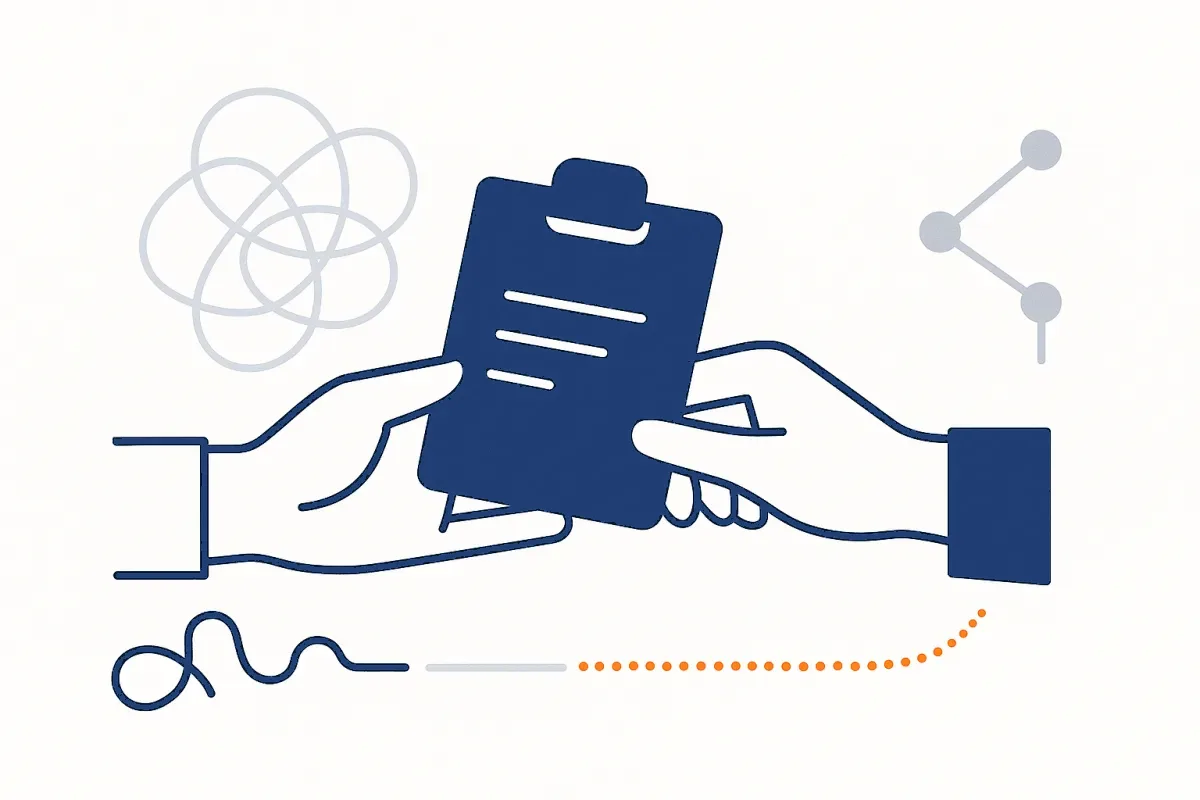
A process that exists only in the founder's habits is not repeatable; it is just a habit. The test of a real sales process is that someone else can run the first three stages without you, and that your involvement starts at Diagnosed, where your judgement is actually the product.
That handover is possible only if the earlier stages are written down. The response to an enquiry: a template, sent within a day. The qualification call: the fixed questions, the three tests, the decision rule for what goes to "later". The CRM discipline: who updates it and when. The weekly review: who runs it and what they escalate. This is a two-page document, not a manual, and writing it usually reveals that the founder has been making these decisions inconsistently for years. I covered the wider version of this handover in the founder-led sales trap; the sales process is the part of it you can fix first.
Who takes it on? For most small firms it is not a salesperson. It is an operations person, an executive assistant, or an associate who runs the enquiry response and the qualification call to a script, and then hands the qualified prospect to the founder. Hire for reliability and warmth, not for closing; the closing was never the problem. What you are handing over is the discipline that keeps deals from dying between conversations.
And where do the enquiries come from in the first place? That is the part the process cannot manufacture. A sales process turns demand into revenue; it does not create demand. If the top of the board is thin, the fix is upstream, in positioning and visibility, and it is the job of a lead generation system that the process sits inside. Outreach done properly, which I wrote about in cold outreach for consultants, is one way to keep the Enquiry stage fed while the longer-term visibility work compounds.
Start With the Board You Have Now
You do not need a new tool or a new hire to begin. Tonight, list every open conversation you can remember, put each one in one of the five stages, and write a next action and a date beside it. The list will be shorter than you feared in some ways and longer in others; the "few others I should chase" will turn out to be a dozen, and half of them will have been dead for weeks.
That list is a picture of how leaky your pipeline is right now. If you would rather have a second pair of eyes on it, someone who can tell you whether the leak is in the process or in the marketing that feeds it, get in touch. Send me your board as it stands, however rough. I will tell you where the deals are going, and whether the fix is a follow-up routine or something further upstream.

About the Author
Anoop Kurup
I'm a marketing consultant for B2B service firms in India. I fix the positioning, visibility, and lead generation behind weak sales. Before this: a research lab at GE, then patents and competitive strategy, then an intellectual-property firm I built and exited. I work with founders one engagement at a time from Bangalore.
More about meCLEAR · Engage
See how leaky your pipeline is right now.
Tell me what you're seeing in your pipeline. I'll tell you honestly if I can help, and where I'd start.
Get in touch