
The Best B2B Marketing in Bangalore Won’t Fix This
Founders in Bangalore keep hiring better marketing to fix a pipeline problem marketing can’t solve. The real issue is usually the offer. Here is why.

There is a search that gets typed from Bangalore offices at the end of every quiet quarter: best B2B marketing in Bangalore. I know the search well. I ran digital marketing businesses in this city for years, and a good share of the founders who found us arrived through exactly that phrase, usually after a month or two of watching the pipeline thin out.
Google will give you what it always gives you: lists. Top 10 marketing companies in Bangalore. Best B2B marketing agencies. Twenty-one full-funnel growth partners, each with a portfolio page and a calendly link. The lists are not wrong. Bangalore has genuinely good agencies, and some of the people on those lists are excellent at their work.
Here is what I learned from years of being on the other side of that search, taking those calls: for most B2B service firms, the agency is not the missing piece. By the time a founder is comparing agencies, the real problem has usually been sitting upstream for years, and no amount of marketing spend flows back up a river. The problem is the offer.
What You Are Actually Searching For
Nobody searches for a B2B marketing agency in Bangalore out of curiosity. The search has a story behind it, and the story is almost always the same one.
The firm grew on referrals and relationships. The founder's network produced enough work for years, so marketing never needed to exist. Then something shifted. A big client wound down, or two referral sources went quiet in the same quarter, or the firm hired delivery people and now carries a payroll that referrals alone cannot feed. The founder looks at the pipeline, sees three months of runway and nothing behind it, and reaches for the thing that seems missing: marketing.
The logic feels sound. We never did marketing; the pipeline is weak; therefore marketing will fix the pipeline. So the search begins, the shortlist forms, and three agencies pitch their process decks.
I want to be careful here, because the instinct is half right. A firm with no deliberate way of generating leads does need one. What the instinct gets wrong is the assumption that the pipeline is weak because the promotion is missing. In my experience the promotion is usually the last thing missing. What is missing is something an agency cannot supply: a clear answer to why a stranger should buy this firm's work at this price.
Why the Third Agency Performs Like the First Two
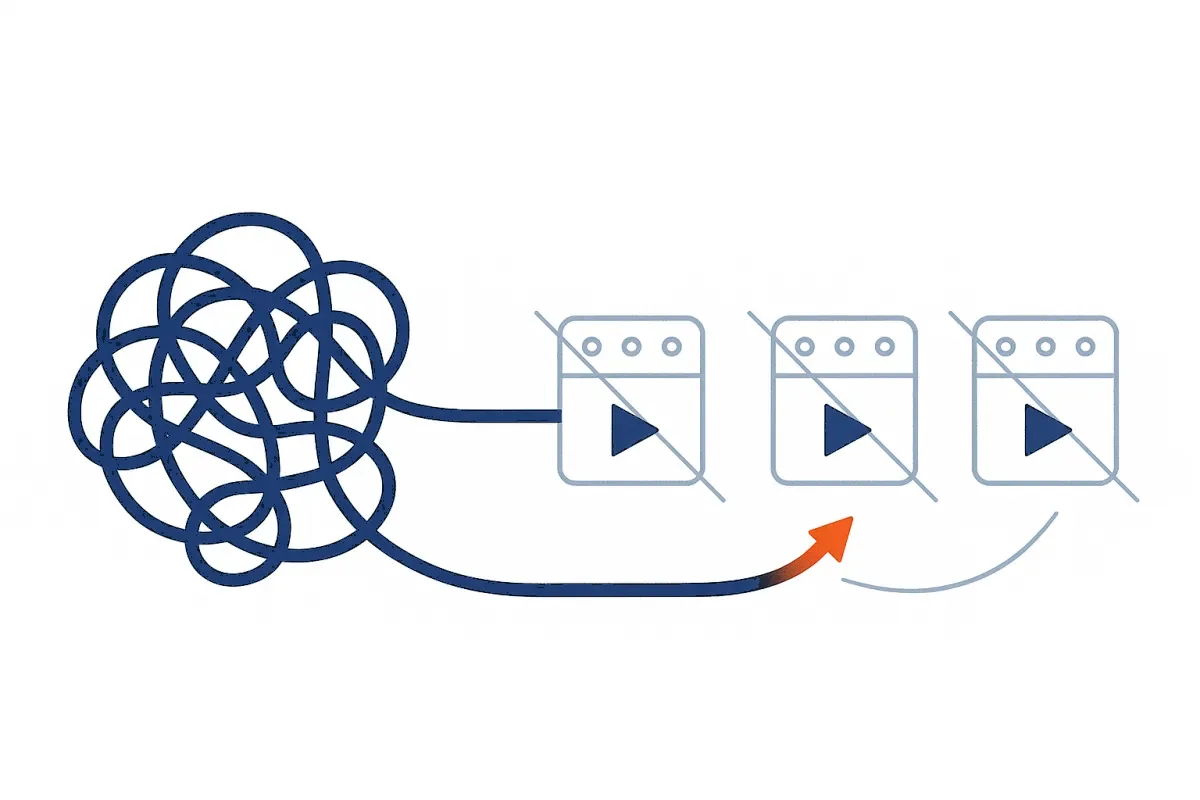
Talk to founders who have been at this a while and you hear a pattern that should trouble you more than a quiet quarter does. The first agency ran for eight months and produced traffic but no enquiries worth having. So the firm concluded the agency was mediocre and hired a better one. The second produced leads, but the wrong kind: students, job-seekers, companies with no budget. The third one is currently on notice.
Three agencies, three strategies, one result. At some point the honest question stops being "which agency is good" and becomes "what do all three of these engagements have in common". The answer is standing in the mirror. Not the founder personally; the offer the founder handed over.
Think about what an agency actually does. It takes your promise and puts it in front of more people, more often, with better targeting and better creative. Marketing is an amplifier. Feed it a sharp, specific promise and it multiplies enquiries. Feed it "we provide end-to-end technology consulting services tailored to your business needs" and it multiplies silence. The amplifier is indifferent; it turns up the volume on whatever it is given. A vague promise at higher volume is just vagueness reaching more people.
This is why switching agencies so rarely changes the outcome. The firm keeps replacing the amplifier while the signal stays the same. And it is why the fourth agency, however talented, will inherit the same fate as the first three unless something upstream changes first.
The Offer Problem Hiding Behind the Marketing Problem
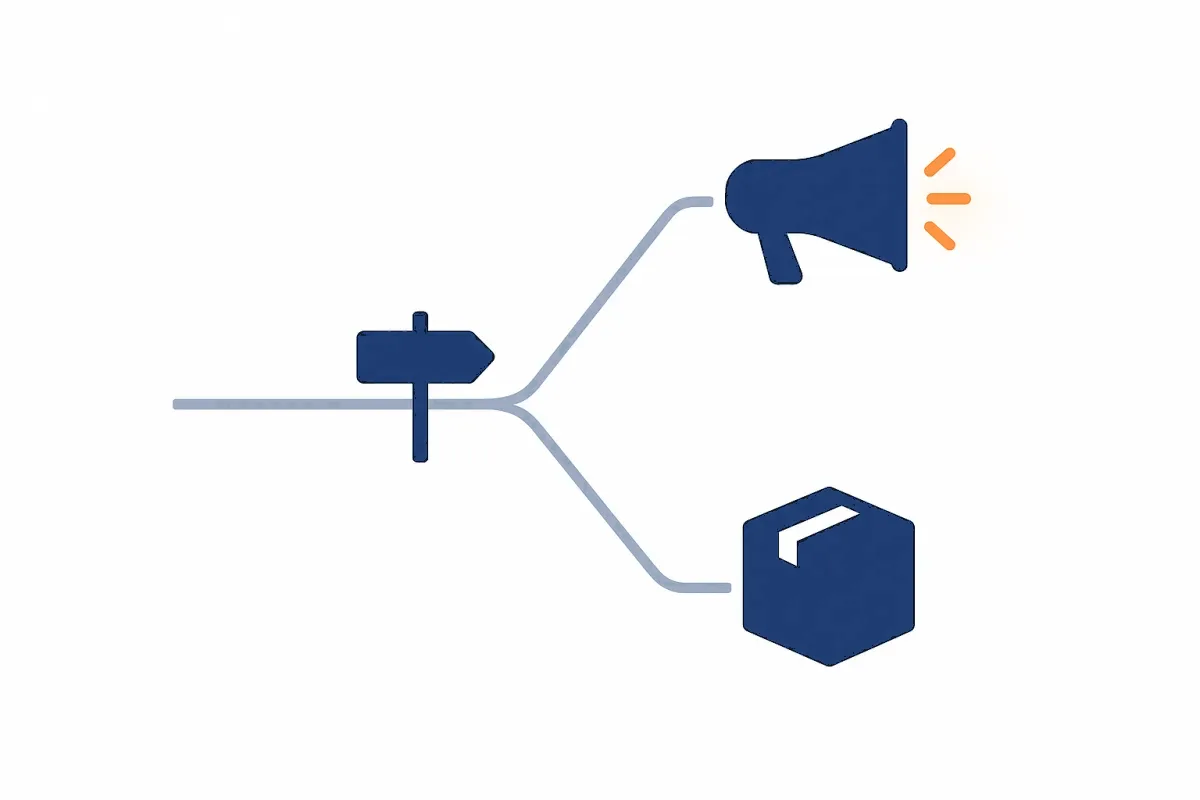
When I say "the offer", I do not mean your list of services. I mean the specific, concrete answer to four questions a buyer silently asks: what exactly do I get, what problem does it solve, what does it cost, and why should this firm be the one to do it. Most B2B service firms in this city cannot answer those questions in under a minute, because the honest answer has always been "it depends", followed by a discovery call and a bespoke proposal.
That worked when every buyer arrived through a referral. A referred buyer comes pre-sold; a trusted mutual contact has already answered the "why this firm" question, so vagueness costs nothing. This is the hidden reason referral-dependent firms struggle the moment they try marketing: referrals were quietly compensating for an offer that was never built to persuade a stranger.
Marketing removes that compensation. A cold prospect who lands on your website gives you thirty seconds, has no mutual friend vouching for you, and is comparing you against four open tabs. If the page says everything for everyone, they leave. The agency did its job; the click was delivered. The offer did not close the argument, because there was no argument, only adjectives.
The pattern shows up on a spend of ₹50,000 a month and it shows up on ₹5 lakh a month. The size of the budget changes how quickly the lesson arrives, not what the lesson is.
A Simple Test: Which Problem Do You Have?
Fortunately, you do not need a consultant to tell a marketing problem from an offer problem. Two checks, both free, will separate them this week.
First, the stranger test. Take your homepage headline, or the first two sentences of your capability deck, and read them to someone who knows nothing about your firm. A friend from a different industry works well. Then ask them three questions: what does this firm sell, who is it for, and what would you expect it to cost. If they cannot answer, you have an offer problem. No agency in Bangalore, however high it ranks on those lists, can profitably promote a promise your own well-wishers cannot repeat.
Second, look at your last ten enquiries, from any source. If enquiries are arriving but they are the wrong people asking for the wrong things at the wrong budgets, that is also an offer problem; the promise is attracting everyone because it excludes no one. A genuine marketing problem looks different: the right people say the right things when they finally find you, but far too few of them find you. Right enquiries, wrong volume: marketing problem. Wrong enquiries at any volume: offer problem.
Run both checks honestly and most founders discover the uncomfortable one. It is uncomfortable because the marketing problem can be delegated to an agency with a purchase order, while the offer problem needs the founder's own thinking. There is no vendor for it. Which is precisely why so many firms buy the delegatable solution to the wrong problem, three times in a row.
Fix the Offer First. Then Marketing Compounds
The sequence that works is unglamorous: sharpen the offer first, then promote it. Decide who the work is for, narrowly enough that the buyer recognises themselves. Package the thing you have delivered most often into a named engagement with a defined scope, outcome, and price. Write the promise in words a stranger can repeat after one reading. Only then does promotion make sense, because now the amplifier has a signal worth amplifying.
Everything downstream changes when the sequence is respected. The agency brief writes itself, because you can finally tell them who to target and what to say. Campaigns stop being experiments in guessing your positioning. Cost per enquiry falls, because specific promises convert cold attention far better than generalities. The same ₹1 lakh a month that produced noise starts producing conversations with the right buyers. I watched this repeatedly in my agency years: the clients who arrived with sharp offers got dramatically better results from the same team, the same channels, and the same spend as the clients who arrived with brochures.
The offer is one part of a larger machine; how leads are generated, followed up, and closed all sit alongside it, and I have written a full guide to building that system for getting clients if you want the complete picture. But the offer is where the sequence starts, because it is the one part every other part depends on.
So before you shortlist a fourth agency, spend a week on the question no agency will be rude enough to ask: is the promise itself worth amplifying? Marketing problem or offer problem? Get in touch and tell me what you're seeing. You'll get an honest reading of where your pipeline actually breaks, so that whatever you spend next, on marketing or anything else, is spent on the right problem.

About the Author
Anoop Kurup
I'm a marketing consultant for B2B service firms in India. I fix the positioning, visibility, and lead generation behind weak sales. Before this: a research lab at GE, then patents and competitive strategy, then an intellectual-property firm I built and exited. I work with founders one engagement at a time from Bangalore.
More about meCLEAR · Lead
Marketing problem or offer problem?
Tell me what you're seeing in your pipeline. I'll tell you honestly if I can help, and where I'd start.
Get in touch