
The Risks of Referral Dependence for Service Businesses
Referral dependence feels safe but quietly weakens pricing, positioning and growth. Here are the long-term risks, and what to build instead.

Most B2B service businesses run on referrals, and most of them are quietly proud of it. Twelve years in, the clients still arrive through introductions, the work is steady, and the founder takes it as proof that the model works. It does work, which is exactly what makes the risks of referral dependence so hard to see.
Referral dependence is the condition in which the vast majority of your clients come through introductions, and you have no reliable way to win work without them. The danger is not that referrals are bad. They are often your best clients. The danger is that depending on them carries a long-term cost that stays invisible while the work is flowing, and only becomes obvious when it slows down, by which point it is expensive and slow to fix. This article walks through what that cost actually is, and what to build instead.
Why Referral Dependence Feels Like Success
When 80–90% of your clients come through introductions, the business looks healthy from the inside. Revenue is steady. The clients are pre-sold, trusting, and easy to start with. There is no fire to put out, no obvious gap demanding attention.
That is the trap in a single sentence: a problem you cannot feel is a problem you will not act on. So the founder keeps doing delivery work, keeps saying yes to whatever arrives, and assumes the model will hold because it always has. The risk doesn't show up in this quarter's numbers. It sits in everything those numbers aren't telling you, and it compounds quietly for years.
You Never Learn Why People Actually Buy
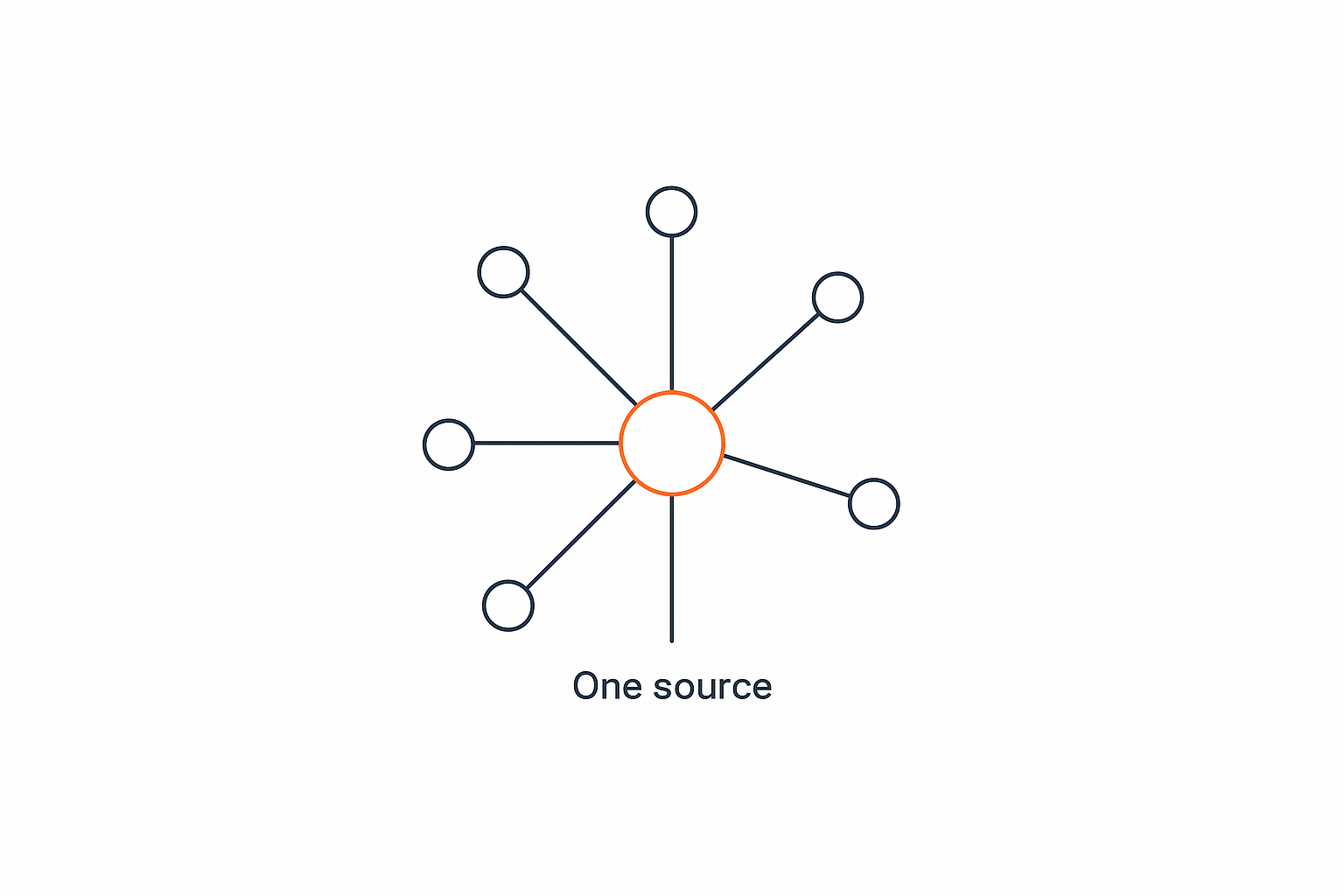
Referral clients arrive pre-sold. That sounds like a gift, and in the moment, it is. The hidden price is that you never see how the sale was made. You don't learn what caught their attention, what built their trust, or what finally convinced them to act.
Without that knowledge, you are working blind. You can't sharpen your positioning, tighten your messaging, or improve your marketing, because you genuinely don't know what is driving demand. Every firm that wins clients in the open market has a feedback loop: they can see what works and do more of it. The referral-dependent firm has no such loop. It is improving nothing, because it can see nothing.
Your Sales and Marketing Muscle Wastes Away
In the open market, you have to win every client. Someone is comparing you to alternatives, questioning your price, and deciding whether to trust you. Winning in that environment takes practice and skill, and like any skill, it holds only if you keep using it.
When referrals do the winning for you, that muscle wastes. The conversations that build selling ability stop happening. The result is a slow, invisible erosion: the day you finally need to sell, because a key client left or growth demanded it, you find you have forgotten how, at the exact moment you can least afford to.
There is a related cost to focus. Referrals send a wide variety of projects your way, so it is easy to keep saying yes to them all. Your services broaden, your specialism blurs, and you end up known for nothing in particular. Rather than putting a clear offer into the market and proving its value, you spend your days meeting whatever needs happen to walk through the door.
The Business Becomes Fragile
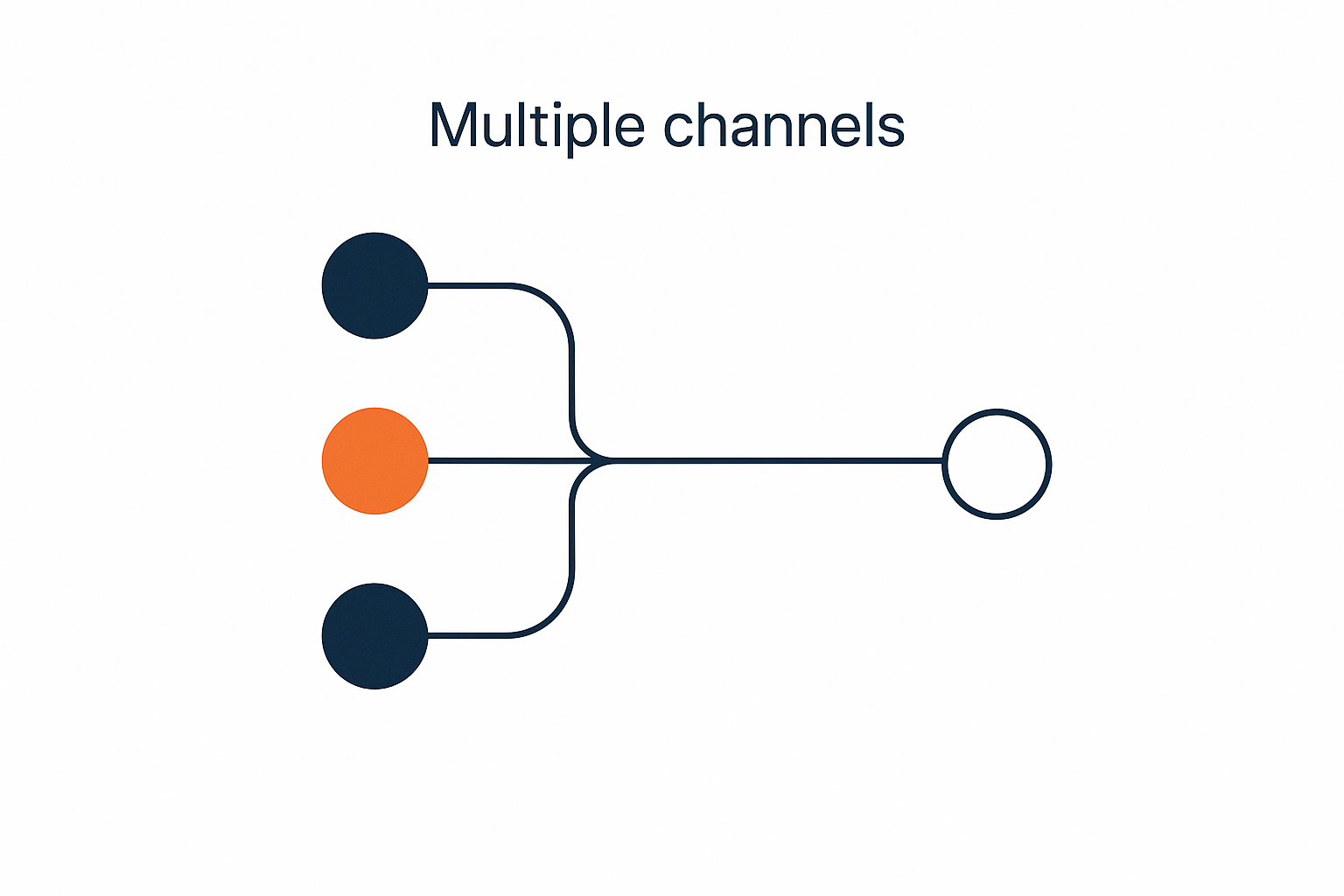
The structural risks are where referral dependence does its real damage.
Client concentration with no replacement plan. Because you have no system for bringing in new clients, you start over-servicing the ones you have to keep them. That feels like good service, but it is really insurance against a risk you cannot otherwise manage. If one or two important clients leave, or a single relationship breaks down, you are genuinely exposed, with no obvious way to fill the gap.
Weakening pricing power. Referral clients arrive with expectations someone else created, usually anchored to the fee a past client paid. That number follows you. Over time, it becomes a constant, quiet pressure to justify your fees, stretch your scope, and make concessions you never wanted to make. You are negotiating against a price you didn't set and can't see.
Growth you cannot control. Referrals can bring wonderful clients, but they come only when others decide to mention you. That makes lead flow unpredictable, revenue difficult to project, and your own confidence in the firm's future shaky. You are running a business whose growth dial is controlled by people outside it, and no amount of effort on your side reliably moves it.
The Cost You Only See at the Exit
Two costs compound silently for the longest, and they are the ones founders regret most.
The first is opportunity. Because referrals keep business flowing, there is never any urgency to invest in brand building or lead generation. Each year you postpone it feels reasonable. But the cost is years of missed compounding, while competitors who started building those assets earlier now have a brand and a pipeline that attract clients without an introduction. That gap doesn't stay constant. It widens.
The second is the sharpest of all: a business built on a founder's reputation and relationships is, in practice, unsellable. Any serious buyer or investor understands that when you step back, the pipeline steps back with you. There is no asset to acquire: only you, and you are leaving. A founder can spend twenty years building a firm and discover, at the very end, that they built themselves a demanding job rather than something they could ever sell or step away from.
What to Build Instead
None of this is an argument against referrals. They are one of the best sources of clients you will ever have, and a healthy firm keeps earning them. The shift is to stop letting them be your only system.
Start with one honest audit. Look at your last ten clients and mark, for each, whether they came because of something your business does, or because of someone you know. If all ten fall into the second column, you don't have a pipeline; you have a network doing you favours. The two feel identical right up until the favours slow down.
Then build a single deliberate path to clients that does not depend on anyone remembering your name. That means three things working together: clear positioning, so a stranger understands what you do and who it is for; a defined offer, so you are proving the value of one thing rather than saying yes to everything; and one repeatable channel through which the right clients can find and choose you. You don't need five channels. One that genuinely works changes everything, because it proves the firm can win clients on its own, and every risk in this article eases the moment that becomes true.
The work isn't dramatic. It is a series of unglamorous decisions made while things still feel fine. That is the only time it can be made cheaply.
Referral dependence isn't a problem of bad clients or slow months. It is the risk of building a business you cannot predict, cannot price with confidence, and cannot eventually sell. The right time to address it is while the referrals are still flowing, not the year they stop.
If you want to see clearly where your own firm stands, get in touch and tell me what you're seeing: you'll get an honest read of how dependent your pipeline really is, and where the first fix lies.

About the Author
Anoop Kurup
I'm a marketing consultant for B2B service firms in India. I fix the positioning, visibility, and lead generation behind weak sales. Before this: a research lab at GE, then patents and competitive strategy, then an intellectual-property firm I built and exited. I work with founders one engagement at a time from Bangalore.
More about meRelated reading
Getting clients beyond referrals
SEO for Consultants: Rank Without a Big Team
You don't need a content factory to rank. Here is how a solo consultant or small firm in India uses focused SEO and thought leadership to get found by the right buyers.
Getting clients beyond referrals
Cold Outreach for Consultants That Doesn’t Suck
Most cold outreach gets ignored because it leads with the sender, not the prospect's problem. How consultants and small B2B firms write outreach that earns replies.
Getting clients beyond referrals
Lead Generation for Consultants & Service Firms
Most lead-generation advice is built for SaaS, not consultants. Here is how B2B service firms generate qualified leads that actually convert.
Still depending on referrals?
Tell me what's going on with your sales. I'll tell you honestly if I can help.
Get in touch