
Why Prospects Say 'Not Now': Your Firm Only Sells One Big Thing
A single large offer makes every prospect decide everything at once, so most defer. A small, paid first step lets a stranger buy before they trust you.

Picture a restaurant with one thing on the menu. A nine-course tasting menu, ₹6,000 a head, three hours at the table. No à la carte. No starters. No walking in for a coffee and a look at the room. The kitchen is excellent. The chef spent twenty years getting that good, and everything that leaves the pass proves it.
Now put a stranger on the pavement outside at eight o'clock on a Friday. He has never eaten there. He has a signboard, whatever he can see through the glass, and a price. To find out whether the chef is any good, he must first commit an evening and ₹6,000 to the belief that the chef is good.
He walks on.
Not because he judged the food and found it wanting. He never got close enough to judge anything. He declined to make a large decision on small information, which is the only sensible thing to do when you are standing on a pavement with your wallet in your pocket.
Most professional service firms are that restaurant.
You may have eight things listed on your website: strategy, implementation, training, audits, a retainer. Count them again, but count the decisions rather than the line items. How many of those can a stranger actually buy without meeting you? For most firms the honest answer is one: a proposal. A scope negotiated over three calls, a number with a lot of zeros in it, a quarter of their year, and a signature that commits them to you before they have any evidence about you at all. Eight items, one decision. That is a menu, not an architecture.
"Not Now" Is the Correct Answer to the Question You Asked
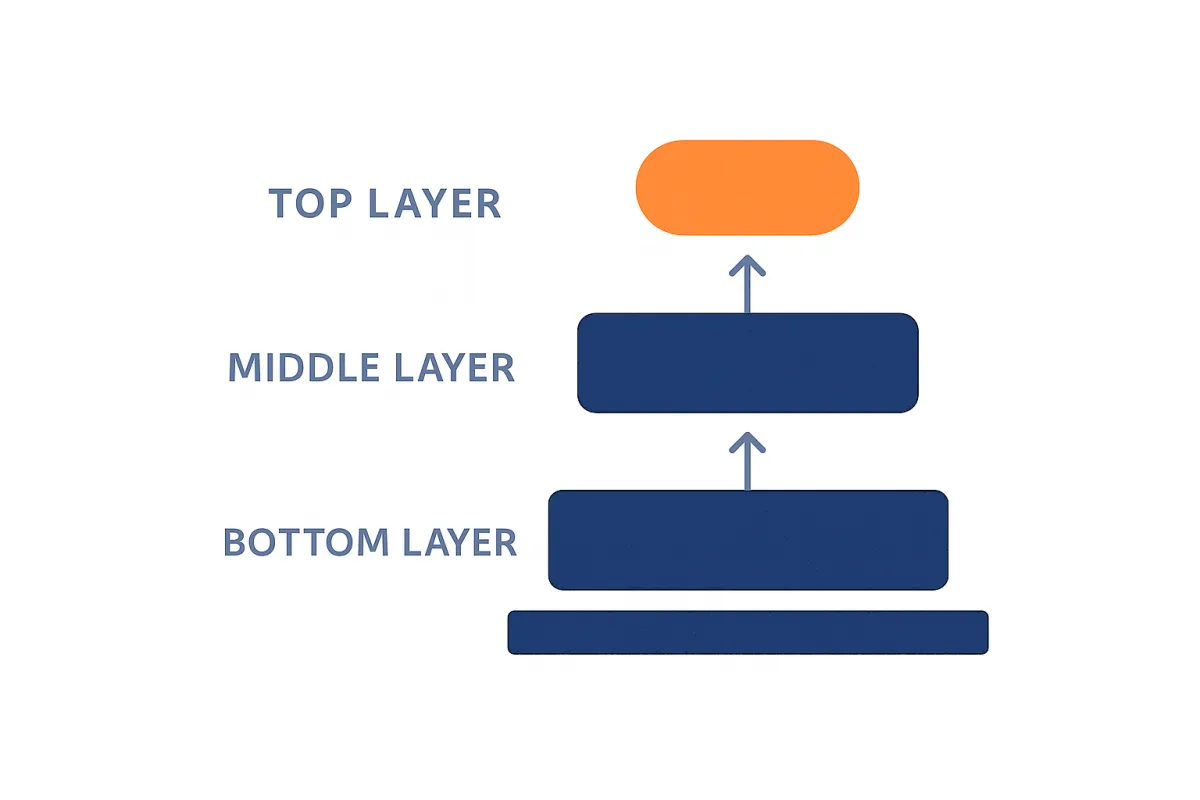
When a prospect goes quiet after the proposal, the firm reads it as a selling failure. The deck wasn't sharp enough. The case studies weren't strong enough. Somebody should follow up again next week.
I'd reframe it. The prospect isn't judging you. He is solving a decision problem, and two things govern how it comes out: how bad it is if he's wrong, and how much he knows. Your flagship engagement maximises the first and starves the second. He is being asked to risk a large sum and a quarter of his year on the basis of a website, a conversation, and three testimonials from people he's never met.
High stakes, thin information. A capable buyer defers. Every time. And deferring costs him nothing, which is why "let me think about it" is not a soft no. It's the rational answer, and he arrived at it correctly.
You can attack that on either side. Almost every firm attacks the information side: better case studies, a longer proposal, another call, a webinar, a newsletter, more proof. Some of it helps at the margin. But all of it is you telling him, and none of it is him finding out. Meanwhile the other side is untouched: the consequence of being wrong is still the entire engagement.
So attack that side instead. Shrink the consequence. Give the man something small he can buy. That is the whole idea, and everything below is just the mechanics of doing it honestly.
The Free Consultation Doesn't Count
The obvious response is the free discovery call, and it doesn't work, for two reasons worth being precise about.
First, it doesn't shrink the decision. It postpones it by forty-five minutes. At the end of that call the prospect still faces the same all-or-nothing choice about the same large engagement, only now with a slightly warmer feeling about you. Nothing structural has changed.
Second, free decides what the meeting is. When no money has changed hands, nothing has been bought, and you are pitching. Both of you know it. Everything you say in that room gets discounted as sales material, because that is exactly what it is. You cannot demonstrate your judgement in a room where your judgement is understood to be an advertisement for your judgement.
A price changes the room, and it doesn't need to be a large one. When a firm has paid, they are no longer deciding whether to trust you; they have bought something and they want it to be good. You stop pitching and start working. That is the first time they watch you do the actual job, which is the only evidence that was ever going to convince them.
A price also sorts people. The person who books a free call and the person who pays ₹25,000 are not the same person. Not wealthier. More decided.
A First Step Has to Finish
Most attempts at a smaller offer fail because the firm builds a sample rather than a step. The tests are simple.
It has to end. A "trial month" of the retainer is not a first step; it is the same open-ended commitment with a smaller deposit, and buyers read it that way. A first step has a start date, an end date, and a thing that gets handed over.
It has to be worth the money on its own. This is the hard one. A prospect should be able to buy the first step, get real value from it, never buy anything else from you again, and still consider the money well spent. If that isn't true, if the deliverable only makes sense as a prelude to the big engagement, you haven't built a first step. You've built a sales call with an invoice attached. People can smell that from a distance, and it does more damage than having no first step at all.
It has to be a different thing, not a thinner one. A "mini audit" that is the full audit done with less care is a worse product, not a smaller decision. The useful question is: what is the smallest complete piece of this problem? Not the cheapest slice of my process, but the smallest whole question that can be answered properly and stand on its own.
It has to be priced far enough below the flagship to be a different kind of decision. If the first step is ₹75,000 and the engagement is ₹1 lakh, you haven't built a step. You've built a discount with extra steps.
What My Own Ladder Looks Like
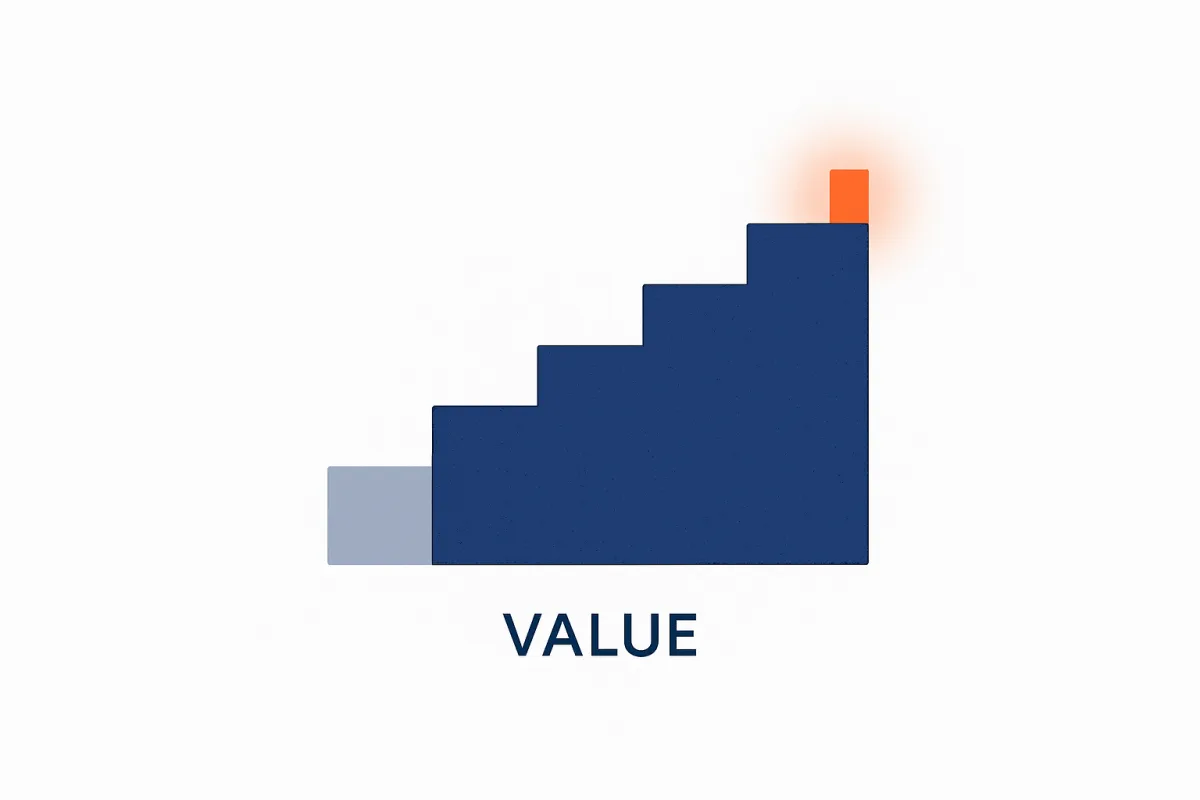
I'd rather show you mine than describe a hypothetical one, because this is how I have sold my own work.
There are two things for sale on my site, and a free layer in front of them.
The free layer is the writing: the blog, the guides, the case studies. It costs nothing because it costs me nothing to run. It is not the first step in the sense above; it's the window in the restaurant wall. It exists so a stranger can see something real before deciding whether to walk in.
The Pipeline Reality Check is a small paid diagnostic: one week, done entirely by me. You send your last twelve months of deals: where each came from, roughly how big, how long it took to close, who did the selling. A week later you get a written verdict: how much of your revenue arrives pre-sold through referrals, where your client concentration risk sits, what your current way of selling will produce over the next six months if nothing changes, the three moves that change it in the order I'd make them, and a straight answer on whether the larger engagement is your next step, including an honest "not yet" when that's the truth.
Test it against what I just argued. It ends. You keep the document. If you never speak to me again, you paid a modest fee for an accurate read of your own pipeline, which is a fair trade. And it is not a thinner version of the engagement; it answers a different question entirely.
CLEAR is the engagement: three months, quoted only after a Reality Check, because nobody should commit to it without first seeing their situation in their own numbers.
One thing about that structure is the first-step idea repeating: each month is paid in advance and month-to-month, so nobody bets the whole engagement on a stranger. The work has to earn every renewal.
Two paid rungs and a window. That's the whole ladder. It isn't elaborate, and it doesn't need to be.
A Ladder Is Not a Menu
The instinct after reading this is to go and build five tiers. Resist it.
A menu asks the prospect to choose. A ladder tells him where to start. The number of rungs that solves this problem is two: one small paid step, one real engagement. Every rung beyond that is another offer to name, price, explain, and sell. A prospect standing in front of five doors is a prospect back on the pavement, which is the problem you were trying to solve.
Add a rung only when a real buyer asks for something that doesn't exist yet. That is the only evidence worth building on. And don't treat the ladder as a conveyor: some firms will take the first step and stop there because it answered their question, and that's a good outcome. Some will skip it entirely because they already know you. The ladder isn't a process people are pushed through. It's a smaller door for the ones who would otherwise have walked past.
The reason your flagship doesn't sell is rarely that the market can't afford it, and almost never that your work isn't good enough. It's that you're asking strangers to make one large decision with very little to go on, and a sensible person says "not now" to that question.
Give them something smaller to buy. Something that finishes, costs real money, and leaves them holding something worth having. Do that and the big engagement stops being the first thing you have to sell. It becomes the thing they ask you for.
Want to see where your own pipeline actually stands before you rearrange anything? Get in touch and tell me what you're seeing. I'll tell you honestly where I'd start.

About the Author
Anoop Kurup
I'm a marketing consultant for B2B service firms in India. I fix the positioning, visibility, and lead generation behind weak sales. Before this: a research lab at GE, then patents and competitive strategy, then an intellectual-property firm I built and exited. I work with founders one engagement at a time from Bangalore.
More about meRelated reading
Getting clients beyond referrals
SEO for Consultants: Rank Without a Big Team
You don't need a content factory to rank. Here is how a solo consultant or small firm in India uses focused SEO and thought leadership to get found by the right buyers.
Getting clients beyond referrals
Cold Outreach for Consultants That Doesn’t Suck
Most cold outreach gets ignored because it leads with the sender, not the prospect's problem. How consultants and small B2B firms write outreach that earns replies.
Getting clients beyond referrals
Lead Generation for Consultants & Service Firms
Most lead-generation advice is built for SaaS, not consultants. Here is how B2B service firms generate qualified leads that actually convert.
Still depending on referrals?
Tell me what's going on with your sales. I'll tell you honestly if I can help.
Get in touch