
How to Handle Price Objections as a Consultant: It Starts With Your Pipeline
"You're too expensive" is rarely about price. It's what a thin pipeline sounds like. Here's why, and what to fix before you discount.
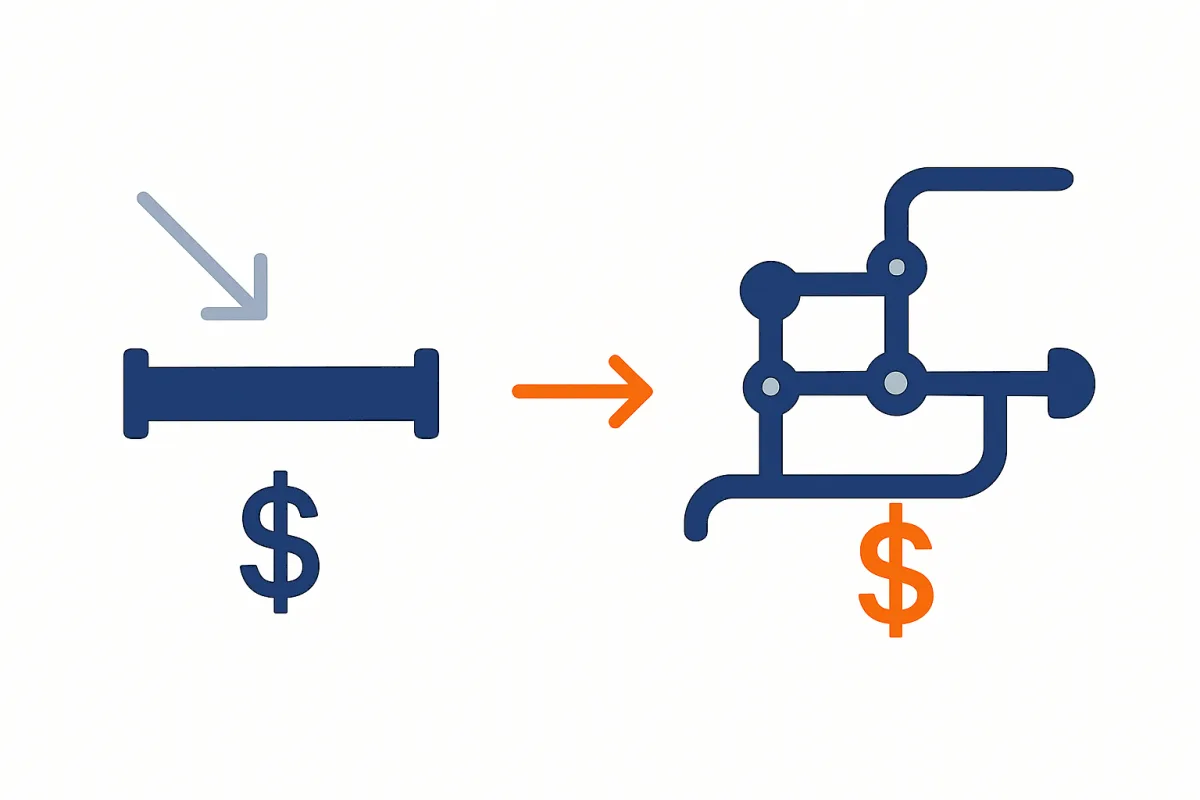
A client pushes back on your price. What do you do?
Most consultants, CA firm owners, and expert-service founders give ground. Not because they don't know their worth, but because their pipeline leaves them no real choice. When one proposal represents a significant portion of next month's revenue, the stakes in that room change completely. You hold the line or you hold the month.
This article explains why the price objection is almost never really about the price, what actually lets you hold your rates, and one specific thing you can do before your next proposal to walk in with real posture.
Price Objections Are Usually Conviction Tests, Not Budget Problems
Most clients who ask "can we do something about the price?" are not in genuine financial distress. They are running a test.
They've sat across from consultants before. They know the pattern: a number goes up, they push, the number comes down. It works. So they try it with you.
This distinction matters because it changes the nature of the problem. If a client genuinely cannot afford your rate, the conversation is about fit, not negotiation. But most price objections are not that. They are probes. The client is asking one question: does this consultant believe in their own number?
Your answer to that question, not the price itself, sets the tone for everything that follows.
The Real Reason Expert-Founders Fold on Price
The reason most expert-founders discount under price pressure has nothing to do with negotiation technique. It has everything to do with the pipeline they walked in with.
When you're running one or two active proposals at any given time, that conversation feels existential. This is the deal. If this doesn't close, next month becomes uncertain. That pressure doesn't stay hidden. It shows up in how quickly the discount appears. Experienced decision-makers, the senior partners and founders who run their own businesses, can sense it. When they do, they push harder.
In a proposal walkthrough this week, a six-month programme with a senior decision-maker, the price question arrived within thirty seconds of pricing going on screen. I've been in that position before, in an earlier stage of my practice, when a thin pipeline made that question very hard to answer honestly. This time it wasn't. Not because I've become a sharper negotiator. Because I had other conversations already active.
The Discount That Closes the Deal Often Costs More Than You Think
When you reduce your price to close a deal, you do two things simultaneously: you close this deal, and you set a precedent for everything that follows.
You signal to this client, and to yourself, that your original number wasn't real. That the price was a starting position, not a considered reflection of what you deliver. That signal is very difficult to undo.
The client who got 15 percent off in month one will expect flexibility in month seven. The next referral they send your way arrives with the same expectation already built in, often before you've had a single conversation with them.
The immediate cost is visible: the margin you gave up on this deal. The compounding cost, how this client and their referrals are permanently positioned toward your rates, is the one most founders don't account for when they decide to "just close the deal."
Three Structural Models Instead of a Discount
The alternative to discounting is structural flexibility: adjusting what the engagement looks like, not what it costs.
In that proposal walkthrough, my response to the price question was immediate. I said: we don't discount the system. But we can adjust the scope or the risk. Three models.
Standard Retainer: the full six-month programme, fixed monthly fee, complete scope of work.
Shared-Risk: lower upfront investment, with a percentage tied to the revenue outcomes we deliver together.
Modular Sprint: a focused ninety-day engagement on one specific problem first, before committing to the full programme.
Three structurally different options, each designed for a different appetite: for investment, for timeline, for risk.
When a client can only push down on one number, the negotiation is adversarial. You're defending a price; they're attacking it. When you offer three structurally different models, the dynamic shifts. You stop defending and start helping them find the right fit. The question moves from "how much can I get off" to "which of these works for our situation."
That is a fundamentally different conversation. And it produces fundamentally different outcomes: for the deal you're in, and for how this client understands your positioning going forward.
Count Your Active Conversations Before Your Next Proposal
That response, the calm, the structure, the ability to hold the line, was not a technique I'd practised. It came from what existed outside that room. I had other conversations in progress. A pipeline that didn't depend on this one deal closing. If she had said no to all three models, the business would have continued.
That is what gives you posture in a negotiation. Not a better script. Not more confidence. A pipeline that means you are never choosing between your margin and your month.
Here is one specific exercise to do before your next proposal. It takes ten minutes.
Count your active pipeline conversations right now. Not your network. Not your LinkedIn connections. Not people you've worked with before who might call again. Active conversations: people who are currently evaluating whether to work with you.
If that number is less than five, you are negotiating from scarcity every time you walk into a room. Scarcity has a direct, measurable cost: the margin you give up on deals you close, the positioning you signal to clients who stay, and the deals you can't walk away from when you should.
The goal is not to close every conversation. The goal is to have enough conversations active at any time that you can afford to lose any single one without it changing your month.
For most expert-founders, that threshold is somewhere between five and ten active conversations at different stages: some early, some mid, some approaching close. Not all at proposal stage. But enough that no single outcome feels decisive.
The price objection is a lagging indicator. It reflects the pipeline health that existed in the weeks before you walked into that room.
You don't fix your negotiation posture in the meeting. You fix it well before you get there. Build the pipeline that gives you options, and the room you walk into will be a different one entirely.
Not sure how thin your pipeline really is? Get in touch and tell me what you're seeing. I'll tell you where your pipeline stands, and what's quietly costing you posture in the room.

About the Author
Anoop Kurup
I'm a marketing consultant for B2B service firms in India. I fix the positioning, visibility, and lead generation behind weak sales. Before this: a research lab at GE, then patents and competitive strategy, then an intellectual-property firm I built and exited. I work with founders one engagement at a time from Bangalore.
More about meRelated reading
Positioning and pricing
Value-Based Pricing for Consultants: A Guide
Charging by the hour caps your income and rewards being slow. Here is how consultants move to value-based pricing without scaring clients off.
Positioning and pricing
Why Disqualifying Prospects Faster Generates More Revenue
For B2B service firms, leads are a quality problem, not a volume one. Here's why disqualifying prospects faster grows revenue, and the system to do it.
Positioning and pricing
Why Service Businesses Lose Money on Smaller Clients
Service firms break when they move from large clients to small ones. The real reason isn't pricing; it's how you're being bought.
Still depending on referrals?
Tell me what's going on with your sales. I'll tell you honestly if I can help.
Get in touch