
How to Scale a Consulting Business Beyond You
Growth stalls when everything runs through the founder. Here is how to scale a consulting business by removing yourself from the parts that don’t need you.

Here is a test worth running on your consulting business: could it survive your two-week holiday? Not survive as in nothing burns down. Survive as in proposals go out, projects move forward, and a new enquiry gets a proper reply that you did not write from a beach.
Most founders fail this test, and most know it without running it. The business is profitable, the clients are happy, and none of it works unless you are in the room. That is not a business yet. It is a well-paid job with your name on the door.
Nearly everything written about how to scale a consulting business treats scaling as addition: hire more people, sell more services, open more markets. Twenty years of building and exiting firms has taught me the opposite. Scaling starts as subtraction. You take the founder out of everything that does not need the founder, and the business grows into the space you vacate.
The Founder Bottleneck, Mapped
Before fixing the bottleneck, look at it honestly. Take a sheet of paper and list every recurring activity in the business: lead follow-ups, proposals, kick-offs, delivery, reviews, invoicing, the newsletter you keep meaning to restart. Against each one, note who does it. For most solo and small consulting firms the list has one name on it, repeated all the way down.
Now sort the list into three columns. Work only you can do. Work someone else could do with training and a checklist. Work nobody should be doing by hand at all. The first honest pass is usually a shock: the "only me" column is long, and most of what sits in it does not belong there. It is there because you never wrote anything down, not because the work needs you.
The bottleneck bites hardest in sales. When the founder is the only person who can sell, the pipeline fills only when the founder has spare attention, which is precisely when the business least needs new work. I have written about this trap before, in the founder-led sales piece, and the conclusion belongs here too: what looks like a selling ceiling is usually a marketing gap. If enquiries arrive only through your personal networking, the constraint is not your closing skill. It is that nothing except you generates demand.
What Only the Founder Should Do
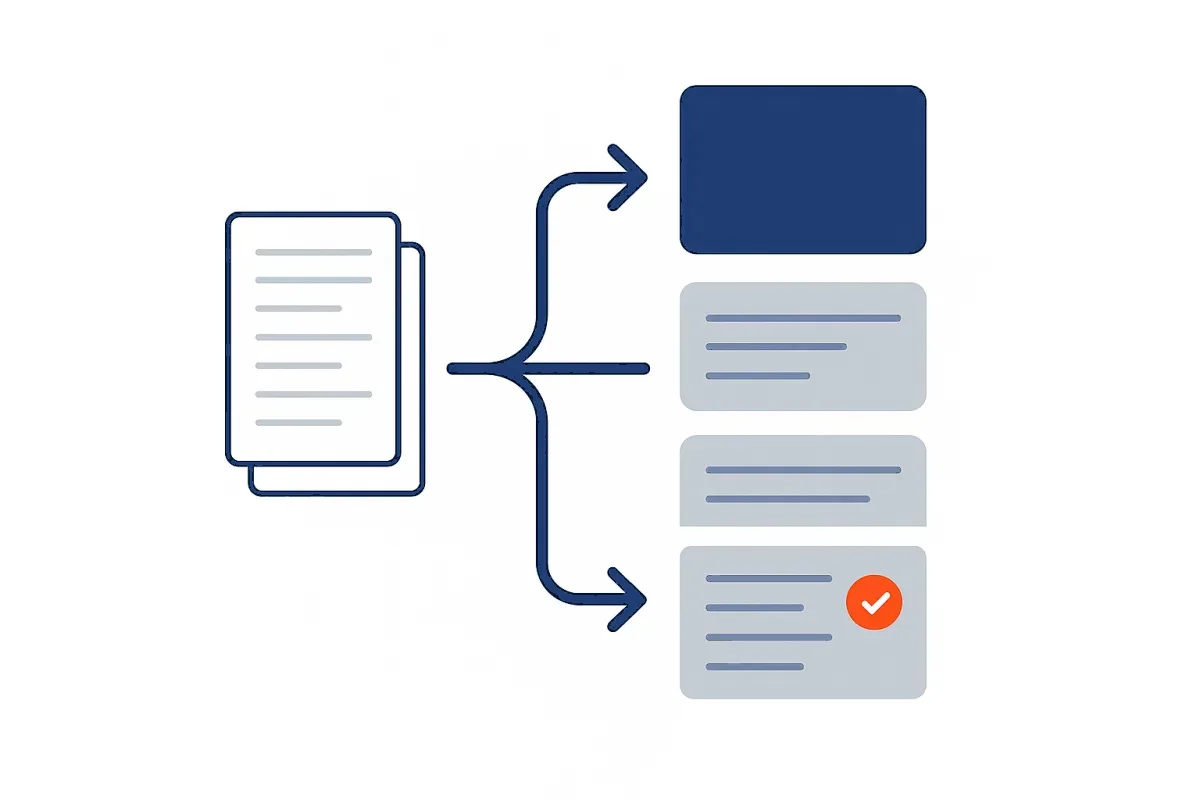
Subtraction does not mean the founder becomes decorative. A few things genuinely deserve your name in that first column, and protecting them is the point of clearing everything else.
Think of a serious restaurant. The chef who built its reputation does not cook every plate on a busy night. The chef writes the recipes, trains the line, tastes ruthlessly, and decides what goes on the menu. The food is still unmistakably theirs; their hands are just no longer the constraint on how many tables get served.
The consulting equivalent: positioning and the offer, because deciding what the firm sells and to whom is judgement that cannot be delegated early. The quality bar, because you must be the one who tastes. The senior relationships where your presence is part of what was bought. And the thinking, the frameworks and points of view that become the firm's intellectual property. That last one matters more than founders expect, because codified thinking is exactly what lets other people deliver your work without diluting it.
Everything outside that short list is a candidate for subtraction. Not all at once, and not carelessly. But the default answer to "does this need me?" should become no, with the burden of proof on yes.
Systems, Templates, and the First Hire
The order of operations matters: codify first, delegate second. A firm that hires before it writes anything down does not remove the bottleneck. It gives the bottleneck an audience. The new hire queues outside your head for decisions, and you are now doing your old job plus explaining it daily.
So write the recipes. Turn your diagnostic questions into a checklist. Turn your last five proposals into a template with the thinking annotated in the margins. Turn the engagement you deliver most often into a named process with stages, so progress is visible without a status call. None of this is glamorous work, and all of it compounds: every hour spent writing a process is an hour you stop spending forever.
A defined offer makes this far easier, which is why productising and scaling travel together. A bespoke, it-depends engagement can only be delivered by the person whose judgement shapes it, while a productised service with a fixed scope and outcome can be taught. If your work resists systemising, that usually means the offer is still too shapeless to scale.
Then, and only then, hire. The first hire is rarely a junior copy of you. It is the person who takes the second and third columns off your list: delivery support, research, project coordination, operations. You are not buying a clone; you are buying back the hours that only you can spend on selling, thinking, and the senior work clients actually hired the firm for.
Recurring Revenue and the Retainer Model

Project revenue has a rhythm every consultant knows: win work, deliver work, look up, discover the pipeline is empty, scramble. The feast-and-famine cycle is not a personal failing. It is the arithmetic of a model where every rupee must be re-won from zero each quarter.
Recurring revenue changes the arithmetic. For consultants it usually takes one of three shapes: an ongoing advisory retainer after a project ends, a maintenance engagement where you monitor and tune the thing you installed, or a subscription-shaped service with a defined monthly deliverable. In each case the client keeps paying because value keeps arriving, and the firm starts each month above zero.
One warning about the retainer model, because the bad version is common: "unlimited access for a monthly fee" is not recurring revenue, it is an hourly job in disguise with the meter removed. A retainer that scales has a defined scope, a named outcome, and a price anchored to what the outcome is worth rather than to the hours consumed. I have covered that pricing logic in the piece on value-based pricing for consultants; it applies to retainers with extra force, because a mispriced retainer compounds monthly.
The strategic effect is larger than the cash flow. A floor of recurring revenue is what buys the founder room to stop selling desperately and start building deliberately. It funds the systemising described above. Stability is not the reward for scaling; it is the precondition.
Scale the System, Not the Hours
Here is where the threads join. A consulting business scales when three systems run without the founder inside them: a delivery system, which is the templates, processes and people above; a revenue floor, which is the recurring work; and a marketing system, which is the one founders build last and should build first. A weekly rhythm that produces qualified enquiries whether or not you networked that week is what makes every other part safe to grow. That system is its own subject, and I have laid it out in full in my guide to building a client acquisition system.
Two questions come up whenever I discuss this, so let me answer them plainly. First: does scaling require employees at all? No. A one-person consulting company with codified processes, a bench of trusted associates for delivery, and a marketing system feeding it can grow income well past what hours-for-money allows, without a single payroll entry. Scaling means removing the founder as the constraint. Headcount is one way, not the definition.
Second: will AI replace consultants? It is already replacing parts of consulting, and mostly the parts you should be happiest to lose: background research, first drafts, meeting summaries, reporting. For a founder trying to remove themselves from low-judgement work, that is not a threat, it is a subsidy. The judgement, the standards, and the relationships stay human. The drudgery was never the product.
Scaling, then, is not a leap. It is a sequence: map the bottleneck, protect what only you should do, codify the rest, build a revenue floor, and put a marketing system underneath it all. Every step is boring on its own. Together they turn a job with letterhead into a firm.
How dependent is the business on you, really? Get in touch and tell me what a two-week holiday would break. I'll tell you honestly which dependency to remove first.

About the Author
Anoop Kurup
I'm a marketing consultant for B2B service firms in India. I fix the positioning, visibility, and lead generation behind weak sales. Before this: a research lab at GE, then patents and competitive strategy, then an intellectual-property firm I built and exited. I work with founders one engagement at a time from Bangalore.
More about meCLEAR · Retain
See how dependent the business is on you.
Tell me what you're seeing in your pipeline. I'll tell you honestly if I can help, and where I'd start.
Get in touch