
Brand Building for Professional Services Firms
Professional services firms live on trust, yet most have no brand beyond their referral circle. Here is how to build one deliberately.
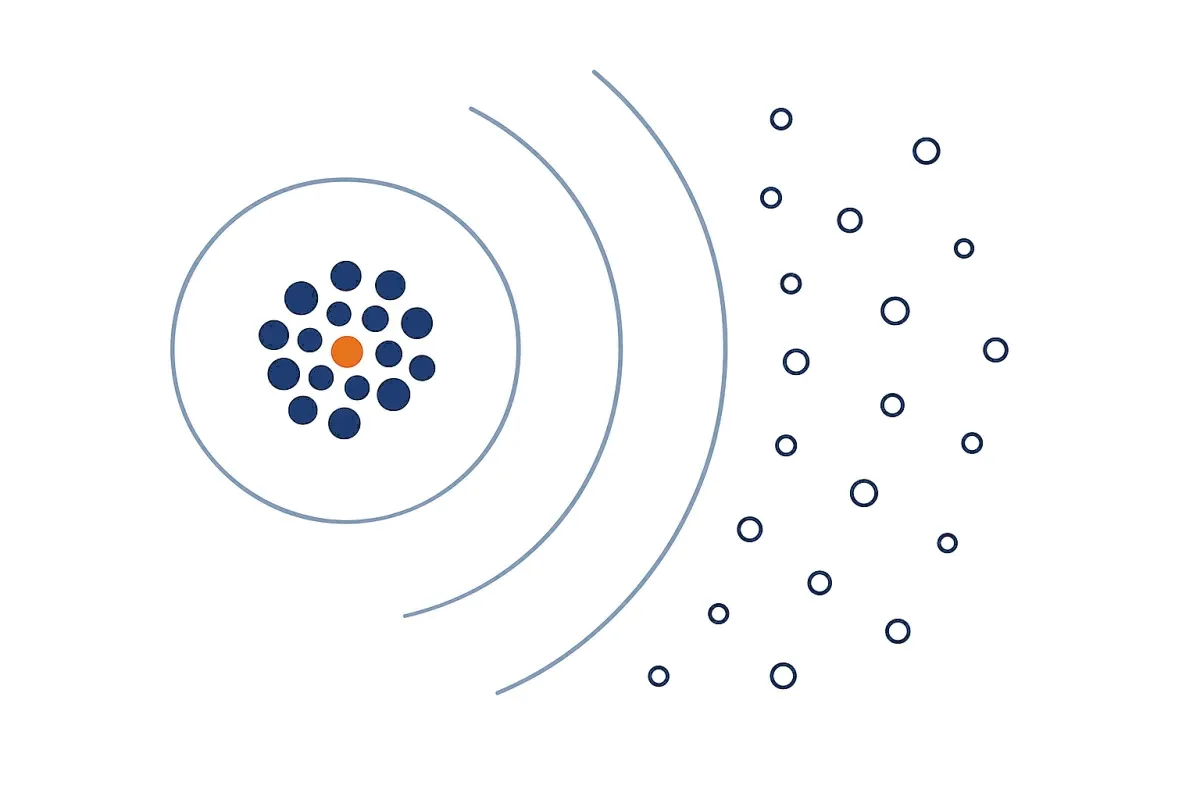
Early in a first conversation, I ask founders of established firms a simple question: do you have a brand? Almost all of them say yes. They have been in business for ten or fifteen years, the clients stay, and people in their circle speak well of them. Then I ask a second question. Of the last ten enquiries you received, how many came from someone who had never met you, never worked with you, and was not introduced by anyone who had?
The answer is usually one. Often it is none.
That is a reputation, and the difference between a reputation and a brand matters more for a professional services firm than for almost any other kind of business. A reputation lives in the heads of people who have worked with you. A brand lives in the heads of people who have not worked with you yet. The first is earned one client at a time and travels only as far as those clients choose to carry it. The second travels on its own.
What a Brand Actually Is for a Services Firm
Say "brand building" to most founders and they picture a new logo, a colour palette, and a website redesign. Those things are the packaging of a brand. They are worth doing well, and they are also the easiest part to buy, which is why so many firms buy them and then wonder why nothing changed.
For a product company, some of the brand really is the look. You can see the product, pick it up, and compare it with the one beside it. A professional services buyer can do none of that. There is nothing to inspect before the purchase. What they are buying is a promise that a group of people will understand their problem and solve it well, and the only evidence they have is what they already believe about you before the first call.
So here is the working definition I use. A services brand is a reputation made repeatable: the answer to "who do you call for this problem?", held by people you have never met. It is trust that arrives before you do. That is why trust businesses need brands more than anyone, and why, oddly, they build them least.
Search for this topic and you will find frameworks with five Cs and seven pillars. Some of them are sensible. For a firm of five or fifty people, though, counting pillars is a distraction. There is one question worth asking: when a stranger with your kind of problem asks around, does your name come up, and does it come up for the right reason?
Why Referral-Dependent Firms Feel Branded but Are Not
Referrals create a convincing illusion of a brand. Enquiries arrive already warm, the buyer has heard good things, and the sales conversation is short. It feels exactly like being well known.
Look closer at what is happening. The buyer did not choose you because of anything they knew about your firm. They chose you because someone they trust vouched for you. The credibility in that exchange belongs to the referrer, who lent it to you for one introduction. When the introduction is over, the loan is repaid. The next buyer who has never met your referrer starts from zero.
This is why so many good firms hit a ceiling they cannot explain. Their work is excellent and their clients are loyal, yet growth arrives only as fast as the referral circle happens to meet people with the right problem. I have written about the risks of that dependence and about how to stop relying on referrals as your only source of work. The brand question sits underneath both. A firm with a real brand still gets referrals, and better ones, because the referrer is recommending a name the buyer has already half heard of.
There is a quick test. Take away every introduction and ask whether the buyer would have found you, and whether they would have understood what you are known for. If the honest answer is no, you are running on borrowed trust. That is a fine place to start. It is a poor place to stay.
The Three Assets: a Point of View, a Body of Work, a Recognisable Name

A professional services brand is built from three assets. None of them needs an advertising budget. All of them need time and a decision.
A point of view. This is an opinion about your buyer's problem that a reasonable person could disagree with. "We deliver quality work with integrity" is not a point of view, because no one argues for the opposite. "Most leadership training fails because it happens off-site, away from the work" is one. It gives the buyer something to react to, and people remember what they reacted to. A firm with no opinions has no brand, only a list of services. This site runs on one: your sales problem is usually a marketing problem. You may disagree, and that is fine. You will at least remember which consultant said it.
A point of view also does the sorting for you. The buyers who agree with it arrive halfway sold. The buyers who disagree leave early, which saves both of you a proposal. It is the same logic as positioning: you choose a problem and a way of seeing it, and you stop trying to appeal to everyone.
A body of work. An opinion stated once is a remark. An opinion developed over fifty articles, a dozen talks, and a shelf of case studies is a body of work, and it is the closest thing a services firm has to a product a buyer can inspect. It lets someone who has never met you sample your thinking at eleven at night, on their own schedule, before deciding whether to call. This is where brand building and SEO for consultants turn out to be the same job seen from two angles: the pages that rank are the pages that show what you think.
The useful property of a body of work is that it compounds. Each new piece makes the older ones more credible, because it shows the thinking was not a one-off. A single article proves you can write. The fortieth article on the same problem proves you have been paying attention to it for years. This is why a brand behaves like interest rather than like a campaign. The returns in year three come mostly from what you did in years one and two.
A recognisable name. The third asset is a name the market attaches to your problem. Sometimes that is the firm's name. Sometimes it is a named method, which works when its job is to make your approach inspectable rather than to sound proprietary; the method behind my own work is called CLEAR for that reason. And sometimes it is a specialism so precise that the name follows from it. One consultant I worked with was a capable generalist offering "business growth advisory", like hundreds of others. He had also lived through the handover of a family business from one generation to the next. Once that became the thing he was known for, he stopped being one of many and became the person family businesses call when it is time to hand over the reins. His skill did not change. What people could repeat about him did.
A Brand-Building Rhythm a Busy Firm Can Sustain
Most brand building in professional services starts with enthusiasm and dies in the first busy quarter. The firm publishes four articles in January, a large project lands in February, and the blog goes quiet until someone notices it the following year. A burst followed by silence builds nothing, because the buyer who found you in January and came back in April saw a firm that had stopped talking.
The answer is a rhythm small enough to survive your busiest month. For most firms I work with, it looks something like this:
- One idea a week. A single observation from client work, written up properly. It can be a LinkedIn post, a short article, or a note to your email list. One is enough if it is real.
- One developed piece a month. An article that argues a position at length and lives on your own site, where it can be found by search and linked to for years.
- One piece of proof a quarter. A case study, a talk, a workshop, or an appearance on someone else's platform. Something that shows the point of view working in the world.
That is two or three hours a week for the founder, and the hours can come from material you already produce. You explain your thinking to prospects several times a week. Record one of those conversations, tidy the transcript, and you have your idea for the week. I have written about keeping this sustainable in a LinkedIn content rhythm that does not burn you out, and the same principle holds on every channel: consistency beats volume.
You may have come across the 3-7-27 rule in branding, which says people need three seconds to form an impression, seven exposures to remember you, and twenty-seven to act. I would not lean on the numbers; I have never seen them traced to a study. The idea underneath is sound, though. A buyer needs to meet your point of view many times before it sticks, and the repetition that bores you is still new to them. Say the same thing, from different angles, for longer than feels comfortable.
Measuring a Brand Without Vanity Metrics

The metrics that are easiest to count are the least useful here. Followers, impressions, and likes tell you something about reach, and reach without relevance builds nothing you own. A post that travels widely among other consultants has done very little with your buyers.
The signals that matter are quieter, and you will find most of them in your enquiries and sales calls rather than in a dashboard:
- The unintroduced enquiry. Track what share of enquiries arrive with no referrer at all. For a referral-dependent firm this starts near zero. Watching it climb is the clearest single measure of a brand forming.
- "I read your piece on..." Enquiries that mention a specific article, talk, or idea. That sentence means your body of work did the first part of the selling before you were in the room.
- The words buyers use. On a first call, listen to how the prospect describes you. When they start repeating your point of view back to you, in your language, the brand is working.
- Shorter, easier conversations. Fewer questions about who you are, less pressure on the fee, and fewer requests to see three competing proposals. A buyer who arrives already believing you compares less.
As for timing, expect early signals within one to two quarters of consistent publishing, usually an enquiry or two that mentions your writing. A brand that meaningfully sells you before the first conversation takes a year or more. The pace depends far more on consistency than on how much you produce.
Brand Building Starts Upstream
Some firms publish steadily for a year and still do not build a brand, and the reason is that they have nothing specific to say. The articles are competent and interchangeable. They could have been written by any firm in the category, so the credit goes to the category rather than to the firm.
The fault is rarely in the writing. It is a positioning problem showing up in the content. A brand amplifies a position; it cannot invent one. If you have not decided which problem you solve, for which buyer, and why your approach beats the alternatives, the publishing will be vague in exactly the way the business is vague. The fix comes first from positioning, then from the differentiation that makes you the obvious choice within it, and then from a messaging framework that says it the same way everywhere. Brand building is what happens when that clear message is repeated in public, patiently, for long enough.
Get those in place and the brand becomes one working part of a larger system for getting clients beyond referrals: the part that makes every other part easier.
Great work, but nobody has heard of you? Get in touch. Tell me where your last ten enquiries came from and send me the last three things your firm published. I will tell you honestly whether you have a brand or a reputation, and what it would take to turn one into the other. If it needs a closer look, the usual first step is the Pipeline Reality Check, a one-week diagnosis of where new business really comes from.
Common questions
Do small professional services firms really need a brand?
Yes, because they sell trust, and a brand is trust that arrives before you do. Without one, every deal starts from zero or depends on a referrer lending you their credibility. A brand does not require an ad budget; it requires a consistent point of view published where your buyers already look.
How long does brand building take for a B2B firm?
Expect early signals, such as inbound enquiries that mention your content, within one to two quarters of consistent publishing. A brand that meaningfully pre-sells you typically takes a year or more. The pace depends far more on consistency than on volume.

Anoop Kurup
I'm a marketing consultant for B2B service firms in India. I fix the positioning, visibility, and lead generation behind weak sales. Before this: a research lab at GE, then patents and competitive strategy, then an intellectual-property firm I built and exited. I work with founders one engagement at a time from Bangalore.
More about meGreat work, but nobody has heard of you?
This is the Engage stage of the CLEAR method. Tell me what you're seeing in your pipeline. I'll tell you honestly if I can help, and where I'd start.
Get in touch