
Business Growth Consultant: What One Should Fix First
What a business growth consultant should do for a B2B services firm, why growth stalls in marketing rather than sales, and what to ask before you hire.
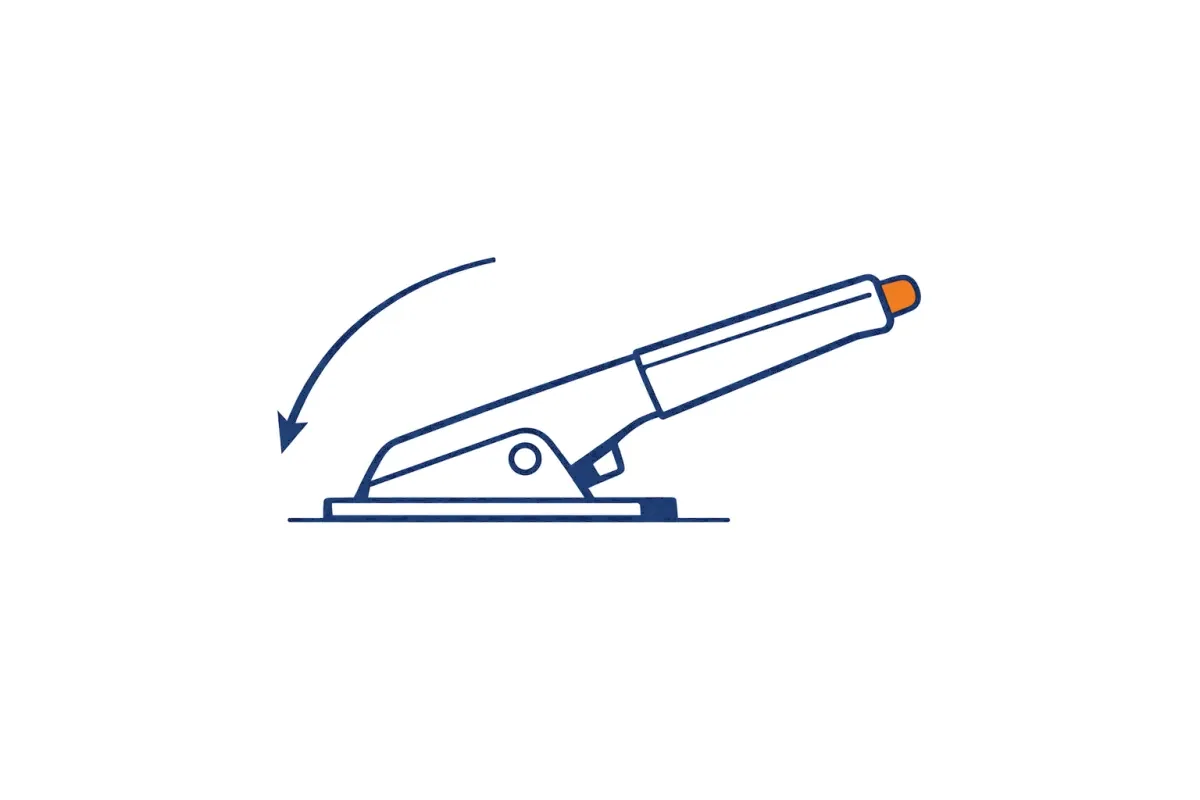
Picture a car that has started to feel tired. It strains on every slope, smells faintly of something burning, and will not go past sixty however hard you press the accelerator. You take it to a mechanic with a long theory about the engine. He listens politely, leans in, and releases the handbrake. It has been on a notch or two for weeks. (You still pay him. It feels fair.)
Most B2B services firms that go looking for a business growth consultant are in that car. Revenue has flattened, the founder is working harder than ever, and the instinct is to press the accelerator: more sales effort, a new hire, an agency, a burst of LinkedIn activity. Sometimes that is the right call. More often there is a handbrake on somewhere, and pressing harder only makes the engine louder.
This is a guide to what a growth consultant should do for a firm like yours, written by someone who does this work. So read it with some suspicion, and I will try to earn your trust by telling you when you should not hire anyone at all.
What a Business Growth Consultant Actually Does
"Growth consultant" is one of the loosest labels in business. In India it covers at least three quite different kinds of adviser, and it is worth knowing which one you are talking to before the first meeting.
The strategy and operations consultant. Often from a large firm background, sometimes running a scale-up consulting practice. They work on the business model, the organisation, processes, finance, and expansion into new markets or cities. Good ones are excellent for a firm that already has demand and is struggling to deliver it profitably at a larger size.
The sales coach or trainer. They work on the people who sell: the pitch, the follow-up, objection handling, closing. Valuable when you have plenty of qualified conversations and lose too many of them. Much less valuable when the real problem is that there are not enough conversations to lose.
The marketing growth consultant. This is the kind I am, and the kind most B2B services firms actually need, though they rarely search for it by that name. The job is to fix the reasons good buyers are not finding you, not choosing you, or not choosing you at the price you want: positioning, visibility, and a repeatable way of generating enquiries that does not depend on the founder's personal network.
A useful first question for anyone using the label is simply, "When a firm like mine stops growing, where do you usually find the cause?" The answer tells you which of the three you are speaking to, and whether their usual cause is likely to be yours.
Why Growth Stalls in a B2B Services Firm

In the firms I work with, the stall looks like a sales problem and is usually a marketing problem. The founder sees fewer proposals, longer decision cycles, more price pressure, and concludes that the firm needs to sell harder. Look one layer down and the cause is almost always one of four handbrakes.
The firm is not clearly for anyone. The website says "end-to-end solutions for businesses of all sizes". Every enquiry has to be educated from scratch about why this firm, and many quietly go to a competitor who seemed more specific. A firm that has not settled how it is different competes on price by default.
Nobody outside the network knows the firm exists. Growth to date came from referrals and repeat clients, which is a fine way to start and a poor way to grow. Referrals arrive when they arrive. I have written about why depending on referrals caps a firm's growth long before it caps its quality.
There is no routine for generating enquiries. Marketing happens in bursts: a flurry of posts after a slow month, an event, a website refresh, then silence once delivery picks up again. The pipeline follows the bursts, so revenue swings with the founder's attention.
Everything runs through the founder. The founder is the only person who can explain what the firm does well enough to win work. That works up to a point, and the point usually arrives somewhere around the time the founder's calendar fills up with delivery. This is the founder-led sales trap, and it is the most common reason a good firm stops growing.
A sales coach cannot release any of these handbrakes, because none of them sits in the sales conversation. They sit upstream of it, in what the firm says about itself and how often the right people hear it.
Growing a Firm Is Not the Same as Scaling It
The words get used interchangeably, but the difference matters when you choose an adviser. Growth means more revenue. Scaling means revenue grows faster than the effort, cost, and founder time it takes to produce it.
You can grow a consulting firm by working more hours, taking every enquiry, and hiring as fast as you win work. Plenty of firms do. It feels like progress until the founder is working seventy hours a week, margins have thinned, and the firm is the same business at a larger size, with the same fragility.
Scaling asks a different question: what has to be true for the next ten clients to arrive without the founder personally finding each one? The answers are mostly marketing answers. A position clear enough that the right buyers recognise themselves. Published thinking that does some of the persuading before the first call. A weekly rhythm someone other than the founder can run. If you are earlier in that journey, my guide on how to scale a consulting business beyond you covers the founder bottleneck in detail.
So if you are searching for a business scaling consultant, it is worth asking whether you need someone to redesign how the firm operates, or someone to fix how it is found and chosen. Both are real jobs. They are rarely the same person.
What a Good Growth Consultant Should Fix First

Order matters more than any single tactic. I work through it the same way each time, because each step depends on the one before it.
First, who the firm is for and why they buy. Not a persona document. A short, honest answer to which clients the firm serves best, what triggers them to look for help, and what they are really buying. Most firms find their best clients have more in common than they expected, and that their marketing has been speaking to a much wider, vaguer group.
Second, what the firm says. One clear statement of what you do, for whom, and why you rather than the alternatives. This becomes the spine of the website, the LinkedIn profile, the proposal, and the way every partner introduces the firm. Until it exists, every channel you add will carry a muddled message further.
Third, where the firm shows up. One or two channels the buyers actually pay attention to, chosen on evidence rather than fashion. For most B2B services firms in India that is some mix of search, LinkedIn, speaking, and deliberate referral relationships with adjacent professionals.
Fourth, the weekly rhythm. A small, repeatable set of activities that keeps the channels alive in busy months as well as quiet ones, with enough measurement to see where enquiries really come from. This is the step that turns marketing from a project into part of how the firm runs, and it is where AI now does a lot of the dull work.
That sequence is the backbone of CLEAR, the method I use with clients. You can work through it without me, and some firms do. What a consultant adds is an outside view of the first two steps, which are almost impossible to see clearly from inside your own firm.
When You Should Not Hire a Growth Consultant
The honest list is short, and it saves a lot of money.
When you cannot deliver more work. If the firm is already at capacity and hiring is slow, more enquiries will strain delivery and damage the reputation that brought you this far. Fix capacity first.
When the service itself is the problem. If clients leave unhappy, renewals are low, and referrals have dried up because the work disappoints, marketing will only introduce more people to the disappointment.
When you want someone to do the marketing for you indefinitely. A consultant should leave behind decisions, a message, and a routine your firm runs. If you want ongoing production, hire an agency or a marketing person, ideally after the positioning work is done so you can brief them properly.
When the founder will not change anything. Every growth engagement asks the founder to give something up: some clients, some services, some of the selling. If that is not on the table, save the fee.
Questions to Ask Before You Hire a Business Growth Consultant

These are designed to tell a diagnosis from a ready-made prescription. A good consultant will be glad you asked.
"What will you look at before you recommend anything?" Listen for questions about your clients, how past clients found you, your win rate, and your pricing. If the recommendations arrive before the questions, the answer was decided before they met you.
"Which of our problems are you not the right person for?" Someone with real expertise knows the edges of it. A consultant who can fix everything usually fixes nothing in particular.
"What will we own at the end?" Decisions, a written position and message, and a routine your team runs. Be careful of anything that only works while the consultant stays.
"Who will actually do the work?" In larger practices the person who sells the engagement is often not the person who delivers it. Ask to meet the second one.
"Have you grown a business yourself?" Not as a gotcha. Advice from someone who has carried the risk of their own firm tends to be more practical than advice from someone who has only studied other people's.
If you want a wider view of the hiring decision, my buyer's guide to hiring a B2B marketing consultant in India goes into engagement models and what a first conversation should cover.
How I Work as a Growth Consultant
Since you are reading this on my site, here are my own answers.
I am a marketing consultant for B2B services firms in India: consulting, agencies, training, and professional services. My background is twenty-plus years in marketing strategy and positioning, starting in a research lab at GE, then building and selling an intellectual property firm, then building marketing businesses of my own. I have carried the risk of my own firms, and I know how hard it is to see your own handbrake from the driver's seat.
I work alone, so you get me rather than a team. Engagements are scoped after a conversation. The usual first step is the Pipeline Reality Check, a one-week diagnosis of where your new business actually comes from and where it stalls, before anyone recommends a channel, a hire, or a tool. If you are building the whole system for getting clients beyond referrals, the pillar guide shows how the pieces fit together.
Growth Has Stalled and You Are Not Sure Why?
Most firms do not need to press harder. They need to find the handbrake: the vague position, the missing visibility, the burst-and-silence marketing, or the founder who has become the only way in. Release that, and the effort you are already putting in starts to carry the firm further.
Growth has stalled and you are not sure why? Get in touch. Tell me how your last ten clients found you, and what you have tried since things slowed. I will tell you honestly where I think the constraint sits, and whether I am the right person to fix it.
Common questions
What does a business growth consultant do?
It depends on the kind. Strategy and operations consultants work on the business model, organisation, and expansion. Sales coaches work on the people who sell. A marketing growth consultant fixes why good buyers are not finding or choosing the firm: positioning, visibility, and a repeatable way of generating enquiries. For most B2B services firms the stall sits in that last area.
What is the difference between growing and scaling a business?
Growth means more revenue. Scaling means revenue grows faster than the effort, cost, and founder time needed to produce it. A consulting firm can grow by working longer hours and hiring as fast as it wins work; it scales when new clients arrive without the founder personally finding each one.
How much does a business growth consultant charge in India?
Fees vary widely with the scope, the size of the practice, and whether the consultant advises or also delivers. Compare engagements on what you will own at the end, such as a clear position, a message, and a routine your team runs, rather than on the monthly figure. Be wary of anything that only works while the consultant stays.
When should a B2B services firm hire a growth consultant?
When the work is good, delivery has room for more clients, and enquiries still depend on referrals and the founder. Do not hire one when you cannot deliver more work, when clients are leaving unhappy, or when the founder is not willing to change anything about who the firm serves or how it sells.

Anoop Kurup
I'm a marketing consultant for B2B service firms in India. I fix the positioning, visibility, and lead generation behind weak sales. Before this: a research lab at GE, then patents and competitive strategy, then an intellectual-property firm I built and exited. I work with founders one engagement at a time from Bangalore.
More about meGrowth has stalled and you are not sure why?
This is the Clarify stage of the CLEAR method. Tell me what you're seeing in your pipeline. I'll tell you honestly if I can help, and where I'd start.
Get in touch