
Marketing for IP Firms: Getting Clients Beyond Referrals
IP firms in India grow by introduction and are limited in how they advertise. How an IP practice earns trust before the need, from someone who ran one.

"Is my idea patentable in India?"
When I ran an intellectual property firm, someone asked me that question almost every week. An engineer with a prototype on the dining table. A startup founder two weeks before an investor meeting. An R&D head who had just seen a competitor's product launch and wanted to know what could still be protected. Different people, the same question, and nearly all of them had found us the same way: somebody they trusted had given them our name.
That worked for years. Then a slow quarter showed me what it actually meant. I had built a firm that clients could find only if someone else sent them. I had no way to make a client appear. I could only wait for one.
This article is about marketing for IP firms: patent and trademark practices, IP consultancies, and the boutique firms that do searches, drafting, filing and prosecution. It is written from the inside, because I built and exited an IPR firm before I became a marketing consultant. It is also a description of work I now do, so read it with that in mind.
What IP Buyers Actually Evaluate
Start with the buyer, because most IP firm marketing starts with the firm instead.
An IP buyer is almost never buying IP. They are buying safety for something they care about: a product they have spent two years building, a brand they are about to spend money launching, a round of funding that depends on showing investors the technology is protected. The patent or the trademark is the means. The worry is the reason they are talking to you.
That changes what they judge you on. In my experience they look for three things, roughly in this order.
Do you understand my field? A founder building a medical device wants someone who has read medical device patents, not someone who files everything for everyone. Technical fluency is the first filter, and most IP firms hide theirs behind a generic list of services.
Can I trust your judgement? IP work is invisible until it fails. A buyer cannot inspect a patent specification the way they can inspect a website design. So they look for proxies: who else trusts you, how clearly you explain things, whether you tell them something they did not want to hear.
What will this cost, and how long will it take? Not the fee alone. The whole shape of it. Patent prosecution can run for years, and a buyer who cannot picture the journey will postpone the decision.
Now look at a typical IP firm's website. Practice areas, a list of services, the partners' qualifications, a contact form. It answers none of the three questions. It describes the firm, when the buyer came to find out about their own problem.
Can IP Firms in India Advertise? What the Rules Leave Open
This is the question that stops many IP firms before they start, so it deserves a straight answer.
If your firm is run by advocates, the Bar Council of India's rules restrict advertising and soliciting work. You cannot run ads promising results or chase clients the way a software company can. A website with factual information about the firm and its areas of practice is allowed. The details matter, so read the rules yourself or ask your own counsel. I am a marketing consultant, not your lawyer.
Here is what the rules do not stop: teaching. Explaining how patentability is assessed in India, what changes when a startup files a provisional application, why a trademark search before a brand launch saves money later. Indian law firms publish articles, newsletters and case updates as a matter of course. None of it asks for work. All of it shows a buyer how you think.
That is also the kind of marketing that works best for an IP firm anyway. A buyer who is worried about their invention does not want a slogan. They want to understand their situation. Help them understand it, in public, and the rules and the buyer are both on your side.
Building Trust Before the Need Arises
The biggest marketing problem for an IP firm is timing. Most firms appear only when a buyer already has an urgent need: an office action due, an infringement notice, a filing deadline. At that moment the buyer takes whichever firm is nearest, usually the one a friend mentions. The rest of the year, the firm does not exist in their mind.
I once described a law firm in this position as a casualty ward. Nobody has a relationship with a casualty ward. You arrive bleeding and take the nearest one. That firm's fix was to anchor itself to a growth event that predictably creates legal risk, instead of waiting for something to break. The full story is in a law firm that could finally be bought, not just referred, and it applies to IP firms almost word for word.
For an IP firm, those growth events are easy to name:
- A fundraise. Investors ask what the company owns. A founder who has never thought about IP suddenly needs to.
- A product launch. Before the brand goes public, someone should check it is free to use and worth registering.
- Entry into a new market. Filing abroad has deadlines that start ticking from the first Indian filing.
- A new R&D programme. The best time to search the prior art is before the budget is spent, not after.
Each of these is a moment you can see coming. Write about them, speak about them at the incubators and industry bodies where these buyers gather, and build relationships with the people who see those moments first: chartered accountants, startup lawyers, incubator managers, investors. These partners matter more than most IP firms realise. A CA who understands why IP matters before a fundraise will send you work for years.
Then there is search. I learned this at my own firm. "Is my idea patentable in India" gets far fewer searches than a broad term like "patent attorney", but a good share of the people typing it have a real invention and a decision to make. Every question your clients ask you in the first call is a page waiting to be written. I explain how to find and write those pages in SEO for consultants.
Packaging IP Advisory Clearly
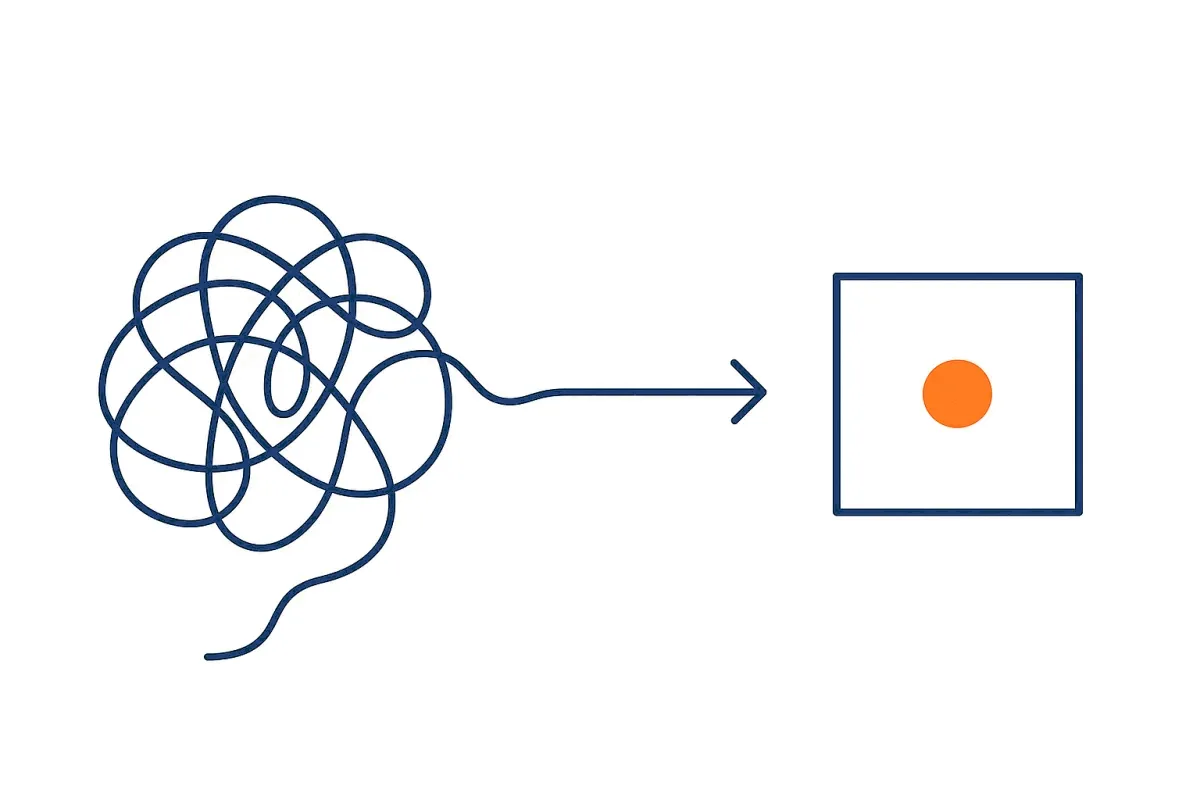
The second problem is that most IP work is hard to buy. A buyer who asks "what will this cost?" hears "it depends", which is honest and completely unhelpful. It depends on the search results, on the examiner, on how many objections come back. The buyer cannot picture the end, so they delay.
The fix is not to promise what you cannot control. It is to give the buyer a small, defined first step with a clear scope and a fixed deliverable. For example:
- A patentability search and opinion, with a set scope and a written answer to "is this worth filing?"
- An IP health check before a fundraise: what the company owns, what it does not, and what investors will ask about.
- A brand clearance check before launch, delivered before the packaging goes to print.
Each one answers a question the buyer already has, at a moment they already recognise. Each one lets them experience your judgement before committing to years of prosecution. And each one is easy for a referral partner to describe, which matters more than it sounds. "Call that firm, they'll tell you in a week whether it's patentable" travels much further than "they're a good IP firm."
I cover how to design an offer like this in how to productise your service. The principle is simple. A stranger can only buy what they can understand.
The same thinking applies to positioning. "Full-service IP firm" tells a buyer nothing. "Patents for medical device startups" or "trademarks for consumer brands launching in India" tells them in five words whether you are for them. Narrowing feels like turning work away. It is the opposite: you become the firm people remember for one thing, and a remembered firm gets referred. There is more on this in positioning for consulting firms.
A Marketing Routine for a Niche Field
An IP firm's market is small. You are not trying to reach millions of people. You are trying to be known by a few thousand founders, R&D heads, in-house counsel and advisors in your chosen field. That is good news, because a small market can be reached with a small, steady routine.
Here is where I would start:
- One useful piece a week, written in a partner's name and published where your buyers already look, usually LinkedIn. One question from a client call, answered clearly. A partner's name opens more doors than the firm's logo; I explain the balance in founder brand vs company brand.
- Five conversations a week with past clients, referral partners and people who once asked for a quote and went quiet. Not pitches. A short note about something relevant to them, such as a change in examination practice or a deadline they may have forgotten. IP firms sit on years of goodwill and almost never use it.
- One talk or workshop a quarter at an incubator, a university, or an industry body in your field. Teaching a room of founders how to think about IP before a fundraise is permitted, useful, and the fastest way I know to become the firm they call.
Keep it small enough to survive a busy month. Filing deadlines do not move, so marketing is always the thing that gets dropped. A routine that someone other than the senior partner owns, on a fixed day, keeps going when the partners are buried in office actions.
None of this replaces referrals. Referred clients are usually your best clients. The point is to stop depending on them, so a quiet quarter is an inconvenience and not a crisis. I wrote about that shift in why you should stop relying on referrals, and the wider system is in the guide to getting clients beyond referrals.
What Marketing Consulting for an IP Firm Looks Like

Here is how I work with IP firms, since that is the obvious next question.
I start with a diagnosis, not a plan. The Pipeline Reality Check is a one-week look at where your work actually comes from: the last twenty matters, who sent them, what the buyer was worried about when they called, and which enquiries went nowhere. It tells us whether the constraint really is marketing.
Sometimes it is not. If most of your enquiries convert and the firm is simply at capacity, the fix is hiring or pricing, not marketing, and I will say so.
When it is marketing, the work follows the CLEAR method: who the firm is for and why they buy, the message, the one or two channels worth your time, and a weekly rhythm your team can run without me. Each engagement is scoped after a conversation, because a two-partner patent practice and a fifty-person IP firm need different things.
I bring one thing a generalist cannot: I have sat where you sit. I first met patents at a desk inside GE Global Research, reading them for competitive landscapes, and later built an IPR firm that lived on introductions until I learned better. I know what an office action does to a week, and why "we should really do some marketing" never survives it.
If your firm is another kind of professional practice, the buyer's guide to hiring a B2B marketing consultant in India covers the same ground more broadly, including what to ask any consultant before hiring them. Agencies have their own version of this problem, covered in marketing consultant for agencies.
Questions IP Firm Partners Ask Me
How do IP firms get clients in India?
Mostly through referrals: from past clients, chartered accountants, startup lawyers, incubators and, for many Indian firms, foreign associates sending filing work into India. Referrals stay important. The firms that grow steadily add two things: a clear specialisation that makes them easy to refer, and regular, useful teaching that brings buyers to them before an urgent need.
Can IP lawyers in India advertise?
Advocates in India work under Bar Council of India rules that restrict advertising and soliciting work. A website with factual information about the firm is allowed. Publishing articles, speaking at events and explaining how IP works is widely done by Indian law firms. Check the current rules with your own counsel before you start.
Is SEO worth it for an IP firm?
Yes, if you write for specific questions rather than broad terms. "Patent attorney" is crowded and full of directories. Questions like "is my idea patentable in India" or "do I need a trademark before launching my brand" get fewer searches but bring buyers with a real decision to make. A small firm can rank for those.
Should an IP firm hire a marketing agency?
Usually not first. An agency will ask what to say, and most IP firms do not yet have a clear answer. Settle who you are for, what you are known for, and a small first engagement a buyer can say yes to. Then an agency, or an in-house marketer, has something worth promoting.
An IP Firm That Only Grows by Introduction?
IP firms are built on trust, and trust has always travelled by introduction. That will not change, and it should not. What can change is how much of your firm's future depends on it. A clear specialisation, a small defined first engagement, and a steady habit of teaching in public make you easy to find and easy to refer, before the buyer's need becomes urgent.
An IP firm that only grows by introduction? Get in touch. Tell me where your last twenty matters came from, and I will tell you honestly whether the fix is marketing, and what I would look at first. If it needs a closer look, the usual first step is the Pipeline Reality Check, a one-week diagnosis of where your work really comes from.

About the Author
Anoop Kurup
I'm a marketing consultant for B2B service firms in India. I fix the positioning, visibility, and lead generation behind weak sales. Before this: a research lab at GE, then patents and competitive strategy, then an intellectual-property firm I built and exited. I work with founders one engagement at a time from Bangalore.
More about meCLEAR · Engage
An IP firm that only grows by introduction?
Tell me what you're seeing in your pipeline. I'll tell you honestly if I can help, and where I'd start.
Get in touch