
Marketing Consultant for Agencies and Studios
Agencies market everyone but themselves. Here is what marketing consulting looks like for an agency, and when it pays for itself.

Ask an agency founder to show you a client's campaign and the laptop comes out in seconds. The dashboards, the before-and-after, the content calendar planned three months ahead. Then ask to see the agency's own marketing plan. There is usually a pause, a laugh, and a sentence that begins with "Honestly, we've been meaning to..."
I have had some version of that conversation with agency founders more often than with any other kind of firm. Advertising agencies, branding studios, video production houses, digital shops. And I say this with sympathy, because I built and ran digital marketing businesses of my own before I started consulting. I know the pull of a client deadline from the inside.
This article is about why that happens, what it costs, and what a marketing consultant for agencies actually does about it. It is also, openly, a description of work I do, so read it with that in mind.
Why Agencies Are the Worst Marketers of Themselves
It is not a skill problem. An agency knows how to write a positioning statement, plan a content calendar and run a campaign. It does all three for clients every week. The problem is that the skills do not transfer to the agency's own business, for three reasons.
The agency knows too many tactics. A client who asks "what should we do?" gets a focused plan, because the agency is looking at someone else's situation from a distance. Turn the same question inward and every tactic looks possible, because the team knows how to do all of them. So the agency does a little of everything: a few LinkedIn posts, a half-built newsletter, an awards entry, a website refresh. None of it runs long enough to work.
The agency judges its own marketing by craft standards. A client's brochure ships when it is good enough for the client. The agency's own brochure has to be good enough for the creative director, who is the hardest audience in the building. This is how an agency's own website redesign ends up "in progress" for a year or more: nobody can agree the work is worthy of the portfolio. Meanwhile the old site kept telling prospects the agency did everything for everyone.
The agency sells capabilities, not a choice. Most agency websites read like a menu: strategy, branding, digital, social, video, events. That list is accurate. It is also exactly what the next ten agencies say. A prospect comparing five agencies on capabilities has nothing left to compare on except the portfolio's look and the price.
So agencies end up in a strange position. They are marketing experts with no marketing, and the market notices, even when it cannot say why.
The Client-Work Excuse, and What It Costs in Pipeline

"We're too busy with client work" is the most common reason agencies give for not marketing themselves. It is true. It is also the reason the agency stays busy one quarter and anxious the next.
The arithmetic is simple. Marketing done today produces conversations weeks or months from now. When the agency is full, nobody markets, so three months later the pipeline is empty. When the pipeline is empty, everyone suddenly has time to market, but whatever they start now will only produce conversations three months after that. The agency is always marketing at the wrong time. That is the feast-and-famine cycle, and it is structural, not a question of discipline.
It gets worse in agencies where the founder is the only person who can sell. The founder is either pitching or delivering, rarely both, so new business stops the moment a big project lands. I wrote about this pattern in the founder-led sales trap, and it is sharper in agencies than almost anywhere else, because agency founders are usually also the senior creative or strategist on the biggest accounts.
The second cost is quieter: dependence. An agency that never markets itself gets clients from two places, referrals and a few large accounts that have stayed for years. Both feel stable. Neither is under the agency's control. One of the agencies I worked with had most of its work coming from a small handful of big clients; the founder knew that losing one would tear a hole in the firm overnight, and could see no way to replace it quickly. The full story is in this case study. The general version is in why you should stop relying on referrals.
What an Outside Consultant Sees That the Agency Cannot
If the agency has the skills, why pay an outsider? The same reason a barber does not cut his own hair. He knows exactly how. He just cannot see the back of his own head.
An outside marketing consultant brings three things the agency cannot supply for itself.
Distance. From inside, the agency sees its work as craft: the idea, the execution, the award-worthy detail. Buyers see something simpler. What problem did this solve, for a firm like mine, and what happened afterwards? A consultant hears your pitch the way a stranger would, and can tell you which parts land and which parts only impress other agencies.
Evidence instead of opinion. My first questions to an agency are the same every time. Where did your last ten clients come from? Which pitches did you win, and which did you lose, and why? Which clients are profitable and which only look good in the portfolio? The answers are usually a surprise to the founder, not because they were hidden, but because nobody had put them side by side.
Someone who can say no to the founder. Inside an agency, the founder's idea tends to win. The team will happily build the podcast the founder is excited about, even if the buyers the agency wants never listen to podcasts. An outside advisor can say "not that, this", and the conversation stays about the evidence rather than about who is senior.
The consultant does not replace the agency's skill. The agency still writes, designs and produces its own marketing, and usually does it very well once it knows what to make. The consultant's job is to make the decisions the agency keeps postponing, and then to make them stick.
Positioning an Agency Past "Full Service"
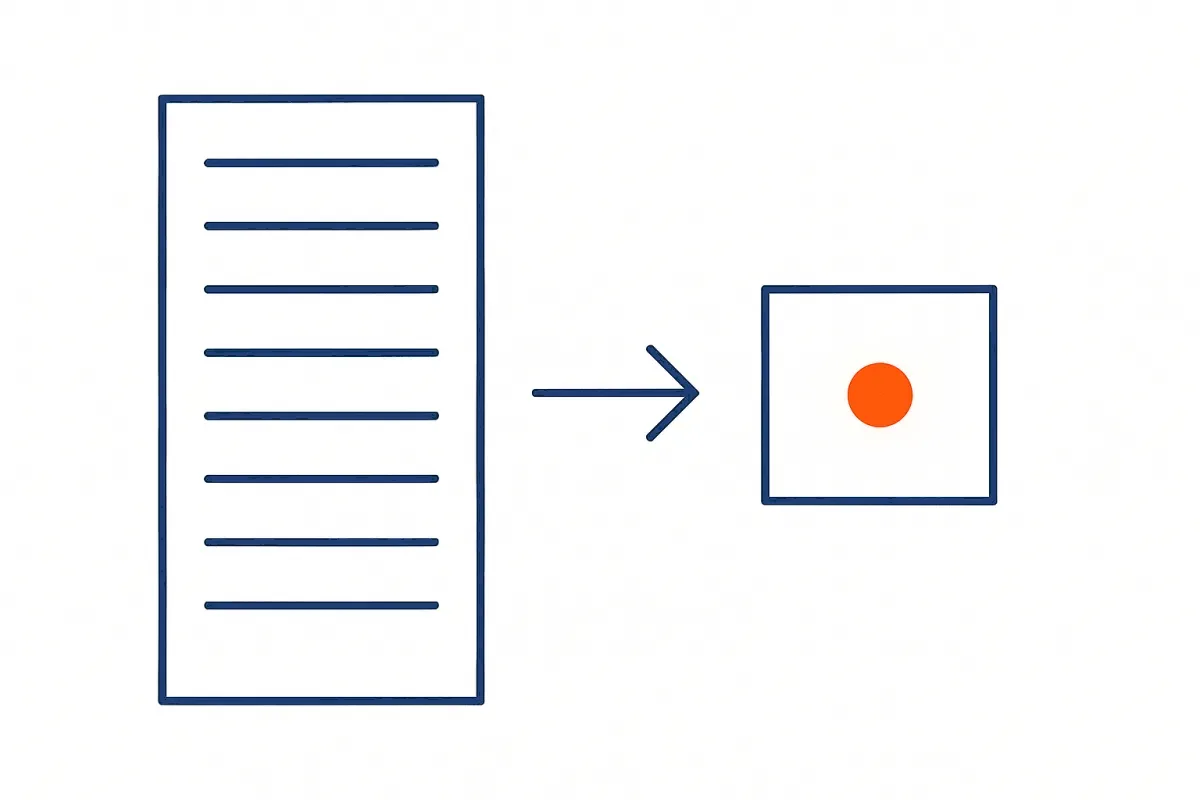
Most agency marketing strategy work starts here, because positioning decides everything else. "Full service" is not a position. It is a menu, and nobody chooses a restaurant because the menu is long.
There are three ways an agency can narrow, and a good agency marketing strategy picks one of them.
By sector. Branding for healthcare firms. Video for manufacturers. Performance marketing for education companies. A branding studio I worked with had a beautiful portfolio and no position of its own; it sold distinctiveness to clients and had none itself. We narrowed it to one sector where the founder already had real affinity and where the portfolio was quietly leaning anyway. The craft did not change. What changed was that the "not right now" replies thinned out, because inside that sector the agency was no longer one of many good-looking shops being pushed on cost. The story is in the branding agency with no brand of its own.
By problem. Not "we do outdoor and digital", but "we launch regional brands in a new city". An advertising agency I worked with could not describe what it sold in two sentences; it described its capabilities instead. We turned that into one clearly defined campaign that a stranger could understand and buy. For the first time, a prospect from outside the founder's network could understand the offer well enough to buy it. It is written up in one campaign a stranger could buy.
By buying moment. A funding round, a rebrand after a merger, an entry into a new market. Tying the agency to a moment gives prospects a reason to call now rather than someday.
Founders resist narrowing because it feels like turning work away. It is not. You can still accept the odd project outside your focus. What you are choosing is what you are known for, and a firm known for one thing gets far more enquiries for that thing than a firm known for everything gets for anything. I have written more about this in positioning for consulting firms and how to differentiate a B2B services firm. Both apply to agencies almost word for word.
One more thing tends to follow from a clear position: a small first step. An agency that sells only large engagements gives a hesitant prospect nowhere to begin. A short, defined diagnostic or audit lets the buyer experience the agency's thinking before committing to a full programme. I cover how to build one in how to productise your service.
A New-Business Rhythm That Survives Busy Delivery Months

Positioning tells the agency what to say. It still needs a way of saying it every week, including the weeks when three clients are on fire. This is the part of new business strategy for agencies that most often fails, so the design matters more than the ambition.
The idea that works best, in my experience, is almost embarrassingly simple: treat the agency as a client. Give it a brief, an account owner who is not the founder, a fixed weekly slot, and a status review on the same calendar as every other client. Agencies are very good at protecting client deliverables. They are bad at protecting internal projects. So make the agency's marketing a client deliverable.
Then keep the routine small enough to survive a bad week. For most agencies I would start with three things:
- One point of view a week, published where your buyers already look. Usually that is LinkedIn, written in the founder's voice but drafted by someone else. The founder's name opens more doors than the agency's logo; I explain the balance in founder brand vs company brand.
- Five conversations a week with past clients, dormant contacts and people who once asked for a proposal. Not pitches; genuine check-ins. Agencies sit on years of goodwill and almost never use it. Cold outreach for consultants covers how to do this without sounding like a sales script.
- One case study a quarter, taken from work you have already delivered. Agencies have more raw material for this than any other firm. Every finished project is a story; almost none of them get told.
None of this needs an ad budget. It needs a routine that someone other than the founder owns, which is the whole point. When the rhythm runs whether or not the founder has time, the pipeline stops following the delivery calendar. For the wider system around it, see brand awareness without an ad budget and the pillar guide on getting clients beyond referrals.
What Marketing Consulting for an Agency Looks Like
Here is how I work with agencies, since that is the obvious next question.
I start with a diagnosis, not a plan. The Pipeline Reality Check is a one-week look at where your new business actually comes from: the last ten or twenty clients, the pitches won and lost, the enquiries that went nowhere. It tells us whether the constraint really is marketing.
Sometimes it is not. One agency I worked with thought it had a pitching problem; it actually had an operating-model problem, because its processes were built for large clients with ready-made briefs and it was trying to sell to small businesses that needed guiding through every step. Better marketing would not have fixed that. If the diagnosis says your constraint is capacity, pricing or delivery, I will tell you, and you will not need a marketing consultant.
When it is marketing, the work follows the CLEAR method: who the agency is for and why they buy, the message, the few channels worth your time, and the weekly rhythm your team runs without me. Each engagement is scoped after a conversation, because a six-person studio and a sixty-person agency need different things. Some agencies only need the positioning decision. Some want their team trained to run the rhythm, which is what the workshops are for.
If you are not an agency but another kind of B2B services firm, the buyer's guide to hiring a B2B marketing consultant in India covers the same ground more generally, including the questions you should ask any consultant before hiring them. Including me.
Questions Agency Founders Ask Me
What does a marketing consultant do for an agency?
A marketing consultant works on the agency's own growth, not its client work. That usually means diagnosing where new business comes from, choosing a position the agency can be known for, shaping the message and the first offer around it, and setting up a weekly new-business routine the team can run. The agency's own people do most of the making; the consultant makes sure it is the right thing to make.
We are a marketing agency. Why can't we just do this ourselves?
You can, and some agencies do. Most do not, for the reasons above: client work always comes first, every tactic looks possible, and nobody inside can see the agency the way a buyer does. If you have tried to fix your own marketing twice and it stalled both times, that is a sign the problem is distance and decision-making, not skill.
What is a good new business strategy for a small agency?
Pick what you want to be known for, then build a small weekly routine around it: a point of view published steadily, regular conversations with past clients and warm contacts, and case studies from work you have already done. Make someone other than the founder own it. Small and steady beats a big push every time the pipeline runs dry.
Should an agency hire a business development manager instead?
Usually not first. A business development manager hired into an agency with no clear position spends the first six months trying to invent one, and usually leaves before it works. Settle who you are for and what you say, then hire someone to carry it out. The person will do far better with a clear brief, as every agency knows from the client side.
An Agency With No Marketing of Its Own?
Agencies are the firms best equipped to market themselves and the least likely to do it. The skill is there. What is missing is the distance to see the agency as a buyer does, a position narrow enough to be remembered, and a routine that does not stop when client work gets busy.
An agency with no marketing of its own? Get in touch. Tell me where your last ten clients came from, and I will tell you honestly whether the fix is marketing, and what I would look at first. If it needs a closer look, the usual first step is the Pipeline Reality Check, a one-week diagnosis of where your new business really comes from.

About the Author
Anoop Kurup
I'm a marketing consultant for B2B service firms in India. I fix the positioning, visibility, and lead generation behind weak sales. Before this: a research lab at GE, then patents and competitive strategy, then an intellectual-property firm I built and exited. I work with founders one engagement at a time from Bangalore.
More about meCLEAR · Acquire
An agency with no marketing of its own?
Tell me what you're seeing in your pipeline. I'll tell you honestly if I can help, and where I'd start.
Get in touch