
Marketing for HR Consulting Firms: Known Before the Crisis
Companies call an HR consultant when something breaks, and they call the one they already know. How an HR consultancy gets known before that day.

Open the electricity meter box in almost any Indian apartment building and you will find a phone number written on the inside of the door in marker pen. It belongs to the electrician who last fixed something there. Nobody chose him after comparing five quotes. When the power trips at nine at night, you do not search for the best electrician in the city. You open the box and call the number.
HR consulting is bought in much the same way. A company does not wake up wanting an HR consultant. It wakes up with a problem: a senior manager has resigned and taken two people with him, a compliance notice has arrived, the first appraisal cycle has turned into a revolt, or an investor has asked for policies that do not exist. On that day the founder calls whoever they already know. If that is you, the work is yours. If it is not, you will probably never hear about it.
This article is about marketing for HR consulting firms: how an HR consultancy gets its number written inside the box before the power trips. I am not an HR consultant, so I will not tell you how to write a leave policy. I am a marketing consultant who works with B2B service firms in India, and HR consultancies share one pattern with most of them. The work is good, and it only arrives by introduction.
When Companies Actually Buy HR Help
Start with the moment of purchase, because it shapes everything else.
Most HR consulting in India is bought by a founder, a CEO or a finance head at a company of somewhere between thirty and five hundred people. Many of these companies have no senior HR person at all, or one generalist who is fully occupied with hiring and payroll. HR strategy is something they know they should think about, and never quite do.
Then something happens. The triggers are remarkably consistent:
- A headcount threshold. Crossing ten employees brings the obligation to set up an Internal Committee under the POSH Act. Crossing twenty brings Provident Fund. Growth that felt like good news turns into a list of things nobody has done.
- A departure that hurts. A key person leaves, often with a complaint about fairness, and the founder realises there is no pay structure, no career path and no process behind any of it.
- A regulatory change. The four labour codes that took effect in November 2025 sent a lot of companies looking for someone to tell them what, exactly, they now had to change.
- An outside demand. An investor, an acquirer or a large customer asks for documented policies, and asks for them quickly.
- A culture that has cracked. Attrition climbs, managers are fighting, and the founder can feel it without being able to name it.
Notice what these have in common. None of them is predictable from the outside, and all of them are urgent on the inside. By the time the buyer is looking, they have very little time to compare firms. They want someone they already trust, or someone a trusted person names.
That is why so many HR consultancies run entirely on referrals. It is a sensible result of how the work is bought. It is also fragile, for the reasons I set out in stop relying on referrals: you cannot control when introductions come, and you cannot turn them up when you need more work.
Why HR Consultancies Get Compared on Price
The sales symptoms follow directly from that buying pattern, and most HR consultancy founders will recognise them:
- Enquiries only arrive after something breaks. Months of silence, then three urgent calls in a week.
- Being compared with the wrong people. Recruitment agencies, payroll vendors and a freelancer who writes policies from templates all get quoted against you, even though the work is different.
- Projects that end and never come back. You build the policy manual, run the appraisal redesign, and the relationship stops the day the invoice is paid.
- Founders who want the fix without the change. They ask for a document when the real problem is how the company is run.
Each of these looks like a sales problem: better proposals, sharper follow-up, a more persuasive first call. It is usually a marketing problem. When nothing public tells a buyer what makes your firm different, they fall back on the one thing they can compare, which is the fee. And when you only appear in their life during a crisis, you leave again when the crisis ends.
I made the general version of this argument in marketing for professional services firms. Buyers of expert work cannot judge the work in advance, so they judge what they can see. The job of marketing is to give them something better to judge.
Positioning Past "End-to-End HR Solutions"

Read the websites of twenty HR consultancies in India and you will find the same list on most of them: recruitment, HR policies, payroll, compliance, performance management, training, HR audits, and the phrase "end-to-end HR solutions". It is an honest list. It is also forgettable, because a list is not a position.
The test of a position is simple. Can a stranger, after reading one sentence, tell whether you are for them, and can a friend repeat it when recommending you? "We offer end-to-end HR solutions" fails both. Compare these:
- "HR set-up for manufacturing companies between fifty and five hundred people."
- "Compensation and career frameworks for software services firms."
- "Labour law compliance for multi-state retail and logistics businesses."
- "The first HR function for funded startups, before they hire an HR head."
Each one does three jobs at once. It tells the right buyer this is for them. It tells a referrer exactly who to send. And it makes your fee easier to defend, because a firm that has solved one problem thirty times is plainly worth more than a firm solving it for the first time.
HR founders often resist this. The firm can do all of it, and turning down a payroll project feels like leaving money on the table. But choosing a position does not mean refusing other work. It means choosing what people remember you for. A firm known for one thing gets referred for that thing. A firm known for everything gets referred for nothing in particular. I go through how to choose in positioning for consulting firms, and how to make the difference visible in how to differentiate a B2B services firm.
A useful place to look for your position is your own client list. Which three clients were the best to work with, got the best results, and paid without argument? What do they have in common? The answer is usually more specific than the one on your website.
Staying Known Before the Crisis

Here is the central marketing problem for an HR consultancy. The buyer needs you rarely, urgently and unpredictably. So the whole job is to be remembered during the long months when they do not need you, without becoming the firm that keeps pestering them.
The answer is to be useful in public, regularly, about the problems your buyers will eventually have. Content that works for HR consultancies tends to look like this:
- Patterns you see across clients. What exit interviews at growing companies usually say, and what that points to. Anonymised, but specific.
- Plain explanations of changes. When a labour code rule or a state regulation changes, a short note on what a company of fifty people actually has to do by when. Founders save these and forward them.
- The warning signs. Five things that tell you your appraisal cycle is about to go badly, written before appraisal season.
- What it took. A short story of how one company fixed a real problem, including the part where the founder had to change their own behaviour.
This kind of content does something that advertising cannot. It shows your judgement before the buyer has to trust it. A founder who has read six months of your notes on attrition already knows how you think when their best manager resigns. You are the number inside the meter box.
It also has a second audience that matters just as much: the people who refer. CAs, company secretaries, lawyers, investors and business coaches all meet HR problems before anyone calls them HR problems. If they have read your work, they know precisely when to send a client your way.
Two practical notes. First, write as a person, not as a company page. Buyers of HR advice want to know who will be sitting across the table, and a named senior consultant writing clearly does far more than a logo posting quotes. I cover how to balance the two in founder brand vs company brand. Second, respect confidentiality completely. Never name a client or describe a situation someone could recognise. You can always show the method without showing the client.
A First Engagement a Stranger Can Buy
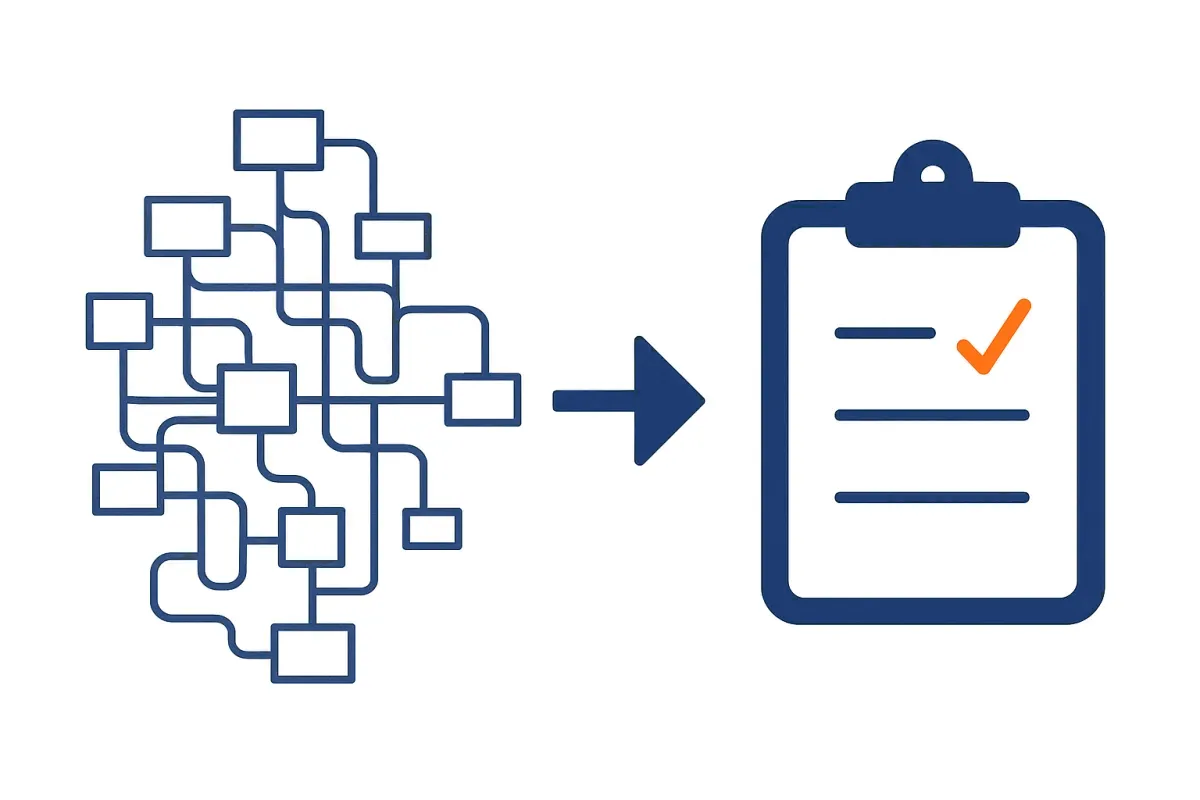
The second problem is the size of the first decision. "Let us fix your HR" is an open-ended, uncomfortable commitment. It involves a stranger reading salary data, talking to employees and judging how the founder runs the company. Many founders will postpone that for as long as they can, even when they know they need it.
The answer is a small, defined first engagement with a fixed scope and a clear deliverable. For example:
- An HR health check. One or two weeks reviewing policies, contracts, pay structure and compliance, ending with a short report: what is urgent, what can wait, and what is fine.
- A compliance review for one change. What the labour codes, or a new state rule, mean for this company specifically, with a dated list of actions.
- One fixed problem. A salary band framework, a POSH set-up, or an appraisal process, built and handed over.
Each of these gives the buyer something useful even if they never hire you again. Each one lets them see how you work on their own problem, at low risk. And each one is easy for a founder to explain to a co-founder or a board, which matters more than it sounds.
The health check has one more advantage. It is the natural start of a longer relationship, because it almost always finds more than it can fix in two weeks. That is also how an HR consultancy escapes the "project ends, client disappears" pattern: a retained advisory role that grows out of a well-run first engagement, rather than a retainer sold to a stranger.
I explain how to design an offer like this in how to productise your service. On the question of how to price HR consulting, the same logic applies as to any expert service. Charge for the problem solved and the risk removed, not the days spent, which I cover in value-based pricing for consultants. A founder cannot judge whether a policy took three days or ten, but they can judge what a compliance notice or a lost senior team would have cost them.
Where HR Consulting Clients Come From in India
Most HR consultancies get their first clients from the founders' own networks: former employers, former colleagues and people they worked alongside in corporate HR. That is a good start and a poor plan. Beyond it, a few channels work unusually well for HR consulting, and a few work badly.
Referral partners who see the problem first. CAs and company secretaries handle compliance and meet HR gaps constantly. Employment lawyers see the disputes. Startup investors see portfolio companies that have outgrown their founders' HR habits. A handful of these relationships, looked after properly with genuinely useful updates, brings steady introductions. This is the single strongest channel for most HR firms.
LinkedIn, written by a person. Founders and CEOs of growing companies are on LinkedIn, and HR problems are among the few business topics everyone has an opinion on. A consultant who writes clearly about real patterns, without jargon, builds a following of exactly the right people.
Search, for specific questions. People rarely search "HR consultant" until they are ready to hire. They search "POSH committee requirements for small company" or "how to create salary bands". Those searches are small and full of intent, and a firm that answers them well is the first firm the buyer meets. I explain how in SEO for consultants.
Rooms full of founders. Industry associations, founder networks and chambers of commerce. A short, practical session on "what the labour codes changed for companies under two hundred people" in the right room does more than a stall at an HR expo, which is full of other HR firms.
What works badly: cold email offering "end-to-end HR solutions", listing directories of top HR consultants, and paid ads for broad HR terms, where you will mostly attract job seekers and students.
A Marketing Routine for a Busy Practice

HR consultancies have a particular risk. When a client crisis lands, it absorbs everyone, and marketing is always next week's job. So keep the routine small enough to survive a hard month.
- One useful piece a week from a named senior consultant: a pattern from a live engagement, a plain note on a regulatory change, a warning sign worth watching.
- Five conversations a week with past clients, referral partners and people who once asked for a proposal. Not pitches. A short note about something relevant to their business.
- One small event or session a quarter, in front of founders rather than HR professionals.
That is two or three hours a week, on a fixed day, ideally owned by someone other than the founder. It looks too small to matter. It matters because it keeps running, so you are known before the crisis, and not only after it. The full system around it is in the guide to getting clients beyond referrals.
What Marketing Consulting for an HR Firm Looks Like
Here is how I work with HR consultancies, since that is the obvious next question.
I start with a diagnosis, not a plan. The Pipeline Reality Check is a one-week look at where your work actually comes from: your last twenty clients, who sent them, what triggered the call, and which enquiries went nowhere and why. HR firms are often surprised by the answer. The referral partners they think matter are frequently not the ones sending the best work.
Sometimes the constraint is not marketing. If your proposals convert well and your consultants are simply full, the fix is hiring, pricing or delivery, and I will say so.
When it is marketing, the work follows the CLEAR method: which companies and which problems you are for, the message that makes that obvious, the one or two channels worth your time, and a weekly rhythm your team can keep without me. Each engagement is scoped after a conversation.
Other professional firms face their own version of this. IP services firms do their best work under someone else's name, which I cover in marketing for IP firms. AI consultancies compete with a market full of noise, which is the subject of marketing for AI consulting firms. If you are weighing up outside help more generally, the buyer's guide to hiring a B2B marketing consultant in India covers what to ask any consultant first.
Questions HR Consultancy Founders Ask Me
How do I get clients for my HR consultancy?
Most HR consultancies start with their own network, and that is fine. To grow past it, add three things: a clear position (which kind of company and which problem you are best at), useful public content that keeps you known between crises, and a small first engagement such as an HR health check that a stranger can say yes to. Then build a few strong referral partnerships with CAs, company secretaries and lawyers, who meet HR problems before anyone else.
What is the best marketing strategy for an HR consulting firm?
Be the firm a company already knows on the day something goes wrong. In practice that means narrowing your position so the right buyers recognise themselves, publishing regularly about the problems they will eventually face, and staying in touch with the people who refer. Tactics like LinkedIn, search and events work once those are in place.
Does digital marketing work for HR consultancies?
Yes, the right kind. LinkedIn posts from a named consultant and search content that answers specific questions both work well, because founders research HR problems before they call anyone. Broad paid ads work poorly, because HR keywords attract job seekers and students far more than buyers.
How much should I charge for HR consulting?
There is no single right figure, and a published rate card mostly invites comparison with payroll vendors and freelancers. Price the problem solved and the risk removed rather than the days spent, and use a small fixed-scope first engagement so the first decision is easy. The firms that get compared on price are usually the ones whose position is unclear.
An HR Firm That Only Gets the Call After Something Breaks?
Nobody plans to need an HR consultant, which is exactly why the marketing has to happen before the need does. The HR firms that grow past referrals are the ones with a clear position, a steady habit of being useful in public, and a first step small enough for a cautious founder to take. They are the number written inside the meter box.
An HR firm that only gets the call after something breaks? Get in touch. Tell me where your last twenty clients came from, and I will tell you honestly whether the fix is marketing, and what I would look at first. If it needs a closer look, the usual first step is the Pipeline Reality Check, a one-week diagnosis of where your work really comes from.

About the Author
Anoop Kurup
I'm a marketing consultant for B2B service firms in India. I fix the positioning, visibility, and lead generation behind weak sales. Before this: a research lab at GE, then patents and competitive strategy, then an intellectual-property firm I built and exited. I work with founders one engagement at a time from Bangalore.
More about meCLEAR · Engage
An HR firm that only gets the call after something breaks?
Tell me what you're seeing in your pipeline. I'll tell you honestly if I can help, and where I'd start.
Get in touch