
Marketing for Branding Agencies: Gold Without a Hallmark
A buyer cannot judge brand work by looking, so they compare taste and price. How a branding agency makes its thinking visible and gets chosen for it.

Walk into a jeweller's shop and ask to see two gold chains. Both shine. Both feel heavy enough in the hand. One may be 22 carat and the other 18, and you cannot tell which is which, however long you look. For generations the Indian family solved this by going to the jeweller their parents went to. With a stranger, there were only two things left to judge: the weight and the making charges. So that is where the haggling happened.
Then came the hallmark. A small stamp, put there by someone who tested the metal, that says what is inside. It did not make the gold any better. It let a buyer who cannot test metal trust a shop they had never entered before.
A branding agency sells gold without a hallmark. The valuable part of the work is the thinking: who the client is for, what they should stand for, what they should stop saying. The buyer can see none of that. What they can see is a logo, a set of colours and a mock-up of a visiting card, and to most buyers four good portfolios look much the same. So they judge what is left, which is taste and price.
This article is about marketing for branding agencies: why the work is hard to sell, what the sales symptoms really point to, and how an agency builds a hallmark of its own. If you came here asking how to get clients for a branding agency, this is my answer. It starts a step before the usual list of tactics.
Why Branding Is a Hard Sell
Three things make brand work harder to sell than almost any other agency service.
The result arrives late and has many parents. A performance campaign shows a number within weeks. A brand does its work over years. The client is chosen a little more often, charges a little more, hires a little more easily. By the time any of that shows, a new sales head has joined, a product has launched and the market has moved. Nobody can say cleanly how much of it was the brand.
The buyer does this once or twice in a working life. A marketing head hires a digital agency every few years and learns how to judge one. A managing director may commission a brand identity once in a decade. They have no yardstick, and they know it. People without a yardstick fall back on personal taste ("I like the blue one") or on whoever is nearest: a spouse, a board member, the nephew who studied design.
The visible part is the smallest part. Weeks of interviews, competitor study and argument sit behind a recommendation, and what the client receives is a logo and a guideline document. I ran an IP services firm before I became a marketing consultant, and the same problem lived there. A patent search report is a few pages. Its value lies in what the analyst knew to look for, and almost no client can see that from the pages.
Put the three together and you have a buyer making a large, rare decision about something they cannot inspect. They are not being difficult when they ask for "a few options to look at". They are doing what all of us do at the jeweller's counter.
Why Branding Agencies Get Judged on Taste and Price
The sales symptoms that follow will be familiar to most founders of a branding or design studio.
- "Can you just do the logo?" The buyer has cut the job down to the one part they can see.
- Three concepts, free, before any contract. You are asked to guess at an answer without a brief, and then judged on the guess.
- Proposals compared on the number of concepts and revisions. Four studios, four quotes, one spreadsheet.
- "This is a heavy commitment just now." The polite no, from a buyer who cannot explain to themselves why it should be you.
- A full quarter, then an empty one. One large rebrand fills the studio, the selling stops, and nothing is waiting when the project ends.
These look like sales problems. A sharper deck, a faster follow-up, a firmer line on free work. They are usually marketing problems, and the cause is not hard to find.
Open the websites of ten branding agencies. You will find a grid of handsome images, a line such as "we build brands that matter", and a list: strategy, identity, packaging, digital. All ten have the same grid, the same kind of line and the same list. Nothing on the page tells a stranger how this studio thinks, who it is best for, or what its work changed for a client. There is no stamp on the gold. So the buyer weighs it and argues about the making charges.
This pattern runs across the whole agency world, and I describe it in the guide to lead generation for marketing agencies, which is the parent of this article. Branding has it in its sharpest form, because the product is the hardest to see.
A Positioning Firm With No Position
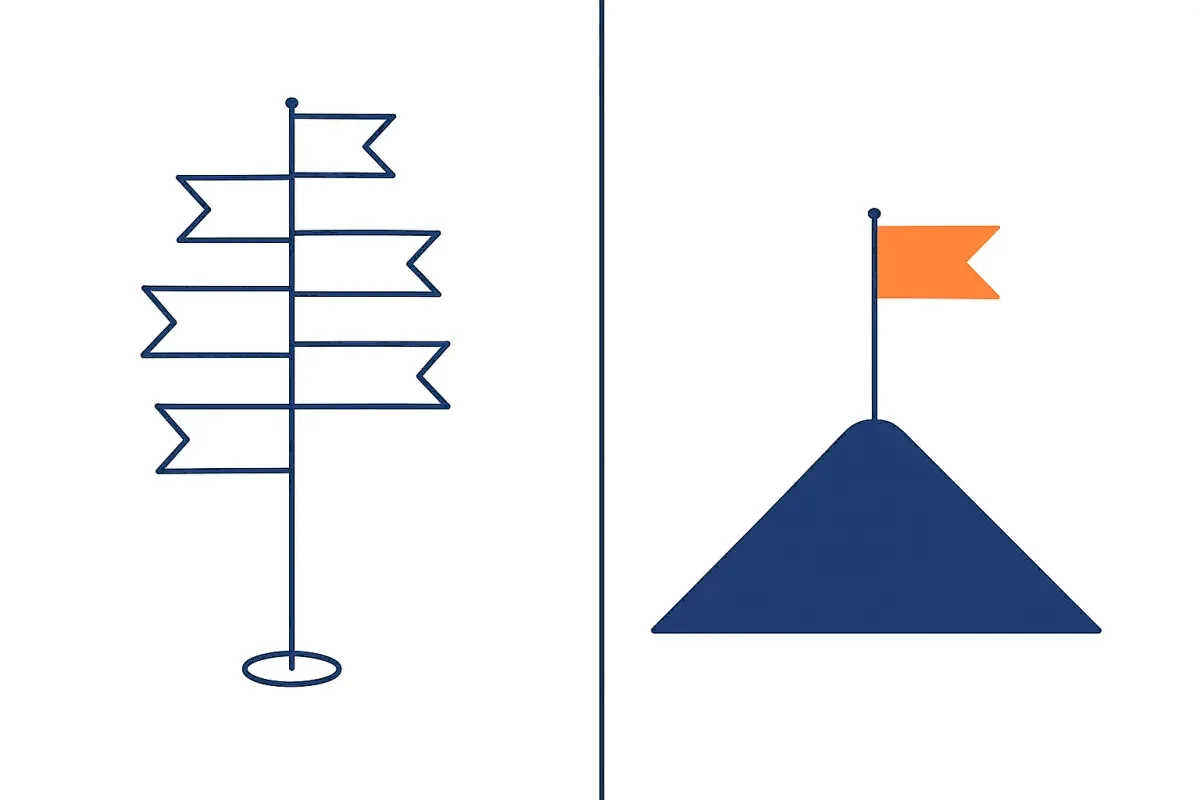
Here is the uncomfortable part, and I say it with affection. A branding agency tells its clients every working day to choose a market, stand for one thing and make the choice obvious. Most have never done it for themselves.
The reason is ordinary. Client work is always in front of you, and your own brand is the job that can wait. I worked with a branding and design agency in exactly this spot. Its portfolio was one most studios would envy, and nothing in how it presented itself answered the buyer's real question: why you, in particular? Prospects compared it with three other good-looking studios and then pushed on cost. The full story is in the branding agency with no brand of its own.
This matters more for a branding agency than for any other kind of firm. An accountant with a dull website has lost nothing. A branding agency without a clear position is quietly telling the market that it does not trust its own advice. Buyers feel that gap even when they cannot name it.
A studio can narrow in three ways.
- By sector. "Brand identity for hospitals and diagnostic chains." "Packaging for regional food brands going national."
- By problem. "Rebranding family businesses when the next generation takes charge." "Identity for engineering firms that look older than they are."
- By buying moment. "Brand work for the six months after a funding round." "One brand out of two, after a merger."
Each of these does what "full-service branding" cannot. The right buyer recognises themselves in one sentence. A past client knows exactly whom to send your way. Your writing gets easier, because you are writing for one reader. And the fee becomes easier to defend, since a studio that has solved the same problem many times is plainly worth more than one meeting it for the first time.
Founders fear that narrowing means less work. The opposite tends to happen, for a reason worth understanding. A generalist studio competes with every other generalist, and the only ground left to compete on is price. A specialist is compared with almost nobody, because to a hospital group, the studio that visibly understands hospitals is not the same thing as a general design shop.
A position is not a refusal, either. You can still take the restaurant that walks in. You are only choosing what you are known for. The place to look is your own client list: who stayed longest, valued the work most and argued least about the invoice? I set out the method in positioning for consulting firms, and how to make the difference visible in how to differentiate a B2B services firm. You already know most of it. You sell it.
The Hallmark: Show the Reasoning, Not Only the Logo

A hallmark is evidence from inside the metal, made visible on the outside. For a branding agency, what is inside is the reasoning.
Most portfolio pages show the finished identity on a tote bag, a signboard and a phone screen. This proves the studio can design. Every studio on the shortlist can design. What the buyer cannot see, and badly wants to, is how you would think about a business like theirs.
So write up the work differently. A useful case has four parts.
- The situation, in business terms. Not "the client wanted a fresh look". Something closer to "a thirty-year-old engineering firm kept losing tenders to younger competitors who looked more capable than they were".
- The routes you considered. Two or three directions, what each would have said about the company, and why you recommended the one you did. Most of all when it was the least obvious one.
- What you told the client to stop. The sub-brand you retired, the tagline you cut, the third typeface nobody needed. Judgement shows most clearly in what is taken away.
- What changed afterwards, in plain words. "The sales team stopped apologising for the brochure." "Distributors in two new states agreed to a meeting."
A note for India. Most clients do not want their numbers published, and many would prefer not to be named. You need neither. A clearly described situation, a decision and a result in plain words will persuade more people than a percentage nobody can check.
The second half of the hallmark is language. No business owner wants a brand for its own sake. They want to charge more than the cheaper rival, to be on the shortlist without asking, to hire better people, to look like the leader of their category. Lead with that, and let the logo and the identity system follow as the means. The craft is the same. Described as decoration, it is a cost, and costs get trimmed. Described as what lets the client charge more and win better customers, it is an investment, and investments get weighed. I cover the fee side of this in value-based pricing for consultants, and how to build the sentences in the B2B messaging framework.
Then turn all of this on yourself. Your own website should carry a point of view on branding in your chosen field, and at least two cases written this way. Six beautiful images and a contact form is unstamped gold.
Packaging Brand Work Into a First Step
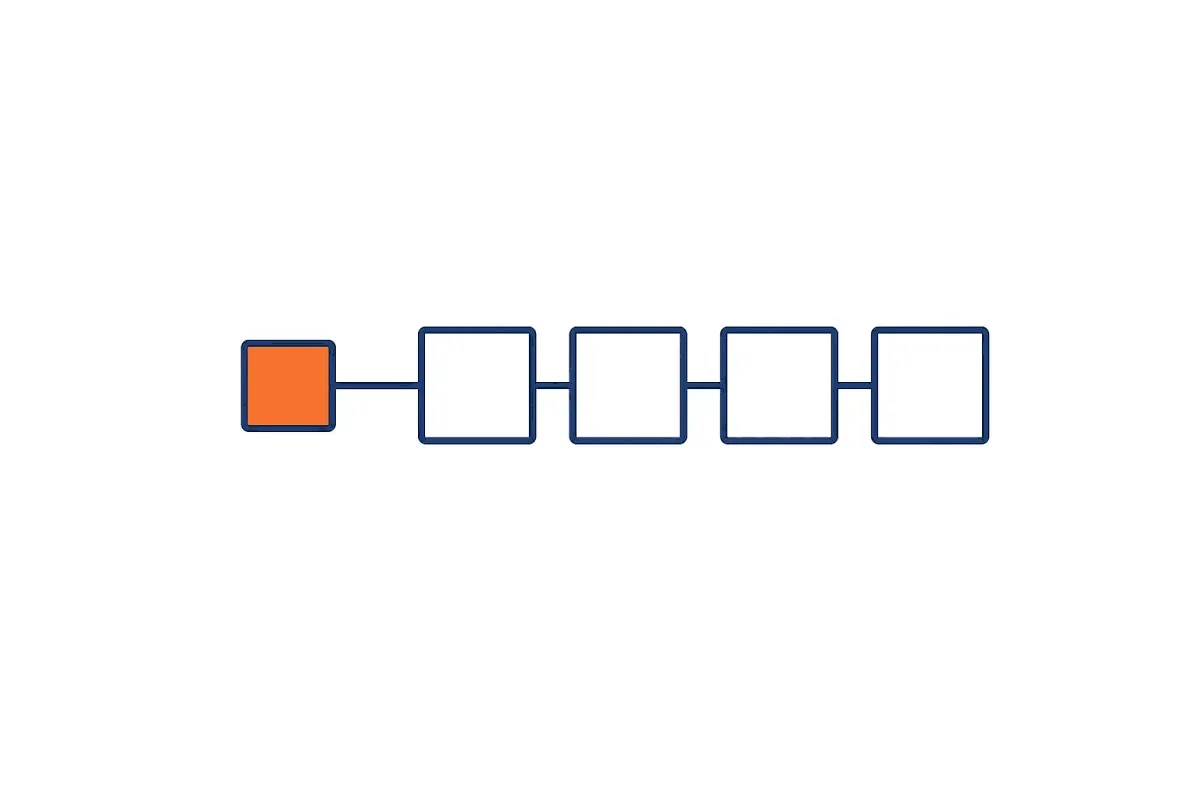
A full identity programme is a large thing to buy. It runs for months, it carries a serious fee, and it asks a buyer who has never bought brand work to trust a studio they met last week. So they hesitate, or they ask for free concepts "to see your thinking".
The request is fair. The free pitch is the wrong answer to it. Spec work asks you to solve a problem you have not been briefed on, and it teaches the buyer that your thinking costs nothing. A better answer is a small, paid first step with a fixed scope:
- A brand diagnostic. Two weeks. Conversations with a few customers and staff, a look at how the firm presents itself beside three competitors, and a written view of where the brand is helping and where it is costing them.
- A positioning workshop. A day or two with the leadership team, ending in one page that says who the firm is for and what it stands for.
- A naming or messaging sprint for a single product or launch.
Each is useful to the buyer even if they never hire you again. Each lets them see your judgement on their real problem. And each makes the full programme an easy next step, because by then you are no longer a stranger. The agency in the case above built a diagnostic like this, and it let hesitant buyers experience the studio's grasp of their sector before committing to anything large.
An eight-person creative agency I worked with took the idea further. It had been writing every proposal from a blank page, so each sale began from nothing and only the founder could do it. We replaced that with one fixed-scope engagement with named deliverables. Two things followed. The founder's pitch became the same pitch every time, which he could make in the gaps between projects. And the team could run most of the delivery, which kept him free to sell while the studio was busy. The swing between full and empty quarters flattened. That story is in breaking the feast-and-famine cycle, and the method is in how to productise your service.
Think, too, about what follows the identity. A brand needs looking after once it is delivered: new applications, campaigns, the slow drift away from the guidelines. A retainer for that, offered only to clients who have been through the first project, is far easier to sell than a retainer offered to a stranger.
Where Branding Agency Clients Come From in India
The hardest client to win is the one who must first be persuaded that brand matters at all. Do not try. Look for the buyer at a moment when the old brand has started to embarrass them:
- A funding round, with new investors looking at the pitch deck.
- A move into a new city, a new state or an export market.
- A son or daughter taking over a family business.
- A merger, or an acquisition that leaves two names where one is needed.
- A new chief executive or marketing head who wants to mark a change.
- A firm that always sold through dealers and now has to face customers directly.
Most of these moments are visible from outside, in the business press and on LinkedIn. That shapes where a branding agency's clients come from.
Past clients and the people who moved. A brand you built five years ago has aged, and the marketing head who commissioned it may now be at another company. A short, useful note twice a year to everyone you have worked with costs almost nothing.
Partners who are in the room at the moment. Investors and their portfolio teams, chartered accountants and merger advisors, architects and interior designers working on retail and hospitality, packaging printers, web development firms. Digital agencies belong on the list too. They know better than anyone what it costs to run campaigns on a weak brand, and I have written for them in marketing for digital marketing agencies.
The founder's writing. Buyers trust a person before a studio. A founder who writes once a week about brand decisions in one sector, including why a well-known rebrand worked or did not, builds exactly the right audience. The balance between the two names is in founder brand vs company brand.
Search, for your specific focus. "Branding agency" is beyond reach and would bring the wrong enquiries anyway. "Branding agency for hospitals" is small, winnable and full of intent. SEO for consultants explains the approach.
Outbound tied to the moment. A note to a founder a month after their funding round, naming one specific thing you noticed in how the company presents itself, gets replies. "We create memorable brands" does not. See cold outreach for consultants.
What works badly: design awards, which impress other designers far more than they impress buyers; "top ten branding agencies" directory listings; and paid ads on "branding agency in" your city, where every competitor is bidding beside you.
A Weekly Routine That Survives a Rebrand Deadline

Feast and famine in a studio is not a discipline problem. It is arithmetic. Selling and delivery compete for the same pair of hands, usually the founder's, so the selling stops exactly when the studio is busiest. I go through the mechanics in stop relying on referrals.
The answer is a routine small enough to survive the week of a big presentation:
- One point of view a week, published where your buyers already look.
- Five conversations a week with past clients, partners and people who once asked for a proposal. A useful note, not a pitch.
- One written case a quarter, in the four-part form above, from work already delivered.
- Fifteen minutes every Monday on each open conversation: what happens next, and who does it.
Give the routine an owner who is not the founder. The founder still holds the conversations, but someone else keeps the list and the calendar, and asks on Monday what happened. That is three or four hours a week. It looks too small to matter, and it matters because it does not stop. The wider system is in the guide to getting clients beyond referrals, and B2B brand awareness without an ad budget shows how far this goes before you spend anything on advertising.
What Marketing Consulting for a Branding Agency Looks Like
A fair question at this point: what would a marketing consultant do for a firm that sells positioning?
I am not going to teach a branding agency branding. You know the method; it is what you sell. What an outsider brings is the one thing you bring to your own clients, which is distance. Nobody can read the label from inside the jar.
I start with a diagnosis, not a plan. The Pipeline Reality Check is a one-week look at where your work really comes from: the last ten or twenty clients, who sent them, what each one bought, which proposals were lost and what the buyer said. Founders are often surprised by the list once it sits in one place.
Sometimes the constraint is not marketing. If every project is scoped from scratch and only the founder can deliver it, more enquiries will make things worse, and I will say so.
When it is marketing, the work follows the CLEAR method: who the studio is for, the message that makes that obvious, a paid first step, the one or two channels worth your time, and a weekly rhythm the team runs without me. Each engagement is scoped after a conversation. If you are weighing up whether an outside advisor makes sense at all, I have written about that in marketing consultant for agencies.
Questions Branding Agency Founders Ask Me
How do branding agencies get clients?
Most get them through introductions, repeat work and the founder's network. The studios that grow steadily add three things: a position narrow enough for a stranger to remember, cases that show the reasoning behind the work and what it changed, and a small paid first step such as a brand diagnostic. Partners, search and outreach all work better once those three exist.
How do I get clients for a branding agency in India?
Start with the people who already know your work, including former clients who have moved to new companies. Then look for firms at a moment of change: a funding round, a new market, a new generation in a family business. Build relationships with the advisors who are present at those moments, and have the founder write regularly about brand decisions in one sector.
Should a branding agency do free pitches or spec work?
Rarely. Spec work is a guess made without a brief, and it attracts buyers who are collecting free ideas. A short paid diagnostic or workshop meets the same need, which is to see how you think, and it filters for people who are serious. The exception is a pitch you have chosen with care for a client you very much want, with a proper brief and a short shortlist.
How do I get branding clients without a big portfolio?
Depth beats volume. Two cases in one sector, written to show the situation, the routes considered and the result, will persuade a buyer in that sector more than twenty unrelated logos. A young studio can also begin with the paid first step, since a diagnostic sells on thinking, which you have from the first day.
A Branding Agency Judged on Taste and Price?
The buyer at the jeweller's counter is not foolish. They cannot test the gold, so they weigh it. A branding agency's buyer is in the same position, and the answer is the same: put a stamp on the work that a stranger can read. A position of your own, cases that show the reasoning, a paid first step, and a weekly routine that carries on when the studio is full. None of it needs a skill the agency lacks. It is the advice you give, taken.
A branding agency judged on taste and price? Get in touch. Tell me where your last ten clients came from, and I will tell you honestly whether the fix is marketing, and what I would look at first. If it needs a closer look, the usual first step is the Pipeline Reality Check, a one-week diagnosis of where your new business really comes from.

About the Author
Anoop Kurup
I'm a marketing consultant for B2B service firms in India. I fix the positioning, visibility, and lead generation behind weak sales. Before this: a research lab at GE, then patents and competitive strategy, then an intellectual-property firm I built and exited. I work with founders one engagement at a time from Bangalore.
More about meCLEAR · Lead
A branding agency judged on taste and price?
Tell me what you're seeing in your pipeline. I'll tell you honestly if I can help, and where I'd start.
Get in touch