
Marketing for Performance Marketing Agencies: The Marksheet
A performance agency sends the client a marksheet every month, and gets judged on one number it only half controls. How to be chosen for more than that.

Drive through any Indian town in June and you will see the hoardings. Rows of passport photographs, each with a name, a rank and a percentage. Rank 47. 99.2 per cent. Every coaching centre in town has one, and every one of them is telling the truth.
The parent standing under those hoardings learns very little. Which students did the centre start with? How many joined and are not on the board? Would the boy with rank 47 have got there with any teacher? The hoarding cannot say.
Then the child joins, and the marksheet starts coming home. When the marks go up, the tutor is brilliant. When they drop in one unit test, the family is asking the neighbours about another tutor by Sunday. Nobody asks whether the child slept, whether the paper was hard or whether the homework was done.
A performance marketing agency lives that life. It is the one kind of agency that sends a marksheet home every month, and the marks on it depend a good deal on a student it does not control. I built and ran digital marketing businesses of my own before I became a consultant, so I write this with sympathy.
This article is about marketing for performance marketing agencies: why being measurable cuts both ways, what the sales symptoms really point to, and how an agency gets chosen for more than one number. If you came here asking how to get clients for a performance marketing agency, this is my answer. It starts a step before the usual list of tactics.
Why the Marksheet Cuts Both Ways
Four things make a performance agency easy to hire and just as easy to replace.
The number makes you easy to buy. A branding agency has to explain what a brand is for. You do not. Cost per lead, cost per order, return on ad spend (ROAS, the revenue earned for each rupee spent on ads). An owner understands these in one meeting, and that is a real advantage.
The same number makes you easy to compare. Once the result is a number, it can be put in a column beside another agency's number. Anybody can promise a better one, and promising costs nothing.
The number has many parents, and you are the one who signs it. An ad brings a person to a page. Whether that person buys depends on the price, the product, the page, the delivery charge and the stock. In a lead generation business it depends on a sales team that may ring the lead on the third day. The marks belong partly to the student, yet the tutor's name is on the report.
The platforms now press most of the buttons. Bidding, targeting and placement used to be a craft. Today the ad platforms do much of it automatically, and they say so in their own advertising. The owner can log in to the account at midnight and see the same screens you see. So a fair question forms in the buyer's mind: what exactly is the fee for?
Put together, you have a buyer who believes all performance agencies do the same thing, and that the only difference between them is the number and the fee. The buyer is not being unfair. Most agency websites tell them precisely that.
Why Performance Marketing Agencies Get Compared on Cost per Lead
The sales symptoms will be familiar to most people who run a performance agency.
- "What ROAS can you guarantee?" Asked in the first ten minutes of the first call.
- The free audit. You spend a day inside the account and send fourteen slides. The client thanks you and forwards them to the present agency.
- The fee compared as a percentage. "They charge less of the spend than you do." What each of you would actually do for it never comes up.
- "The leads are junk." Said by a sales team that called them on Thursday.
- The client who leaves in month three. One poor month, just as the account had begun to learn, and a new agency starts again from the beginning.
- The cheaper pair of hands. A freelancer at a fifth of the fee, or a founder who has decided to run the ads himself after watching two videos.
- Two accounts that pay most of the salaries. It feels stable until one of them hires an in-house team.
These look like sales problems. A sharper pitch, a bigger promise, a lower percentage. They are usually marketing problems, and the cause sits on the agency's own website.
Open ten of them. You will read "ROI-driven performance marketing", see a ROAS figure in very large type, and scroll past dashboard screenshots with the client's name blurred. There will be a row of platform partner badges and a button that says "Get a free audit". It is the toppers' hoarding. Every word of it is true, and a buyer can learn nothing from it, because the agency next door has the same hoarding with a slightly larger number.
There is an irony here that performance people enjoy when it is pointed out gently. You would never let a client run that ad. The same claim as every competitor, a free offer that attracts anyone at all, and no attempt to qualify the click. You would pause it by lunchtime.
A buyer who cannot tell four agencies apart does the sensible thing. They choose the biggest promise or the smallest fee. I describe the wider pattern in the guide to lead generation for marketing agencies, which is the parent of this article.
The Overpromise Trap
An agency that is compared on a number is tempted to promise the number. It works, in the sense that it wins the account. It is a trap for three reasons.
The promise attracts the wrong client. The owner who believes a guaranteed ROAS is very often the owner whose business needs a miracle. The sensible buyers, the ones you want, hear a guarantee and trust you a little less.
It starts the relationship on a number you half control. The price changes, the stock runs out, the sales team loses two people, a competitor starts a sale. The marks fall, and the only thing written down anywhere is your promise.
It bends the work towards the report. There are easy ways to make a marksheet look good. Spend the money on people who were going to buy anyway, such as existing customers and people already searching for the brand by name, and the ROAS looks splendid while the business gains very little. Most agencies do not set out to do this. A promised number pushes them there one small decision at a time, and owners do work it out in the end.
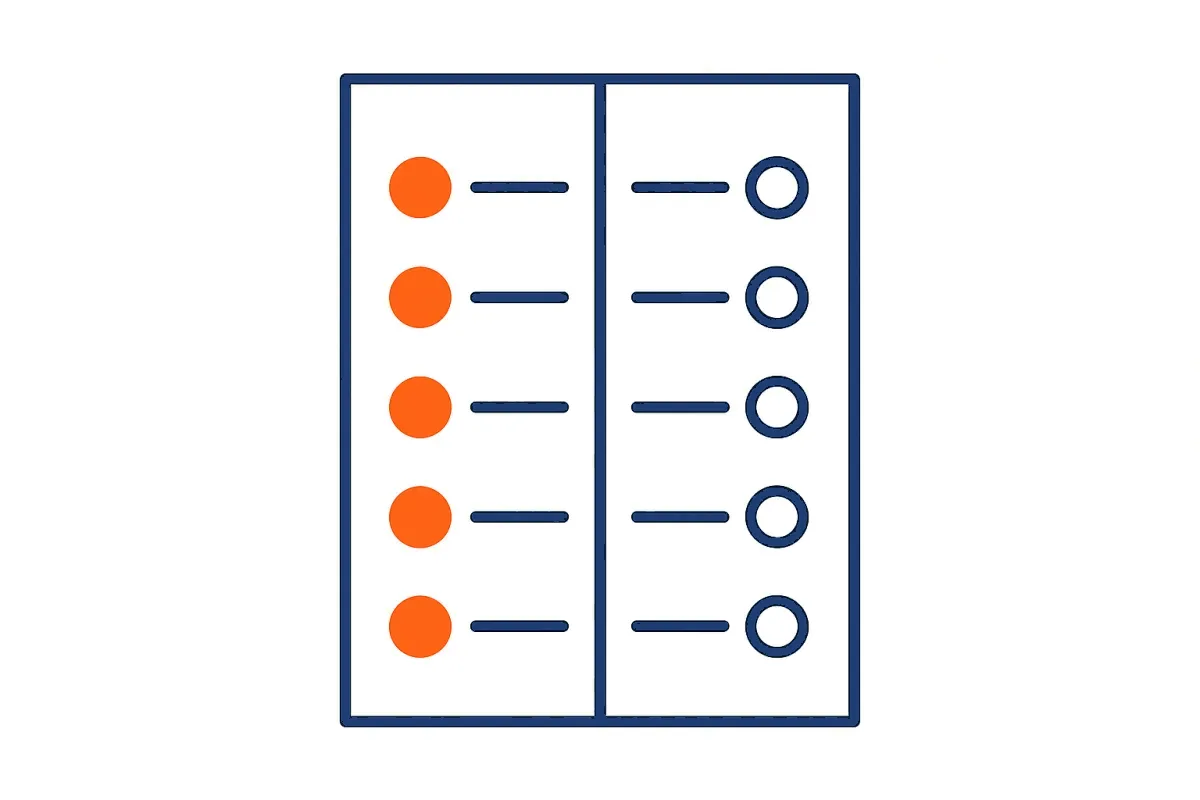
The remedy is a marksheet with two columns, agreed before any money is spent.
- Column one is what you control. How the account is built, what gets tested, where the money goes, how quickly you learn and how honestly you report.
- Column two is what the client controls. The price, the product, the stock, the page if you do not run it, and how soon a lead gets a call.
- Promise a process and a range. "In the first sixty days we will test these four things. By then we will know whether your target is realistic at your present price." That is a promise you can keep.
- Predict the bad month. There will be one. Say so in the first meeting, and say what you will do when it comes. The same sentence said afterwards sounds like an excuse.
- Report in the owner's language. One page a month. Orders or qualified leads, what each one cost, what you learnt and what you will change. Leave the click-through rates in the appendix.
- Keep the ad account in the client's name. An agency that runs the ads from its own account is holding the history hostage, and the client knows it. Handing over the keys says you expect to be kept for the work.
None of this is a sales technique. It is the difference between a tutor who promises ninety-five per cent and one who says, "Let me see where the child is, and I will tell you what is possible by March."
A Position Past "ROI-Driven Performance Marketing"
"ROI-driven" describes every performance agency that has ever existed. Nobody advertises the other kind.
A platform is not a position either. "Google and Meta ads" tells a buyer which tools you use. It puts you beside every freelancer with the same two logins.
An agency can narrow in three ways.
- By sector. "Admissions for colleges and coaching institutes." "Performance marketing for skincare and personal care brands." "Lead generation for residential projects." "Appointments for clinics and hospitals."
- By problem. "Brands whose cost of getting a customer has risen for three quarters running." "Lead generation where the sales team rejects most of the leads." "Brands that cannot spend more without the returns falling apart."
- By moment. "The first year after a brand moves from marketplaces to its own website." "The first serious ad budget after a funding round."
Narrowing does something particular for a performance agency. It makes an honest promise believable. An agency that has run thirty admission seasons knows the range of results a college can expect, and can say so with a straight face. It knows the fortnight after the results is worth more than the two months before it. It knows the parent fills the form and the student chooses the course, and that the call has to come after seven in the evening. A generalist can only quote a number from some other industry and hope.
That knowledge changes the first meeting. The question stops being "what ROAS will you get me?" and becomes "what usually goes wrong in an admission season, and when?" Nobody asks five agencies for a free audit in order to have that conversation.
Founders worry that narrowing means turning work away. It does not. You can still take the account that walks in. You are choosing what you are known for. The method is in positioning for consulting firms, and how to make the difference visible is in how to differentiate a B2B services firm.
Qualifying for Accounts You Can Actually Move

A good tutor tests the child before taking the fee. Some children need a different teacher, some need a different subject, and a few need only a quieter room at home.
Not every account can be moved by advertising, and the agency that takes all of them collects the blame for all of them. Six questions are worth asking before you say yes.
- Does it already sell without ads? Advertising multiplies demand that exists. It seldom creates demand for something nobody has wanted so far.
- Does the margin leave room to pay for a customer? If the sums fail on paper, they will fail in the account.
- Who calls the leads, and how soon? Ask to hear three calls.
- Is there enough budget and time to learn? A test needs enough orders to mean anything. A very small budget for one month proves nothing either way.
- Can you change the page? If the landing page belongs to somebody who will not touch it, you control half the result.
- Can the owner live with a poor month? Ask directly. The answer is usually honest.
Two bad answers, and you decline, or you offer the diagnosis and nothing more.
That diagnosis is the paid first step, and it replaces the free audit. Two weeks or so, for a fixed fee. You read the account and the page. You follow twenty leads through to the sales team and listen to a few calls. You work out the sums. Then you write down what number is realistic, what it depends on, and what the first sixty days would test. The client can take that document to any agency.
It does three useful things. It filters out people who were only collecting free advice. It shows your thinking on their real problem, which no screenshot can. And it puts the two-column marksheet in writing before the retainer begins. I explain how to design a first step like this in how to productise your service.
The proof on your website should change in the same way. A screenshot of a dashboard shows that a number went up, and every agency has one. Write the work up as a case instead: the business situation, what you found, what you changed and why, and what happened afterwards in plain words. The best ones are detective stories. The cost per lead had been rising for six months, the ads were fine, and the cause turned out to be a form with eleven fields and a sales team that called back after two days. In India most clients will not want their figures published, and you do not need them. "The sales team stopped complaining about the leads" will persuade more owners than a ROAS nobody can check.
Pricing on Value, Not on Ad Spend
Most performance agencies charge a percentage of the money the client spends on ads. It is the old media commission in digital clothes. I wrote about where that commission came from, and what it did to the price of an idea, in marketing for ad agencies.
The percentage is simple to explain, and it causes four problems.
- You earn more when the client spends more. The client knows this, so every suggestion to raise the budget arrives under suspicion.
- You earn less when you do your job well. Find a way to get the same orders for less money and your own invoice shrinks.
- The fee has little to do with the work. A small account with six products and a difficult sales process can need far more thought than a large, simple one.
- A percentage invites a lower percentage. It is one more number for the buyer to compare.
The alternative is a fee for the job. A fixed monthly fee, set by what you actually take on. How many products or markets. How many separate paths from ad to sale. Whether you make the creative, run the pages and report on what happened to the leads. Put a floor under it, and review it when the scope changes, not when the budget does.
A performance-linked part is fine as a bonus on top, tied to a number both sides can see and you largely control. It should not be the whole fee. An agency paid purely per lead or on a share of revenue has become an investor in the client's business, with no say over the price or the sales team.
The real meaning of value here is how much of the result you own. I worked with an ad-creative agency that lived on a few large clients. Those clients arrived with a marketing team and a finished brief, and bought one part of the process because they owned the rest. When the agency went looking for smaller clients, it found they owned none of it. A small or mid-sized business is buying the thinking, the plan, the creative, the running of the campaign and the customers at the end. So the agency's promise moved from "we produce your ad creatives" to "we bring you customers", in a fixed scope a small business could say yes to. The story is in from a few big clients to many small ones.
I should add that this was a change to how the agency operated, and no change of wording would have done it. Better marketing would not have fixed it, and I said so at the time.
The lesson carries straight across. An agency that only manages bids is selling the part the platforms are busy automating. An agency that owns the path from the ad to the sale is selling something the owner cannot get from a login, and that is far harder to put in a column and compare. The fee side is in value-based pricing for consultants.
Where Performance Marketing Agency Clients Come From in India
Look for buyers at a moment of change. The hardest client to win is one whose marks are good this term.
- Costs that have risen for two or three quarters.
- A brand moving from marketplaces to its own website.
- A funding round, with money set aside to grow.
- A new marketing head.
- The person who ran the ads in-house has resigned.
- The months before admission season or the festive season, when budgets are decided.
Several of these can be seen from outside, and that shapes where the clients come from.
Past clients, and people who have moved. Marketing heads change companies and take their agencies along. So do founders who start a second brand. A short, useful note twice a year to everyone you have worked with is the cheapest new business there is.
Partners who are in the room first. A web studio or a store developer finishes a site that now needs traffic, and I have written for them in marketing for web design agencies. A branding agency hands over an identity that has to be launched; see marketing for branding agencies. Many digital agencies do content and social well and would gladly pass on the paid side, which is part of marketing for digital marketing agencies. Add CRM consultants, who see what happens to leads after you deliver them.
The founder's writing. You have an advantage here that few service firms have. The big ad platforms publish the live ads of every advertiser, and anyone can look them up. A weekly note on what one brand is running, what its page does with the click and what you would test next needs no client data at all. Prospects arrive having already watched you think. Buyers trust a person before a firm, and the balance between the two names is in founder brand vs company brand.
Search, for your focus. People in India search for a performance marketing agency city by city, and those results are crowded with "best agency" lists and directories. "Performance marketing agency for coaching institutes" is small and full of intent. SEO for consultants explains the approach.
Outbound tied to something you can see. Before you write to anyone, you can read their ads and their landing page. A note that begins with one specific thing you noticed gets read. An offer of a free audit does not. See cold outreach for consultants.
Overseas and white-label work. Plenty of Indian teams run accounts for agencies abroad. It is steady and it can pay the salaries. The agency abroad holds the client and you hold the task list, so treat it as a base and not as a position.
What works badly: free audits for anyone who asks; advertisements promising a guaranteed ROAS; "top ten performance marketing agencies" directories; freelance bidding sites; and the same message sent to five hundred founders. The platform partner badge is worth having. Remember that the agency next door has it too.
A Weekly Routine That Survives Sale Season

A performance agency is busiest exactly when its clients are. In the festive sale weeks, or the fortnight after the board results, the whole office watches dashboards until midnight. New business stops entirely. Then January is quiet, two accounts have left, and there is nothing in hand to replace them.
The cause is arithmetic. Selling and delivery compete for the same few senior people, so the selling stops when the agency is busiest. I go through the mechanics in stop relying on referrals.
The answer is a routine small enough to survive a sale.
- One observation a week, published where your buyers already look. A platform change and what it means for an owner. An ad you admired and why it worked.
- Five conversations a week with past clients, partners and marketing heads who have changed jobs. A useful note, not a pitch.
- One written case a quarter, from work already delivered.
- Fifteen minutes every Monday on each open conversation: what happens next, and who does it.
- A written rule for new accounts. The six questions above, on one page. Two bad answers, and you decline or offer the paid diagnosis.
Give the routine an owner who is not the founder. The founder still holds the conversations. Someone else keeps the list and the calendar, and asks on Monday what happened. It comes to three or four hours a week. That looks too small to matter. It matters because it does not stop.
Should a performance agency run ads for itself? Yes, once the position and the paid diagnosis exist. You know better than anyone what advertising does for an offer nobody can tell apart from the next one. Until then, B2B brand awareness without an ad budget shows how far the routine goes on its own, and the wider system is in the guide to getting clients beyond referrals.
What Marketing Consulting for a Performance Agency Looks Like
A fair question: what would a marketing consultant do for a firm that runs other people's marketing by the number?
I am not going to run your ad accounts. You are better at that than I am. What an outsider brings is what you bring to your own clients, which is a view from across the road. Nobody can read their own hoarding from inside the classroom.
I start with a diagnosis, not a plan. The Pipeline Reality Check is a one-week look at where your work really comes from: the last ten or twenty clients, who sent them, what each one bought, how long they stayed and what they said when they left. For a performance agency the last two columns are usually the interesting ones.
Sometimes the constraint is not marketing. If the agency is built to manage ad accounts and the clients it wants need the whole path owned, more enquiries will make things worse. I will say so.
When it is marketing, the work follows the CLEAR method: who the agency is for, the message that makes that obvious, one offer a stranger can buy, the one or two channels worth your time, and a weekly rhythm the team runs without me. Each engagement is scoped after a conversation. If you are weighing up whether an outside advisor makes sense at all, I have written about that in marketing consultant for agencies.
Questions Performance Agency Founders Ask Me
How do performance marketing agencies get clients?
Most get them through introductions, repeat work and marketing heads who move companies and take the agency along. The agencies that grow steadily add three things: a position narrow enough for a stranger to remember, a small paid diagnosis in place of the free audit, and written cases that explain what they found and changed. Partners, search and outreach all work better once those exist.
How do I get clients for a performance marketing agency in India?
Start with the people who already know your work, including past clients and the people who have left those companies. Then look for brands at a moment of change: rising costs, a move from marketplaces to their own site, a new marketing head, the run-up to the festive season. Build relationships with web studios, branding agencies and digital agencies, who meet those brands before you do. None of this needs a budget. It needs a fixed slot in the week.
Should a performance marketing agency guarantee ROAS?
No. The return depends on the price, the product, the page and the sales follow-up, most of which the agency does not control. A guarantee attracts the clients least likely to succeed and starts the relationship on a promise that one bad month can break. Promise a process, a realistic range and what that range depends on, in writing, before the retainer begins.
Should a performance agency charge a percentage of ad spend?
It is common, and it sets your interests against the client's, because you earn more when they spend more. A fixed monthly fee based on the scope of the job is easier to defend and harder to compare. A bonus tied to a result both sides can see is a reasonable addition. It should not be the whole fee.
What is considered a performance marketing agency?
An agency that runs paid advertising where the result is measured directly, usually as leads, orders or revenue against the money spent. In practice that means search ads, social ads and marketplace ads, with the reporting that goes with them. The better ones also take responsibility for the creative, the landing page and what happens to a lead after it arrives.
A Performance Agency Judged on One Number?
The buyer who asks for a guaranteed ROAS is not being unreasonable. Every hoarding in town has taught them that a number is all there is to compare. Unteaching it is a marketing job: a position of your own, a marksheet with two columns, a paid diagnosis before the retainer, a fee for the job and a small routine that carries on through sale season. The tutors whom parents stay with for years are seldom the ones with the biggest hoarding. They are the ones who told the family in the first week what was possible, and why.
A performance agency judged on one number? Get in touch. Tell me where your last ten clients came from and how long each one stayed, and I will tell you honestly whether the fix is marketing, and what I would look at first. If it needs a closer look, the usual first step is the Pipeline Reality Check, a one-week diagnosis of where your new business really comes from.

Anoop Kurup
I'm a marketing consultant for B2B service firms in India. I fix the positioning, visibility, and lead generation behind weak sales. Before this: a research lab at GE, then patents and competitive strategy, then an intellectual-property firm I built and exited. I work with founders one engagement at a time from Bangalore.
More about meA performance agency judged on one number?
This is the Acquire stage of the CLEAR method. Tell me what you're seeing in your pipeline. I'll tell you honestly if I can help, and where I'd start.
Get in touch